





If you need to pump away from home, the best choice is usually a pump that is quiet enough to fade into the background, small enough to fit your routine, and comfortable enough to empty you well. For most parents, that means looking closely at noise, flange fit, battery life, cup capacity, and how easy the pump is to clean between sessions.
If you have ever tried to picture yourself pumping in an airport, in your car before work, or during a short office break, you already know the stress is not just about milk removal. It is also about sound, setup time, leaks, and whether the pump actually works for your body. The good news is that modern wearable and portable pumps can make public pumping much more manageable, and the right setup can save time, reduce frustration, and help you stay on schedule.
What actually makes a pump quiet and discreet
A quiet pump is not always a discreet pump, and that distinction matters. Quiet refers to sound level, while discreet includes the pump’s shape under clothing, how much adjusting it needs, how likely it is to leak, and whether you can use it without drawing attention.
A consumer advocacy publication and a product review site have both pointed out that noise, leakage, comfort, and fit are some of the biggest factors for wearable pumps. In practical terms, pumps in the low-40 dB range are generally considered quiet enough for easier public use, and some of the quietest wearable models test even lower. That said, no pump is truly invisible. If a pump is bulky, shifts in your bra, or needs frequent repositioning, it may still feel obvious even if the motor is soft.
This is why wearable pumps tend to appeal to parents who pump at work, while commuting, or during errands. They sit inside the bra, run on rechargeable batteries, and let you keep your hands free. A traditional portable pump can still be a good travel option, but tubing, bottles, and a separate motor usually make it harder to use discreetly in public.
Quiet matters, but shape matters too
In real life, pump shape often affects confidence more than sound. A low-profile pump that sits closer to the body is usually easier to hide under a loose sweater, nursing tank, or button-down shirt than a rounder cup that pushes clothing outward.
Leaks also affect discretion. A pump that starts spilling once you collect 3 to 4 oz is much harder to use on the go, especially if you are stuck on a plane or halfway through a work meeting. If you tend to pump larger volumes, pay close attention to cup capacity and overflow risk before you buy.
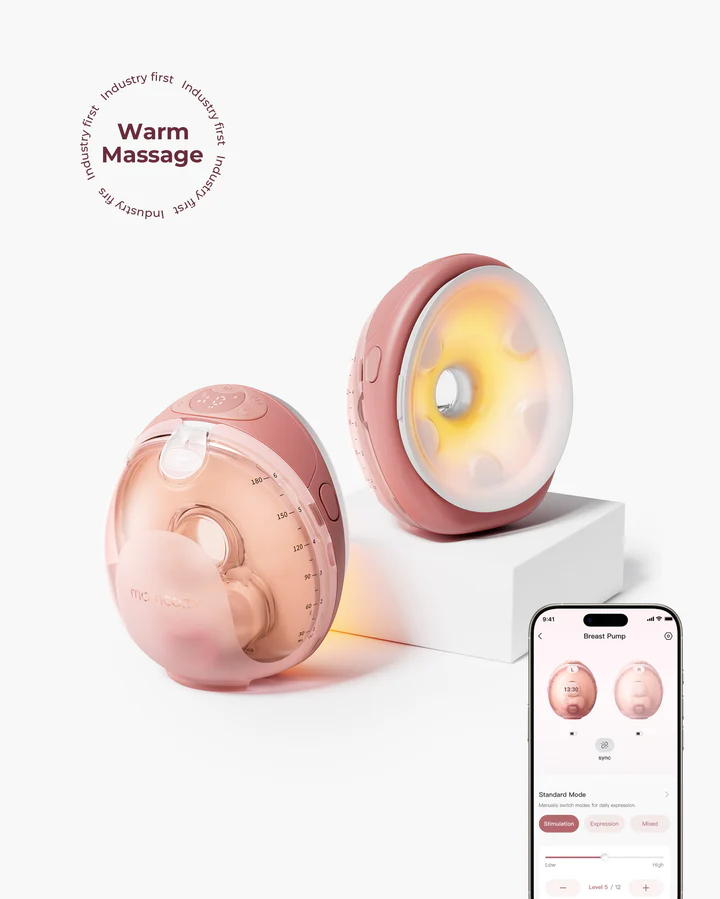
Wearable or portable: which one makes more sense for travel?
If your top priority is pumping quietly in public, a wearable pump is usually the easiest fit. A medical organization describes wearables as pumps that fit inside the bra for more discreet, hands-free use, and that convenience is exactly why many parents reach for them outside the house.
But convenience is not the only factor. Experts cited by a consumer advocacy publication and a product review site note that wearable pumps do not always remove as much milk as a stronger standard electric pump. Some parents adjust within 1 to 2 weeks and get close to their usual output, while others still empty better with a traditional double electric model.
Choose based on how often and where you pump
A wearable pump makes the most sense if you are pumping during work breaks, while traveling, in the car, or in other places where privacy and mobility matter. If you pump a few times a week away from home, the tradeoff can be worth it.
A portable standard pump may be a better fit if you pump frequently, need stronger suction, or rely on the pump to maintain supply. Some rechargeable double electric pumps are still compact enough for travel and can be quieter than people expect, just less discreet under clothing.
Manual pumps are also worth keeping in mind. A federal health agency and a medical organization both note that manual pumps are easy to transport and do not need batteries or electricity. They are especially useful as a backup for train rides, long car days, or situations where power is uncertain, and they are often quieter than electric options.
Flange fit is one of the biggest comfort and output issues
If pumping hurts, feels pinchy, or leaves you feeling half-empty, the problem may not be the pump itself. It may be the flange size. This is one of the most important points to get right, especially if you plan to pump in less-than-ideal settings where you do not have time to troubleshoot.
A doula education group and other fitting guides note that many pumps still ship with a standard 24 mm flange, even though that size is often not the best match. Some experts report that many users actually fit somewhere in the 12 mm to 18 mm range. A poor fit can cause rubbing, swelling, nipple damage, and lower milk collection.
What a good fit looks like in practice
A good fit is not just about how the nipple looks in the flange tunnel. It is about whether pumping feels comfortable, whether milk flows well, and whether you empty in a reasonable amount of time. A product review site gave a simple example of how meaningful this can be: switching from a 24 mm flange to a 17 mm insert can change both comfort and output.
Try your pump for 1 to 2 days before a trip instead of waiting until travel day. That gives you time to test sizing, adjust suction, and see whether you are actually emptying well. If you are unsure, a lactation consultant can often help with a proper fitting, and some insurance plans cover those visits.
The features that matter most when you are away from home
Once you know the pump style that fits your routine, focus on the details that make travel easier. The most useful travel-friendly pumps usually share the same basics: rechargeable battery power, simple controls, a closed system or anti-backflow design, and as few washable parts as possible.
Battery life is a big one. Several travel guides recommend aiming for at least 4 to 5 sessions per charge. That is enough to get through a long workday, a travel day, or a delayed flight without scrambling for an outlet. If your pump only lasts around 100 to 150 minutes total, check whether that covers your typical 2 to 3 sessions in an 8-hour day.
Don’t ignore capacity and cleanup
Cup capacity matters more than many parents expect. A 6 oz collector may be fine for some sessions, but if you regularly pump more than that, you may need to stop and empty mid-session. That is inconvenient at home and even more frustrating in a car, office, or airport.
Cleaning also affects how usable a pump feels outside the house. A federal health agency’s standard advice is to rinse milk-contact parts in cool water, wash with dish soap and warm water, rinse with hot water, and air-dry on a clean surface. That is the safest routine, but not always realistic when you are moving around. For travel days, it helps to pack multiple sets of parts, pump wipes for in-between sessions, and zip bags to separate used pieces until you can wash them properly.
How to pump more comfortably and privately in public
Public pumping gets much easier when you stop treating it like an emergency and start treating it like a routine. The setup matters just as much as the pump. A hands-free bra or nursing tank, dark or patterned layers, and a shirt that opens easily can make the whole process feel much less awkward.
If you are new to pumping outside the house, start with a semi-private setting first. A parked car, family restroom, office wellness room, or nursing room is usually easier than trying to pump fully out in the open on day one. That lets you figure out your setup, sound level, and milk transfer without extra pressure.
Pack for fewer problems, not for perfection
A small pumping kit should cover the basics: storage bags or bottles, spare parts, charging cable, cleaning wipes, and a cooler with ice packs. Many parents also find it helpful to pre-assemble parts and keep them in a large zip bag so they are not digging around for valves and caps during a short break.
For storage, several travel and pumping guides say milk can usually stay at room temperature for about 4 hours and in an insulated cooler with ice packs for up to 24 hours. Labeling milk with the date and time also helps when you are pumping across a full day of errands, meetings, or travel connections.

Travel planning matters more than most people think
The easiest travel pumping days are usually the ones planned the night before. Charge the pump fully, pack more parts than you think you need, and keep the pump in your carry-on so it stays accessible. Travel-specific guidance also recommends staying close to your normal pumping schedule, even when the day gets busy.
For air travel, look up lactation rooms or family restrooms before you leave. For road trips or train travel, check where you can stop or whether you will have access to outlets. If you are crossing time zones, shifting pumping times gradually can make the transition easier.
A backup plan is worth the space
Even if you love your main pump, a simple backup can save the day. A manual pump, extra storage bags, and an extra charging cable take up less room than dealing with a dead battery or a broken valve when you are already away from home.
If you are traveling with frozen milk, flat-freezing bags can save space in the cooler. If milk is still partially frozen and contains ice crystals, travel guidance generally says it can be refrozen. If it has fully thawed, plan to use it within 24 hours.
Practical Next Steps
Choose the pump that matches your real routine, not your ideal one. If you need to pump quietly during work breaks or while traveling, a well-fitting wearable or compact rechargeable pump is often the most practical choice. If output is your main concern, a portable standard electric pump may serve you better, even if it is less discreet.
Before you commit, test three things at home: flange fit, how many sessions you get from one charge, and whether the pump empties you comfortably in about 10 to 15 minutes per breast or a typical double-pump session. Once those basics are working, public pumping usually becomes much more manageable.