




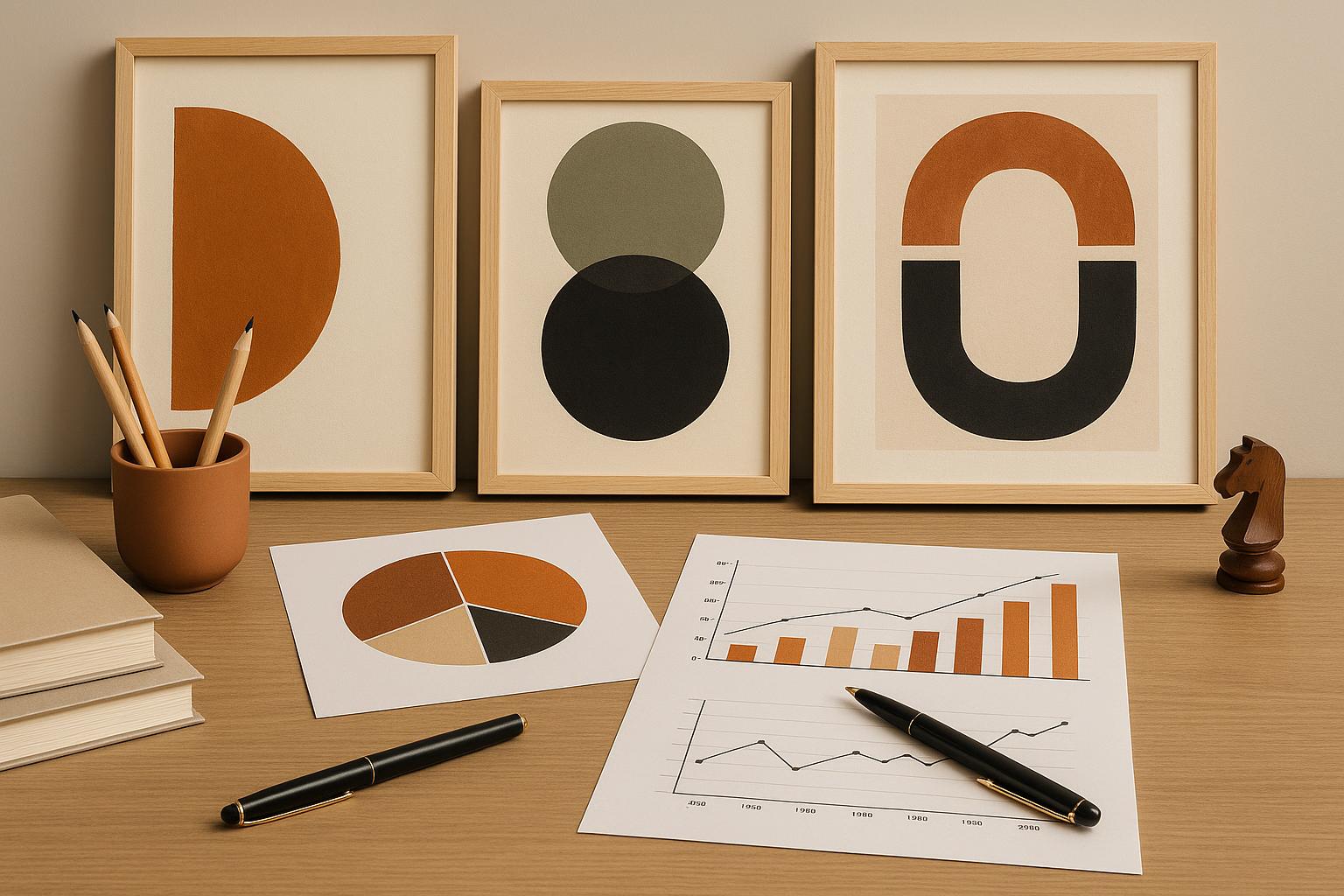
Collecting can look beautifully instinctive from the outside.
A sharp eye, strong preferences, a few confident purchases, and suddenly someone appears to have built a compelling collection on taste alone. Sometimes that happens. More often, the strongest collections have something quieter behind them; structure. Not rigid rules, not joyless optimisation, just a clearer sense of direction than “I liked it at the time”.
That’s why art consulting from Otomys speaks to a growing shift in how people approach collecting. More buyers still care deeply about personal taste, obviously. But they also want context, coherence and better judgement around what they’re building over time. Taste may start a collection. Strategy usually helps it mature.
Because collecting without any structure can become a bit like decorating with a credit card and a good mood. You end up with interesting pieces, maybe even excellent ones, though the collection itself may feel scattered, reactive or oddly unfinished.
Taste Gets You Started, But It Doesn’t Always Build a Collection
Most collectors begin emotionally.
They respond to a work, an artist, a material, a period, a feeling. That’s not a flaw. In fact, it’s often the best part. A collection built with no emotional response at all would feel sterile pretty quickly. But instinct on its own can also be inconsistent. People buy in different moods, through different lenses, at different stages of knowledge. Over time, that can create a group of works that are individually appealing and collectively confused.
That’s usually when strategy starts sounding less intimidating and more useful.
Not strategy in the corporate sense. More the idea of understanding where the collection is heading, what strengths it already has, what gaps exist, and how new acquisitions might deepen rather than dilute the whole. Once that perspective clicks, collecting tends to feel less random and far more satisfying.
A stronger framework also helps reduce impulsive buying dressed up as passion. Enthusiasm’s great. Regret’s expensive.
The Best Collections Tend to Have Internal Logic
A compelling collection doesn’t need to be narrow, though it usually benefits from some kind of thread.
That thread might be visual, conceptual, historical, cultural, medium-specific or tied to a particular point of view. It doesn’t need to be obvious to everyone walking past the wall. It only needs enough internal logic that the collection begins to say something beyond “these were all nice”.
That’s where strategic thinking becomes so valuable. It helps collectors identify what they’re actually responding to and how those responses can be developed with more intention.Maybe the focus is emerging artists. Maybe it’s a conversation between contemporaryworks and older pieces. Maybe it’s a particular discipline, geography or sensibility that keeps resurfacing. Once the pattern becomes visible, decisions usually improve.
And improved decisions don’t kill spontaneity. They sharpen it. A collector with stronger context can still fall in love with an unexpected work, though they’re better placed to understand what that work adds and whether it belongs.That sort of confidence tends to grow the collection more effectively than taste alone.
Advice Has Become More Valuable as the Market Gets Noisier
The art world hasn’t exactly become simpler.
There’s more access, more visibility, more platforms, more commentary and more noise than ever. On one hand, that’s exciting. On the other, it makes discernment harder. Collectors now move through a landscape full of signals; hype, social proof, trend pressure, resale chatter, aesthetic cycles, identity cues, and the persistent temptation to confuse visibility with significance.
In that environment, strategy starts feeling less like an optional extra and more like a filter.
Good advice can help collectors step back from the noise and think more clearly about quality, context and long-term fit. Not in a way that strips the pleasure out of collecting, but in a way that protects it from becoming overly reactive. There’s a big difference between buying widely and buying well. The first can look impressive quickly. The second tends to age better.
That matters whether the collection is personal, commercial or somewhere in between. Even collectors who aren’t thinking in investment terms usually want to feel they’ve built something with shape, integrity and staying power.
Collecting Feels Better When It Starts Holding Together
One of the most satisfying moments for a collector is realising the collection has begun to become more than a series of purchases.
The works start talking to each other. The choices feel less accidental. A point of view emerges. Not because everything matches, but because the collection has developed a kind of intelligence of its own. That doesn’t happen through taste alone very often. Taste is important, though it’s not always enough to create cohesion over time.
That’s why more collectors are looking for strategy. Not to replace instinct, and not to outsource personal judgement, but to strengthen both. They want someone to help make sense of the field, sharpen the lens and build something more deliberate than a string of attractive decisions.
And honestly, that makes sense. Collecting’s more enjoyable when the collection starts holding together in a way that feels considered, personal and a little harder to forget.