




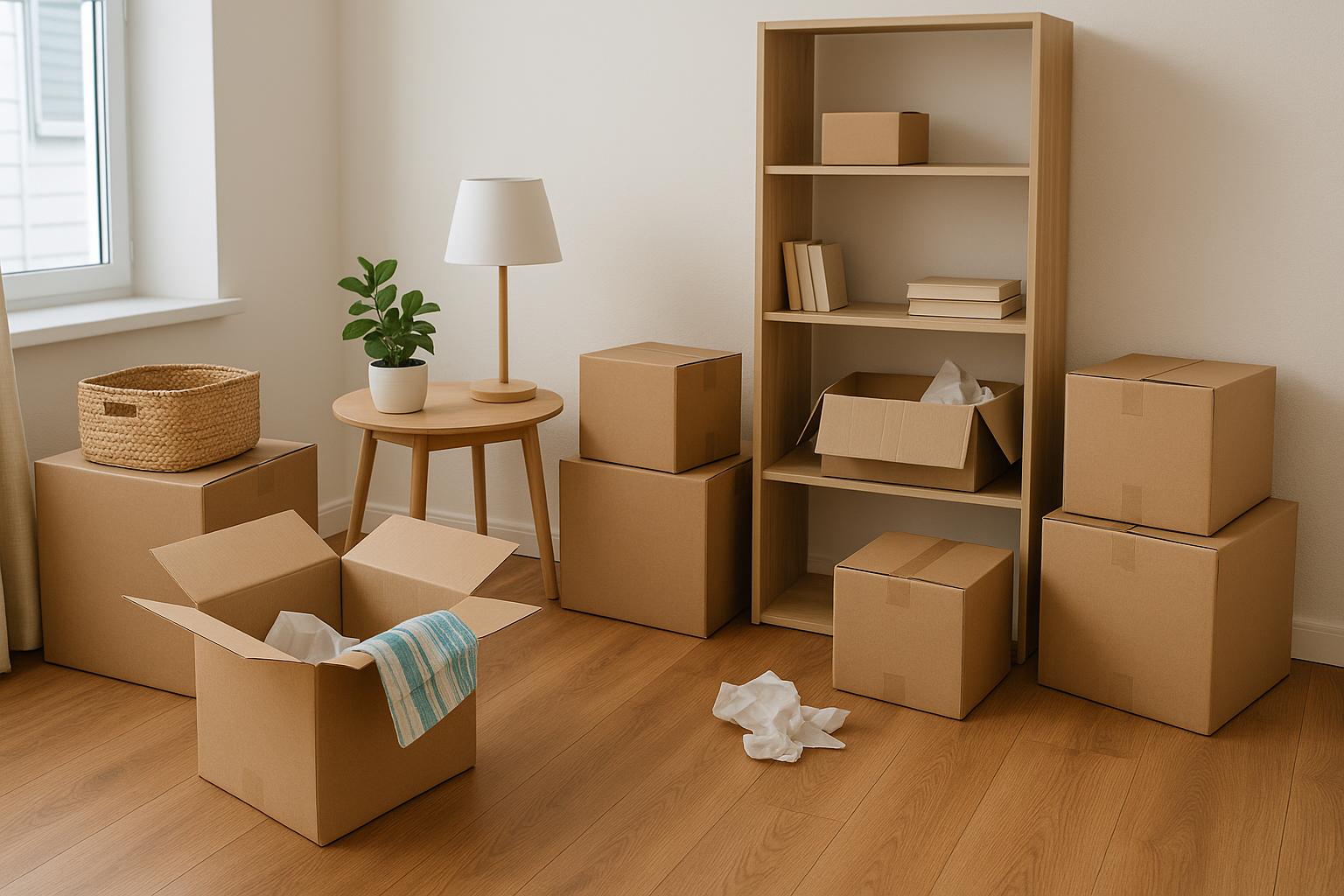
Moving is always a complicated and exhausting process. But that’s only half the battle. Once the boxes are inside the house, the second part begins – unpacking. It seems simple enough: open the boxes and put things away. But it’s not as easy as it might seem at first glance. Many people are familiar with the situation where boxes sit around the house for weeks. This creates a sense of chaos and incompleteness; it feels like you’re still in the middle of the move. This makes it hard to adjust and get used to your new place. To avoid getting tired and adding to your stress, unpack after moving calmly, systematically, and thoughtfully.
The team at 5 Points Moving has prepared tips to help you get organized faster and make your new home cozy and comfortable to live in.
1. Start with the essentials
To ensure a minimum level of comfort, unpack the boxes containing the most necessary items that you use regularly first. This is the best way to unpack after moving and stay organized.
Unpack the following first:
- personal hygiene items;
- phone and laptop chargers;
- documents;
- dishes;
- medications (especially if you take them regularly or during flare-ups);
- slippers and clothes;
- one or two sets of clothes for going out (work suits, shirts, underwear).
Of course, this is far from everything you need to live. However, having these items on hand will reduce stress and the feeling of being lost.
2. Sort through the boxes one by one
It is better to open boxes based on how they are divided by area. Start with items you’ll need in the kitchen, bathroom, bedroom, and living room. Here’s one of the moving unpacking tips: don’t arrange them the way you’re used to, but in a way that’s convenient right now. The layout in a new home is usually different. Therefore, the old arrangement of kitchen items or things in the bedroom may turn out to be completely inconvenient. Try different options to figure out what’s most comfortable for you.
You can set aside some boxes and deal with them last. These are usually seasonal items you don’t need right now, household appliances you rarely use, or old but valuable items. If you have musical instruments, it’s important to pack them properly at their original location, transport them carefully according to all the rules, and unpack them just as carefully. If you’ve never done this before, it’s best to contact musical instrument movers, who will handle it professionally.
3. Dispose of packing materials immediately
As soon as you’ve unpacked the boxes, removed the plastic wrap, tape, and other packing materials, you can take them out of the house. This way, you won’t clutter up your space with unnecessary items. Move empty boxes to the garage or basement. Ideally, break them down. If you think they might still come in handy, make sure they take up as little space as possible by flattening them.
As soon as the amount of packing materials and boxes starts to decrease, the space will feel lighter, cozier, and more lived-in. And your psychological stress will be reduced.
4. Perfection is the enemy of progress
Sometimes unpacking in one room takes longer than planned. The boxes are open, some household items and clothes are already laid out, but the process stalls. One fully furnished room creates a sense of coziness, but the rest still look like a post-move mess.
Practical unpacking tips after a move help you organize the entire process so that it covers the entire home, little by little. One room, such as the bathroom or bedroom, is fine – it provides essential comfort. But it’s better not to make a single room perfect right away, but rather to unpack everything gradually and simultaneously.
5. Temporary solutions aren’t a bad thing
After moving, you’ll want to finish unpacking and arranging things as soon as possible. However, there’s no need to try to make every corner perfect or make final decisions right away. You can arrange furniture and decor a little later, guided not only by design principles but also by comfort. Place items where it’s convenient for you to use them right now. A permanent spot for them will find itself over time. As you go about your daily routines and tasks, some things will change, while others will stay where you’ve placed them. Be flexible in your decisions.
6. Work in short bursts
When trying to do unpacking after moving all at once, fatigue builds up quickly and concentration is lost. You start moving items around without a clear logic. Short bursts of work are less stressful. Do a little, take a break, step back, and look at it from a distance. You’ll see more clearly what to keep and what to change. This makes the process less stressful and more manageable, even if there’s a lot of work to do.
7. Don’t leave unpacked boxes sitting around for too long
The longer boxes stay closed, the harder it is to get back to unpacking. Over time, you start to get used to the temporary mess, and you might even forget about some items altogether. Even if you can’t unpack everything at once, try to spend at least 20–30 minutes on it every day. Making gradual progress is much more effective than putting it off for a long time. Plus, empty boxes take up space, get in the way, and create a visual sense of incompleteness.
Summing up
Unpacking after a move never happens instantly. Over time, everything begins to fall into place and settles into a more comfortable state. New routines and ways of organizing your belongings become a natural part of daily life, where everything gradually finds its place both in your space and in your daily rhythm.