




A good home should feel like a place where life happens, not a place where life is managed. That distinction matters, especially for people with disability who want support, safety and structure without losing warmth, privacy or personal choice.
Too often, accessible housing is discussed in purely practical terms: wider doorways, step-free entry, modified bathrooms, assistive technology, emergency systems. Those details are important. They can change someone’s daily life in very real ways. But they’re only part of the story. A home that genuinely supports independence has to work physically, emotionally and socially. It has to make everyday routines easier without making the person living there feel like a patient, a tenant in a system or a visitor in someone else’s idea of care.
This is where thoughtful NDIS housing can make a meaningful difference. At its best, it combines practical support with dignity, giving people the chance to live with more autonomy while still having the right assistance close by.
Independence Starts with Ordinary Choices
Independence doesn’t always mean doing everything alone. Sometimes it means choosing when to have breakfast, deciding how a bedroom is arranged, inviting a friend over, watching television without being interrupted or making a cup of tea without needing to ask.
These ordinary choices are easy to underestimate. In many people’s lives, they’re barely noticed because they’re automatic. But when housing or support arrangements remove those choices, the effect can be profound. A person may technically be cared for, yet still feel like their life is being scheduled around systems rather than their own preferences.
A well-designed supported home protects choice wherever possible. It allows people to build routines that suit them. It recognises that independence is personal, not a fixed checklist.
Design Should Help Without Announcing Itself
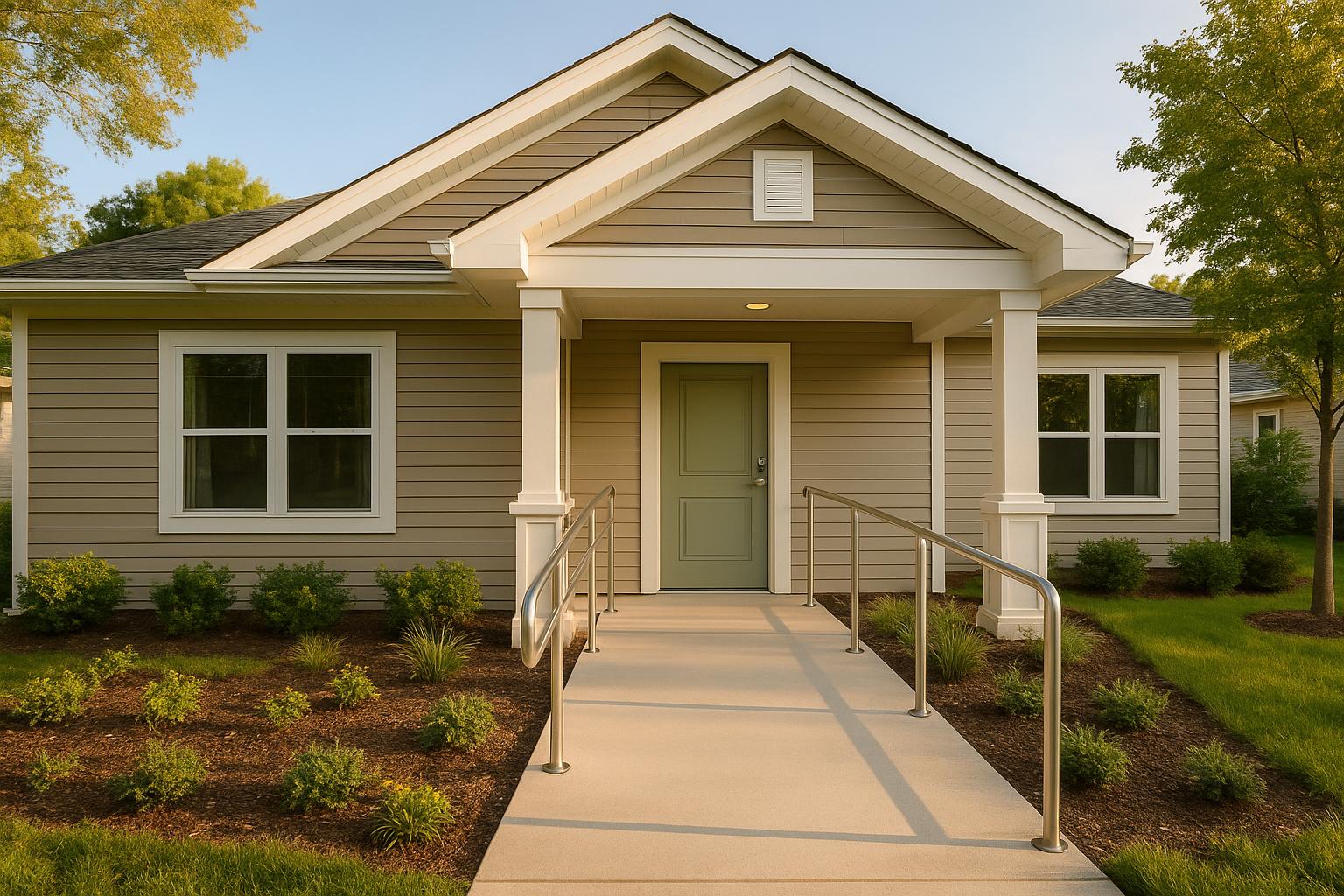
Accessible design doesn’t need to feel cold, clinical or institutional. In fact, the best accessibility often blends into the background. A bathroom can be safe without looking like a hospital bathroom. A kitchen can be easier to navigate without feeling stripped of personality. Bedrooms can be practical while still feeling calm, comfortable and individual.
The goal isn’t to hide disability. It’s to avoid turning someone’s home into a facility by default.
Small design decisions make a big difference. Good natural light. Durable but homely finishes. Enough space to move comfortably. Storage that makes sense. Outdoor areas that feel usable, not decorative. Shared spaces that invite connection without forcing it. Private spaces that feel genuinely private.
When accessibility is treated as part of good design rather than an afterthought, the result feels less like accommodation and more like home.
Support Should Be Present, Not Overpowering
The balance between support and independence can be delicate. Too little support can leave people feeling unsafe or isolated. Too much can feel intrusive, especially when staff presence dominates the rhythm of the house.
A supportive home works best when assistance is available in a way that respects the person’s autonomy. That might mean help with meals, personal care, medication, transport, appointments or daily planning. But it should be delivered with attention to privacy, communication and consent.
People need to feel that support is there for them, not happening to them.
This is particularly important in shared living environments. Clear expectations, compatible housemates, respectful staff and consistent communication all help create a home that feels settled rather than chaotic.
A Home Should Support Relationships Too
Independence isn’t only about tasks. It’s also about connection.
A home should make it easier for people to maintain relationships with family, friends, neighbours and community. That can mean being located near shops, parks, health services, public transport or familiar local places. It can also mean having enough room for visitors, shared meals, hobbies and downtime.
People don’t just need a roof over their head. They need the conditions to participate in life.
When housing is planned around community access, it gives residents more than convenience. It supports belonging. A person can become known at the local café, attend regular activities, join a club, visit family more easily or simply be part of the everyday movement of a neighbourhood.
That’s a quiet but powerful form of independence.
Safety and Personality Can Coexist
There’s sometimes an assumption that safety has to come at the cost of personality. It doesn’t.
A safe home can still have favourite colours, family photos, music, pets, plants, artwork, books, collections and all the small signs that someone real lives there. These details aren’t cosmetic extras. They matter because they turn a functional space into a personal one.
Of course, safety planning is essential. Some homes need specialist equipment, emergency response systems, behavioural supports or environmental modifications. But those features should sit within a broader understanding of the person, not define the entire home.
A home that supports independence asks, “What helps this person live well?” not just, “What reduces risk?”.
The Real Measure Is Daily Life
The success of supported housing isn’t only measured by compliance, funding categories or floor plans. It’s measured in daily life.
Can the person move around comfortably? Do they feel listened to? Are they able to make meaningful choices? Do they have privacy? Are they supported to try new things? Does the home feel calm, respectful and lived in? Can they build routines that make sense for them?
These questions reveal whether a home is doing its job.
Because independence is rarely dramatic. It often shows up quietly: someone making their own lunch, choosing what to wear, spending time in the garden, learning a new skill, sleeping better, feeling less anxious, or having people over without the whole thing feeling complicated.
A Better Standard for Supported Living
A home that supports independence without feeling like a facility is built on a simple idea: people deserve both support and selfhood.
They shouldn’t have to trade comfort for accessibility, or safety for personality. They shouldn’t have to live somewhere that works on paper but feels impersonal in practice.
The best supported homes are thoughtful, human and flexible. They make room for care, but they also make room for ordinary life; the kind with routines, preferences, visitors, mess, laughter, quiet mornings and small decisions that belong to the person making them.
That’s what turns housing into a home.