




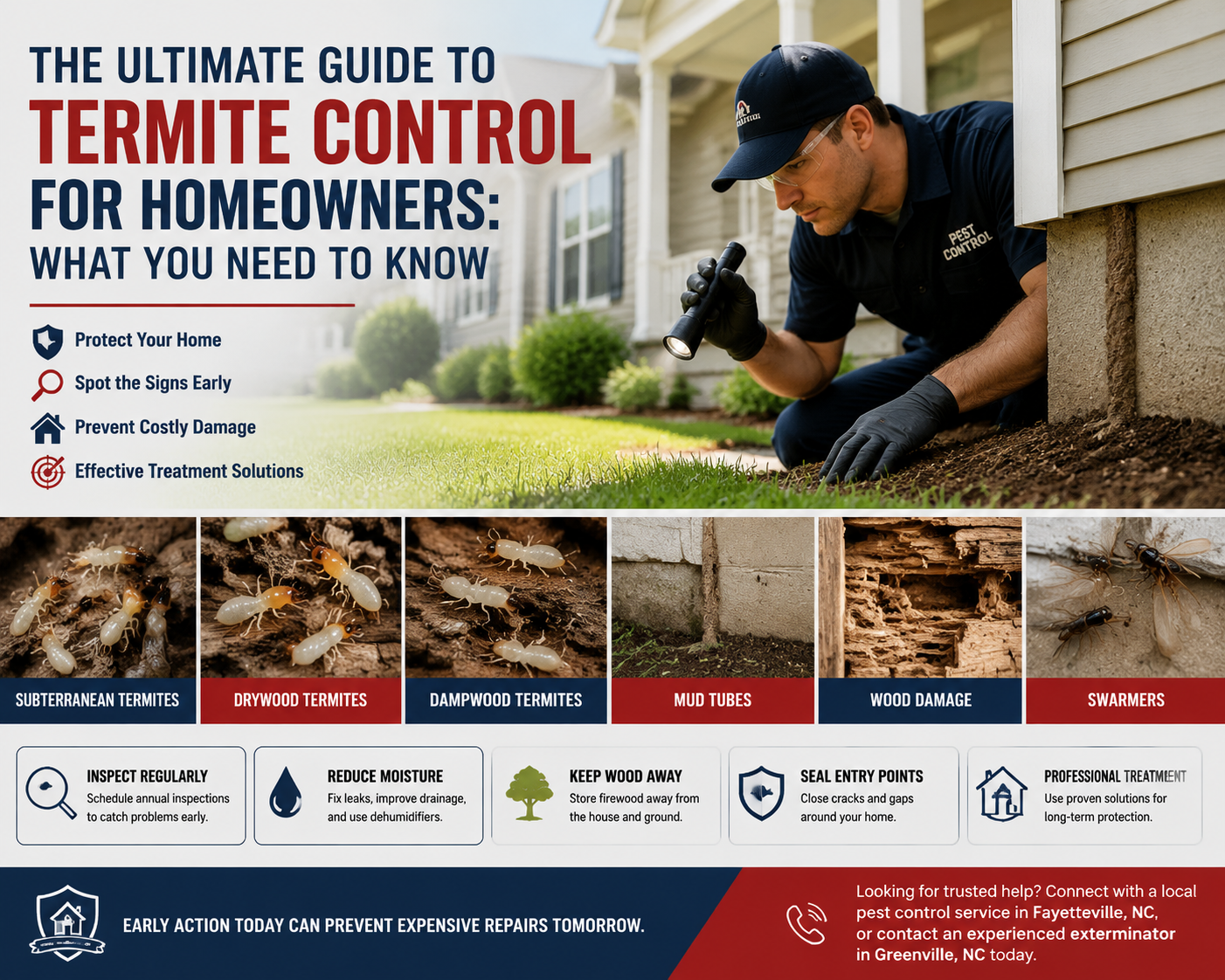
Termites are one of the most destructive pests a homeowner can face. These tiny insects work quietly behind walls, under floors, and inside wooden structures. By the time visible signs appear, serious structural damage may already exist. According to the United States Environmental Protection Agency (EPA), termites cause billions of dollars in property damage each year in the United States.
Understanding how termites behave, how infestations start, and how to stop them early can save homeowners from expensive repairs. This guide explains everything you need to know about termite control, including warning signs, prevention methods, inspection tips, and treatment options that help protect your home long-term.
What Are Termites and Why Are They Dangerous?
Termites are wood-destroying insects that feed on cellulose found in wood, paper, and plant materials. Unlike ants, termites often stay hidden while they slowly weaken important structures inside a home.
The most common types include:
| Type of Termite | Common Location | Main Risk |
| Subterranean Termites | Soil and foundations | Severe structural damage |
| Drywood Termites | Wooden furniture and walls | Hidden interior infestations |
| Dampwood Termites | Moist wood areas | Damage in damp environments |
A termite colony can contain thousands or even millions of insects. They work continuously, making early detection critical.
Signs You May Have a Termite Problem
Recognizing the early warning signs can help homeowners act before the damage becomes severe.
Common Signs of Termites
- Hollow-sounding wood
- Mud tubes near foundations
- Bubbling paint or warped walls
- Discarded wings near windows
- Small holes in the drywall
- Sagging floors or ceilings
Many homeowners mistake termite damage for water damage because the symptoms often look similar.
Why a Termite Inspection Matters
A professional termite inspection is one of the best ways to detect hidden infestations before major structural problems occur. Inspectors check crawl spaces, attics, foundations, basements, wooden structures, and moisture-prone areas.
Areas Commonly Checked During an Inspection
- Wooden beams and framing
- Exterior siding
- Window and door frames
- Crawl spaces
- Basement walls
- Roof supports
- Wooden fences and decks
Homeowners should schedule a termite inspection at least once a year, especially in humid or warm regions where termites thrive.
How to Prevent Termite Damage Before It Starts
Preventive action is often more affordable than repairing structural damage later. Moisture control and routine maintenance are key.
Simple Ways to Prevent Termite Damage
Reduce Moisture Around the Home
Termites are attracted to moisture. Fixing leaks and improving drainage can lower the risk.
- Repair leaking pipes
- Clean clogged gutters
- Improve ventilation in crawl spaces
- Use dehumidifiers when needed
Keep Wood Away From Soil
Wood-to-soil contact creates easy access for termites.
- Store firewood away from the house
- Raise wooden decks above ground level
- Avoid mulch touching the foundation
Seal Entry Points
Cracks and gaps around the home can become termite entry points.
- Seal foundation cracks
- Repair damaged siding
- Close gaps around utility lines
Pro Tip: Trim shrubs and tree branches away from your home’s exterior. Dense vegetation traps moisture and creates hidden access points for termites.
Understanding Home Termite Treatment Options
Different infestations require different solutions. Choosing the right home termite treatment depends on the severity of the problem and the type of termite involved.
Chemical Barrier Treatments
Liquid termiticides are applied around the foundation to create a protective barrier. These treatments are effective for subterranean termites.
Bait Station Systems
Bait stations are placed in the soil around the property. Termites consume the bait and carry it back to the colony.
Benefits include:
- Continuous monitoring
- Reduced chemical exposure
- Colony elimination over time
Wood Treatments
Specialized products can be applied directly to wooden structures to protect against infestation.
Fumigation for Severe Infestations
For widespread drywood termite problems, fumigation may be necessary. This process requires homeowners to temporarily leave the property.
Comparing DIY vs Professional Termite Solutions
Some homeowners try over-the-counter termite products. While minor issues may appear manageable, large infestations usually require professional help.
| DIY Methods | Professional Services |
| Limited effectiveness | Thorough inspections |
| Temporary relief | Long-term solutions |
| Hard to reach hidden colonies | Advanced treatment tools |
| Risk of incomplete treatment | Ongoing monitoring |
A professional approach is often more reliable for long-term termite control.
What Homeowners Should Know About Seasonal Termite Activity
Termites stay active year-round in many regions, but spring and summer are especially important because the swarming season begins.
Increased Risk During Warm Months
Swarming termites leave colonies to establish new nests. Homeowners often notice flying termites near windows or outdoor lights during this time.
How Landscaping Can Affect Termite Problems
Your yard can either help protect your home or increase termite risk.
Landscaping Habits That Attract Termites
- Excess mulch near foundations
- Dead tree stumps
- Overwatered flower beds
- Untreated wooden garden borders
Better Landscaping Choices
- Use gravel near foundations
- Remove rotting wood quickly
- Keep soil levels below the siding
- Maintain proper drainage
The Cost of Ignoring Termites
Ignoring termites can lead to major structural repairs. Damage often spreads unnoticed for years.
Potential Repair Costs Include
- Floor replacement
- Roof support repairs
- Wall reconstruction
- Foundation reinforcement
- Furniture replacement
Homeowners searching for local resources related to pest control service in Fayetteville, NC, often begin looking for solutions only after visible damage appears. Early action is always the smarter approach.
When Should You Call a Professional?
You should contact a termite specialist if you notice:
- Swarming termites
- Mud tubes
- Soft or hollow wood
- Repeated moisture problems
- Previous termite history in the home
Key Takeaways
- Termite control is essential for protecting a home’s structure and long-term value.
- Routine termite inspection services help detect hidden infestations early.
- Moisture control plays a major role in helping prevent termite damage.
- Professional home termite treatment solutions are often more effective than DIY methods.
- Landscaping, drainage, and maintenance habits directly impact termite risk.
Endnote
Termites may be small, but the damage they cause can be massive. The good news is that homeowners can reduce the risk significantly with regular inspections, moisture control, preventive maintenance, and fast action when warning signs appear.
Understanding how termites behave allows homeowners to make smarter decisions about protecting their property. Whether you are dealing with an active infestation or simply trying to avoid future problems, investing time in prevention today can help save thousands of dollars in repairs later.
FAQs
1. How often should homeowners schedule a termite inspection?
Most experts recommend scheduling a professional termite inspection once every year. Homes in humid climates or areas with previous infestations may require more frequent inspections.
2. What is the best way to prevent termite damage naturally?
Reducing moisture, fixing leaks, removing wood debris, and keeping mulch away from foundations are effective ways to help prevent termite damage naturally.
3. Are DIY termite treatments effective?
DIY products may help with minor surface issues, but professional home termite treatment methods are usually more effective for eliminating hidden colonies and preventing reinfestation.
Concerned about hidden termite activity in your home? Stay proactive with regular inspections, moisture control, and preventive maintenance to protect your property from costly structural damage. If you need guidance, contact a professional exterminator in Greenville, NC, to help you tackle the problem early and effectively.