




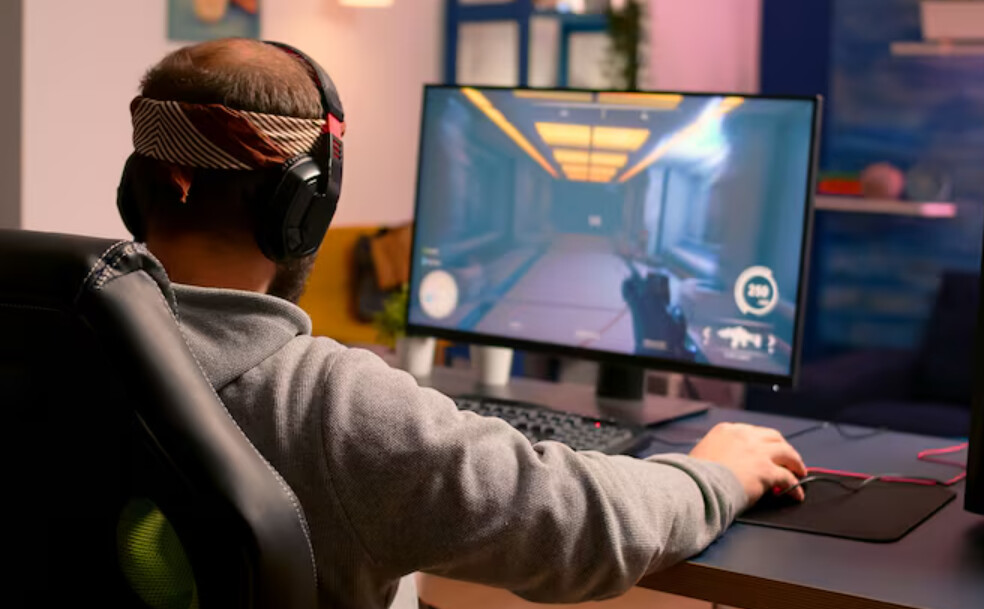
Have you ever opened an online game intending to play for only a few minutes, then noticed that far more time had passed than expected?
That experience is not unusual. Modern online gaming is designed around quick access, clear controls, constant feedback, and short bursts of activity that make starting simple and staying engaged surprisingly easy.
Understanding those design choices can help adult players make more deliberate decisions about how and when they play.
Starting Usually Takes Very Little Effort
Many online games remove the small obstacles that once made gaming slower to begin. Instead of installing complicated software or learning dozens of controls, players can often reach the main game screen within a few steps.
Simple Interfaces Reduce the Learning Curve
A clear interface tells players what to do without requiring a long explanation. Buttons are usually visible, menus are grouped logically, and basic actions can often be understood through familiar symbols.
Slot-style games are a good example. A player generally sees reels, a stake control, and a spin button. The rules behind payouts can be more detailed, but the basic action is immediately understandable.
That simplicity matters because people are more likely to continue exploring something when they do not feel confused during the first few minutes.
Mobile Access Removes Another Barrier
Smartphones have also changed when gaming can happen. A person no longer needs to sit at a dedicated computer or console. Games may be accessible during a commute, a break, or a quiet evening at home.
That convenience can be useful, but it also makes boundaries more important. When entertainment is always within reach, players may need to decide in advance when they will stop rather than waiting until they feel finished.
Games Give Players Constant Feedback
Once play begins, online games rarely leave the screen feeling inactive. Movement, sound, animations, progress indicators, and changing outcomes continuously give the player something to respond to.
This feedback helps explain why a simple activity can hold attention longer than expected.
Small Events Keep the Experience Moving
A game does not need a major event every minute to feel active. Small visual changes can be enough.
A spinning reel stops. A progress meter moves. A new round becomes available. A sound confirms an action. Each event creates a short cycle of anticipation and response.
Someone comparing different slot-style interfaces might encounter names such as slot zeus while browsing gaming options. The useful question is not whether a particular name sounds exciting, but what features are actually available, what the rules say, and how quickly repeated rounds can be started.
Players should check game information carefully rather than assuming that similar-looking titles work in the same way.
Random Outcomes Can Encourage “One More Round”
Many casino-style games use random results. Random means that previous outcomes do not determine what must happen next.
For example, losing several rounds does not make a win “due.” Likewise, a recent win does not prove another one is coming.
This is particularly important because repeated rounds are easy to start. The thought of trying “just once more” can turn into many additional rounds unless a player has already decided on a stopping point.
Convenience Can Blur the Sense of Time
Online gaming often removes natural pauses. There may be no journey to a venue, no physical chips to handle, and no need to reset equipment between rounds.
Without those interruptions, time can feel different.
Fast Play Makes Limits More Useful
A practical approach is to decide on both a time limit and a spending limit before opening a game. Those limits should be based on the money and time the player is comfortable using purely for entertainment.
The same principle applies when encountering platforms or gaming names such as ZEUS222. Rather than making assumptions from branding alone, adults should check the available terms, game rules, account controls, and any responsible-play options provided before deciding how to use a service.
A simple personal checklist can help:
- Decide how long the session will last.
- Set a spending amount before playing.
- Avoid increasing the budget after losses.
- Take breaks during longer sessions.
- Stop when the planned limit is reached.
These checks are simple, but they create friction in an environment designed to make continued play easy.
Social Features Add Another Reason to Return
Online gaming is not always a solitary activity. Leaderboards, multiplayer modes, shared events, chat systems, and community discussions can make games feel connected to a larger group.
Community Creates Ongoing Interest
People naturally return to activities where something appears to be happening. A changing ranking, a new event, or a conversation with other players can create a sense that the experience continues even when someone is not playing.
That does not make social gaming inherently problematic. It simply means players should separate social enjoyment from spending decisions.
Friends can share an activity without turning every session into a longer or more expensive one.
Make Convenience Work on Your Terms
Online gaming feels easy to start because many small design choices remove effort. Clear controls, mobile access, rapid feedback, repeated rounds, and social features all help entertainment begin quickly and continue smoothly.
For adults, the useful response is not to avoid enjoyment but to add a few boundaries of their own. Gambling should be treated as paid entertainment, not as a source of income. Set time and spending limits before playing, understand that random outcomes cannot be controlled, and never chase losses.
When starting is effortless, knowing when to stop becomes the more valuable skill.