




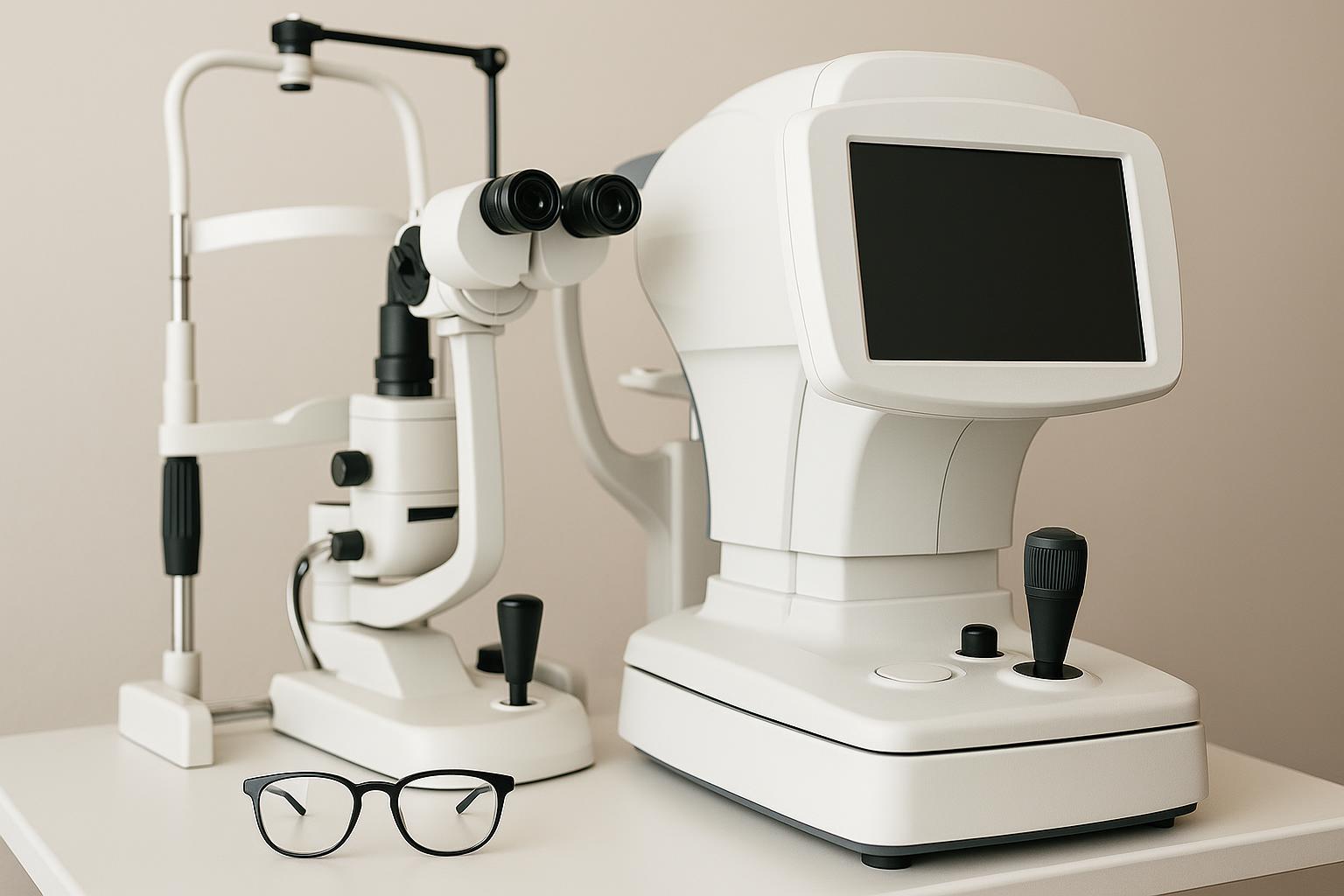
A modern eye practice stands apart because it treats a visit as more than a checkpoint. It treats the visit as a decision opportunity. Dr. Pham shares a thought that for patients who search for an eye doctor in Warrenton, they can see for both common and complex concerns; that distinction matters. Modern care often looks beyond the immediate complaint and asks how the patient’s visual demands, ocular surface, lens status, and long-term goals should shape the plan.
In recent article, newer refractive centers have been described as patient-centered facilities built around advanced diagnostics and customized options designed to improve both outcomes and the overall experience.[1]
Dr. Thu T. Pham expresses the same idea in practical terms: “At NOVA Eye Experts, comprehensive ophthalmology and modern vision correction planning work best when the evaluation is thorough, the explanation is clear, and the treatment path reflects the patient’s real life.” That emphasis on real life is one of the defining ways modern care differs from routine care.
Why today’s leading vision practices focus on lifestyle as much as eyesight
Lifestyle matters because two people with the same measurements on paper may need very different recommendations. Someone who works long hours at a screen, drives at night, notices dry environments, or wants less dependence on glasses may evaluate tradeoffs differently from someone with fewer visual demands. Modern refractive and cataract planning increasingly takes those real-world priorities seriously.
In 2025, refractive specialists discussing newer treatment strategies emphasized that quality of vision, higher-order optical issues, and patient-specific goals now play a larger role in decision-making than they once did.
This is not just a refractive issue. Lifestyle also matters in glaucoma, dry eye, and cataract care. A patient’s ability to manage drops, tolerate fluctuating vision, or commit to follow-up can shape the best strategy. The modern difference is that these practical realities are treated as medically relevant rather than peripheral. That makes the plan feel more personal, but it also makes it more realistic.
Leading practices focus on lifestyle because eyesight is lived, not merely measured. The most accurate prescription in the world still has to work in a person’s actual day.
How research-driven care can bring more precision to every recommendation
Research-driven care matters because it sharpens clinical judgment. It helps doctors choose diagnostics and treatment pathways based on current evidence rather than habit.
A review on recent refractive surgery advances describes a field shaped by continuous technological progress aimed at improving patient satisfaction, visual performance, and safety. That broader research momentum influences how practitioners think about everything from candidacy to customization.
The same is true in ocular-surface care. In 2024, experts described targeted dry eye interventions based on findings from tear osmolarity, inflammatory testing, staining, and meibography. That is research-driven care in action. It replaces vague symptom management with more precise phenotyping and better-targeted treatment.
Research-driven care also supports better lens planning. A recent Q&A on light-adjustable lens technology emphasized the importance of optimizing the ocular surface before and after surgery to improve measurement accuracy and postoperative refractive outcomes. This is another example of how modern care uses evidence to refine both the plan and the result.
What happens when advanced technology meets deeper refractive expertise
Advanced technology matters more when the clinician knows how to interpret it. A machine can measure the cornea, but expertise determines what those measurements mean for a real patient. A platform can support SMILE or another refractive option, but expertise decides whether the eye is actually a good match. This is why a modern practice stands apart not only by having newer devices, but by pairing them with deeper refractive judgment.
The same principle appears in other areas of ophthalmology. A 2025 surgeon perspective on glaucoma care described a move toward earlier, more interventional, and more personalized treatment, with the focus shifting from reactive care to deciding what is best for each patient. That is the same logic that modern vision correction applies more broadly. The advantage is not just more tools. The advantage is better use of them.
When advanced technology meets deeper expertise, the patient usually feels it as clarity. The explanation gets better. The recommendation feels more specific. The next step makes more sense. That is what stands apart.
Why do patients feel the difference when judgment and innovation work together
Patients feel the difference because the visit stops sounding generic. Instead of being told only what can be done, they hear why one option fits better than another. They hear why dry eye treatment may need to happen before any refractive discussion. They hear why a certain lens strategy may suit future needs better than a quick fix. They hear why waiting is sometimes the right recommendation. These are judgment-rich conversations, and they tend to build confidence.
Innovation impresses people. Judgment reassures them. A modern practice stands apart because it brings both together. That is why a modern eye visit often feels different from a routine one. The patient is not simply processed through a system. The patient is placed into a more thoughtful plan.