




Introduction
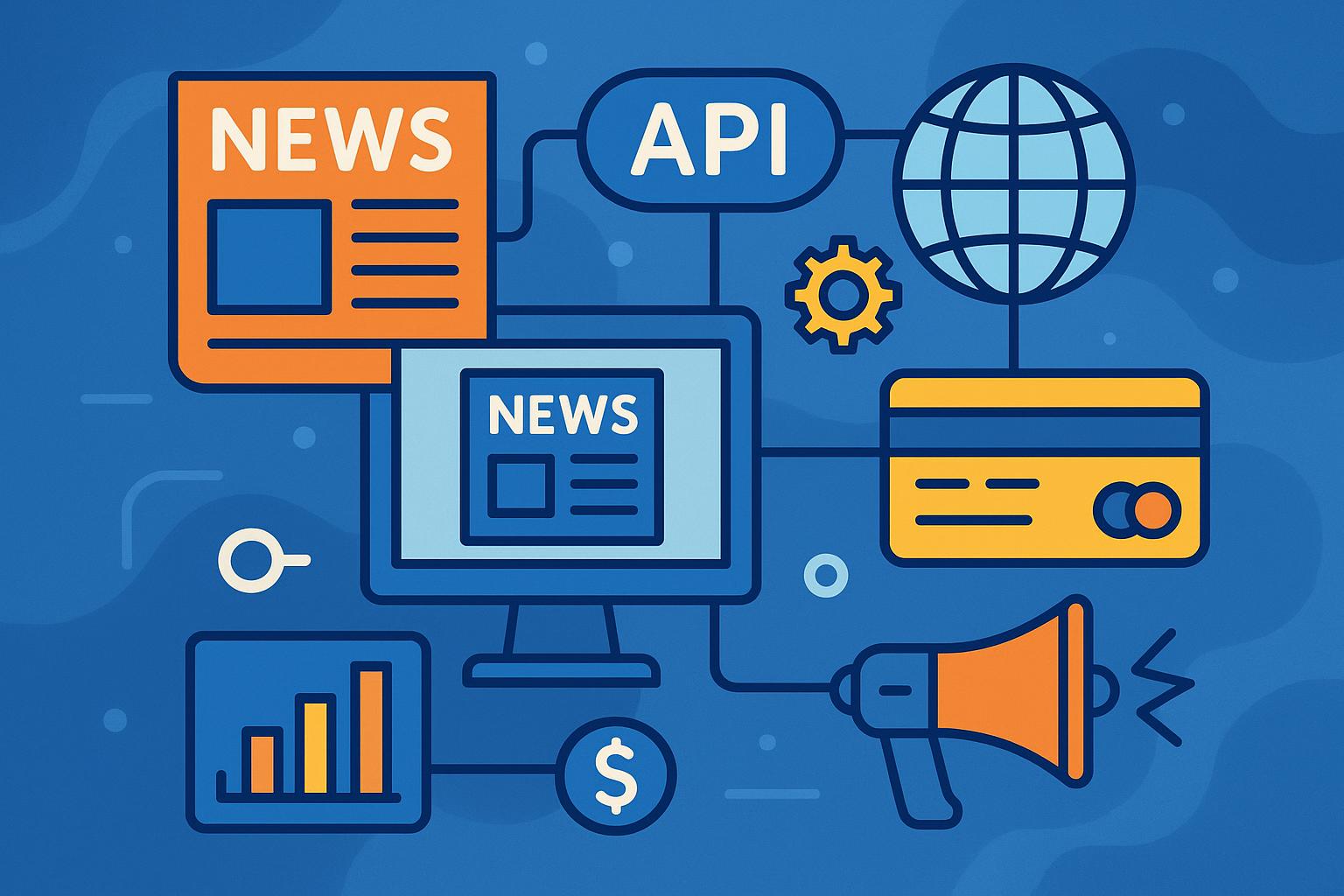
Every time you open a market-tracking app, a news aggregator, or a brand’s content dashboard, you’re seeing the output of something most people never think about: a news API quietly moving data behind the scenes.
The headline on the screen is the visible tip. Underneath it, thousands of articles are being ingested, categorized, translated, and delivered in milliseconds so that a product can show you the right story at the right moment. That invisible pipeline has become one of the most valuable pieces of infrastructure in the modern software stack — and it’s reshaping how media companies, fintech platforms, and marketing teams operate.
This article explains what news APIs are, why so many industries now depend on them, and what separates a good one from a great one.
What Is a News API?
A news API is a service that gives software programmatic access to articles, headlines, and their metadata — source, author, publication date, category, language, country, and more.
Instead of manually browsing websites, scraping pages, or curating content by hand, a developer sends a request and receives structured data back in a clean, predictable format like JSON. That data can then be filtered, sorted, searched, and displayed however the product needs it.
In practice, a news API turns the entire open web of journalism into a queryable database. You can ask questions like:
- What are the top business headlines in Germany right now?
- Give me every article mentioning a specific company in the last 24 hours.
- Show me breaking news across 50 countries, in 12 languages, sorted by recency.
The best news APIs answer those questions instantly and reliably — which is exactly why they’ve become a default building block for so many products.
Why So Many Industries Now Depend on News APIs
News is no longer just something readers consume. It’s a data source that powers decisions, products, and revenue across several industries.
Media & Entertainment
Aggregators, publishers, and content platforms use news APIs to fill feeds, power topic pages, and surface trending stories without hiring an army of editors. A single integration can cover hundreds of sources and dozens of languages, letting a small team deliver the breadth of a global newsroom.
Fintech & Trading
In financial markets, news is a signal. Traders and quantitative funds use real-time news data to detect events — earnings surprises, regulatory changes, geopolitical shocks — the moment they break. Sentiment analysis and event-driven strategies both depend on fast, structured, comprehensive news feeds.
Marketing & Advertising
Brands use news APIs to monitor mentions, track competitor activity, spot emerging trends, and feed content calendars. Instead of waiting for a weekly report, marketing teams can react to what’s happening in their industry in near real time and align campaigns with the conversation.
Technology & Product Teams
For developers, a news API is a shortcut to a feature that would otherwise take months to build: global content coverage, search, categorization, and localization. It’s the difference between shipping a product this quarter and building a data pipeline from scratch.
What Separates a Good News API From a Great One
Not all news APIs are created equal. Once you’re past the marketing pages, these are the factors that actually matter in production.
- Global coverage. Source count is table stakes. What matters is genuine geographic and linguistic reach — can it give you reliable coverage across dozens or hundreds of countries?
- Freshness and speed. In breaking-news scenarios and financial markets, a five-minute delay can be the difference between insight and irrelevance. Look for real-time indexing.
- Language and region support. A product serving a global audience needs articles in the audience’s language, not just translated headlines. Multilingual coverage is a major differentiator.
- Historical depth. Trend analysis, backtesting, and research require more than today’s headlines. A long retention window lets you query years of data, not just the last week.
- Clean, structured data. Consistent fields, reliable categorization, and predictable schemas save enormous engineering effort downstream.
- Uptime and support. An API is infrastructure. Downtime breaks your product, so reliability and responsive support are non-negotiable.
Common Use Cases in the Wild
The same underlying data powers very different products:
- Market intelligence dashboards that combine pricing data with news sentiment.
- AI and LLM applications that need fresh, reliable sources to ground their answers — news APIs have become a go-to retrieval layer for keeping AI outputs current and factual.
- Reputation and brand monitoring tools that alert teams the moment their name appears in the press.
- Content discovery apps that personalize reading feeds by topic, region, and language.
What these use cases share is a need for breadth, speed, and structure — the three things that make news API selection a strategic decision rather than a line item.
How to Evaluate One for Your Project
If you’re building anything that depends on news, the practical path looks like this:
- Define your coverage needs. Which countries, languages, and topics actually matter to your users?
- Test freshness. Pull breaking stories and compare timestamps against the source.
- Check the data model. Make sure the fields, categories, and filters map cleanly to your product.
- Confirm retention. If you’ll ever need historical analysis, don’t lock yourself into a short window.
- Start with a real integration. A free tier or trial is the fastest way to see how the API behaves under your own use case.
For teams that need broad global coverage without building a pipeline from scratch, a purpose-built provider such as AllNewsAPI covers news from 244 countries and offers the kind of retention, language support, and structured data that make integration straightforward — a useful benchmark when comparing options.
The Bottom Line
News APIs are the invisible engine behind some of the most-used products in media, finance, marketing, and technology. They turn the world’s journalism into structured, searchable, real-time data — and they let small teams deliver the kind of global coverage that used to require a newsroom.
As AI applications demand fresher data and markets move faster, that infrastructure will only become more central. The teams that treat news data as a core building block — rather than an afterthought — will be the ones shipping the products everyone else relies on.
The headlines get the attention. The API does the work.