




Jammie Avila is a financial advisor, entrepreneur, and retirement planning specialist who has spent more than 15 years helping Las Vegas and Henderson, Nevada, clients prepare for their financial futures. As founder, owner, and partner of Cornerstone Wealth Management, Jammie Avila builds strategies focused on retirement readiness, wealth preservation, income sustainability, and legacy planning, often collaborating with legal, tax, and insurance professionals to meet client needs. Beyond his advisory work, he hosts the Cornerstone Retirement Blueprint Podcast, created and co-hosted the longest-running local financial news show on AM radio, and authored the book Designed to Thrive: The Five Pillars of Retirement Planning. He also serves on the board of directors of HELP of Southern Nevada. That same attention to how systems perform under real conditions carries over into everyday questions, including why ceramic grills cook differently from regular gas grills.
Many people expect a familiar grilling temperature to work the same way on any outdoor cooker. The same chicken, steak, or vegetables may brown differently or pick up more smoke on a ceramic grill, while the grill itself may retain heat longer than a gas grill. The difference comes from how each grill creates, stores, moves, and controls heat, not from the recipe alone.
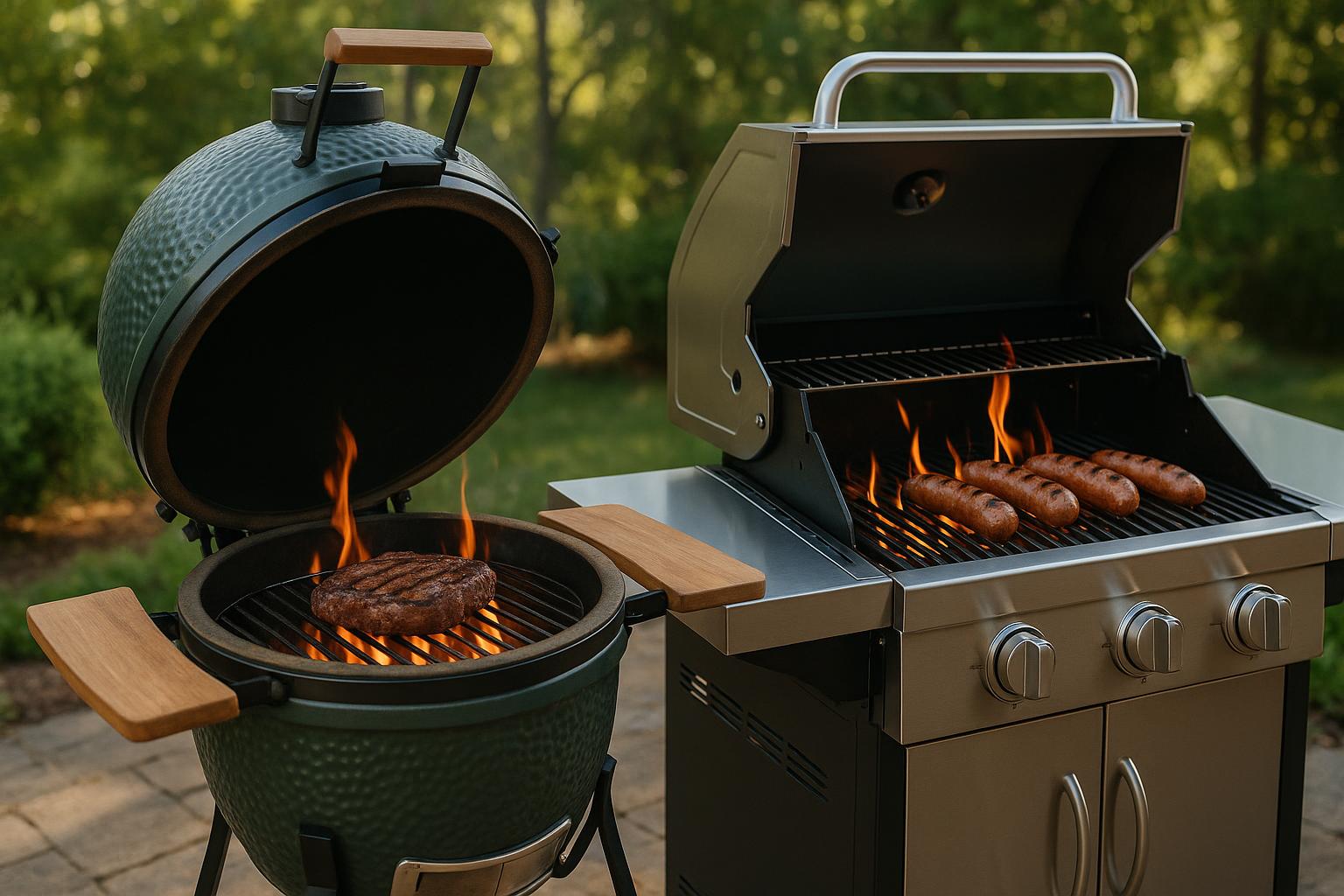
A ceramic charcoal grill, often called a kamado-style grill, uses a ceramic body, firebox, natural charcoal, live fire, and vents that control airflow. A standard gas grill uses gas burners under the cooking grate.
Direct heat means food cooks over the heat source, while indirect heat means food cooks away from the main heat source. Both grill types can use those methods, but their heat systems are not the same.
Ceramic material helps the grill hold and distribute heat after the fire and cooking chamber warm up. That heat retention helps the grill stay steady during longer cooks.
It also means a ceramic grill can be easier to heat than cool if the temperature rises too far. Vent changes affect the charcoal fire, but the grill may release stored heat gradually after the fire slows.
A gas grill setup centers on lighting burners, preheating the closed grill, and adjusting burner settings to the recipe.
In direct gas grilling, food cooks directly over the burner tube. For indirect gas grilling, the cook turns some burners on and leaves food away from the active heat source. The adjustment point is the burner setting, not airflow through a charcoal fire.
Airflow matters in ceramic charcoal cooking because charcoal needs oxygen to burn. Opening vents lets more air reach the fire and can raise the cooking temperature, while closing vents limits oxygen, slows the coals, and lowers the temperature over time. Vents still need some opening because a charcoal fire can weaken or go out without enough air.
Lid use also warrants attention, as unnecessary opening can disrupt temperature control. During low-and-slow cooking, lifting the lid can disrupt the internal temperature of a ceramic grill.
Gas grilling also depends on keeping the lid closed for much of the cook, then briefly opening it to turn food or check doneness near the end. Frequent checking changes the heat environment, not just the cook’s routine.
Those traits make ceramic grills useful for low-and-slow cooking. Low-and-slow means cooking at a lower temperature for a longer time, such as smoking pork shoulder instead of searing a burger.
A ceramic smoking setup can use indirect heat and a low smoking range of about 225 to 250 degrees Fahrenheit. A thermometer matters because timing alone can lead to inconsistent results from one cut to another.
Smoke adds another difference. Smoke comes from burning material, and grilling smoke can affect flavor, aroma, browning, and surface texture.
In a ceramic charcoal grill, charcoal, wood type, wood amount, airflow, and fire temperature all shape the result. A gas-grill direct-heat setup does not create that same charcoal-and-wood smoke environment by default.
These differences also change how people judge progress. Surface color can develop before the inside reaches the right temperature, especially when heat or smoke affects the outside first.
A food thermometer gives a safer check than color, timing, or outside appearance alone. Once people understand how each grill holds heat, feeds the fire, and exposes food to smoke, they can make better cooking adjustments without treating every grill like the same machine.
About Jammie Avila
Jammie Avila is a Las Vegas-based financial advisor, entrepreneur, and retirement planning specialist with more than 15 years of experience. He is the founder, owner, and partner of Cornerstone Wealth Management, where he helps individuals, families, and business owners build retirement and wealth strategies. Avila hosts the Cornerstone Retirement Blueprint Podcast, authored Designed to Thrive: The Five Pillars of Retirement Planning, and serves on the board of directors of HELP of Southern Nevada.