




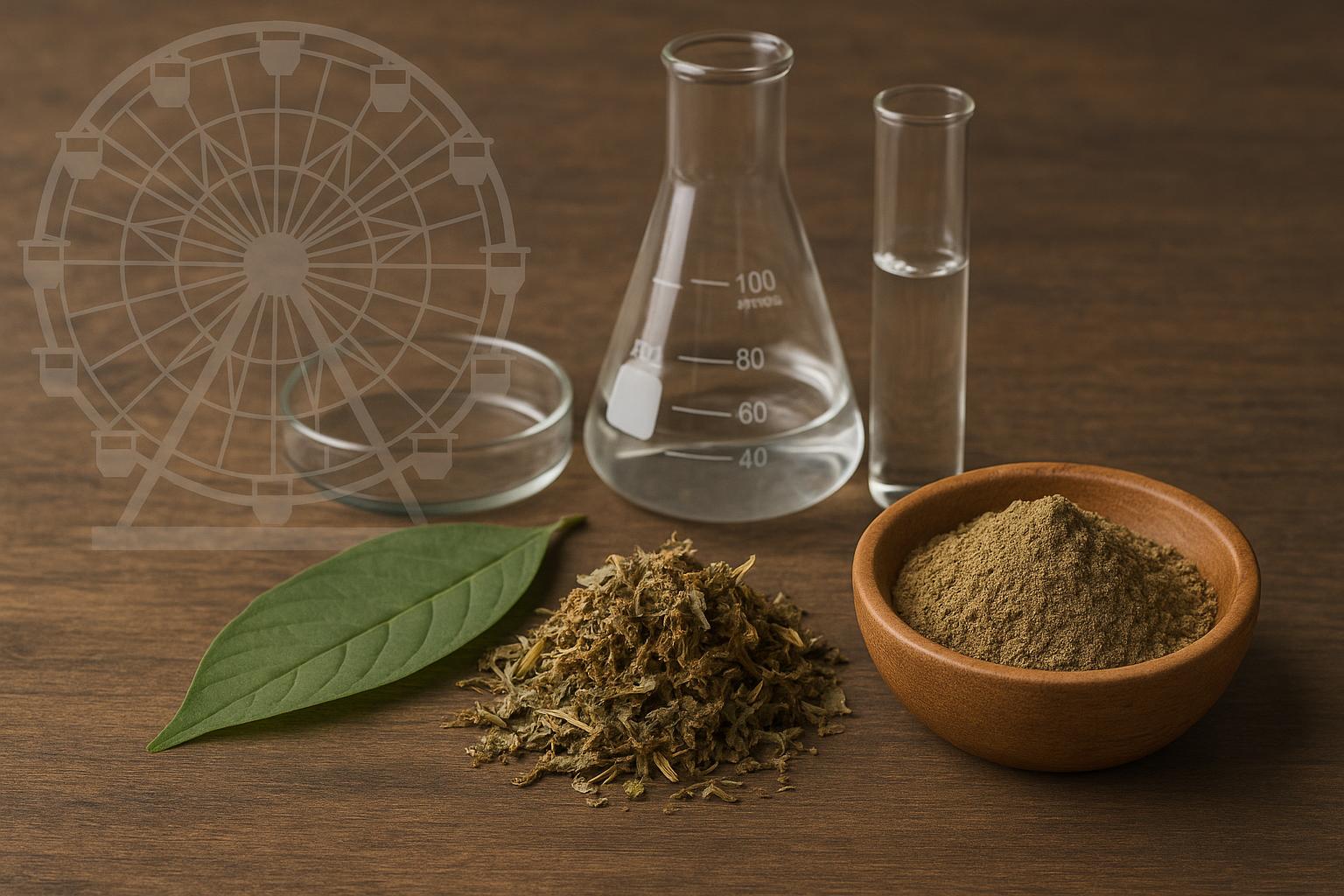
There’s a moment that happens with most wellness products—the moment you flip the package over, squint at the ingredient list, and realize you have no idea what half of it means. I’ve been there more times than I can count. And honestly, it’s part of what drew me down the kanna rabbit hole in the first place.
Kanna, for anyone who’s new to it, is the common name for Sceletium tortuosum, a succulent plant native to South Africa. Indigenous communities there have used it for centuries—chewing it, brewing it, carrying it on long journeys—primarily for its ability to ease stress, lift the mood, and make social situations feel a little more effortless. It’s not a new discovery by any stretch. What’s new is the way modern wellness brands are working with it, and how much variation there is in quality from one product to the next.
That’s what I want to talk about here. Specifically, what it actually takes to bring a high-quality kanna product to market, and why the sourcing and testing decisions a brand makes matter a lot more than most people realize.
Why kanna quality is harder to pin down than you’d think
Here’s the thing about botanicals: the same plant, grown in different conditions, processed in different ways, can produce wildly different results. Soil quality, harvest timing, extraction method, storage—all of it influences the final product. With kanna, this matters especially because the plant’s active compounds (most notably the alkaloids responsible for its mood-lifting effects) are sensitive to how they’re handled post-harvest. This is why I pay close attention to whether a brand is being transparent about where their kanna comes from and how it’s processed. Vague claims like “natural” or “plant-based” are easy to make. Actually backing them up is a different story.
The sourcing piece: it starts with the plant itself
Good kanna starts in the ground—literally. Sceletium tortuosum grows best in the arid, rocky soils of southern Africa, where it’s been cultivated and wild-harvested for generations. Responsible sourcing means working with suppliers who understand the plant’s biology and harvest it at the right stage of maturity, when the alkaloid content is at its peak.
It also means thinking about sustainability. Kanna has seen a surge in global demand over the past few years, which puts pressure on wild populations. Brands that prioritize cultivated sources—rather than stripping wild plants—are doing something that matters, both for the integrity of the supply chain and for the long-term health of the plant’s native ecosystems.
When I started looking more closely at Ferris Wheel, what stood out to me was the emphasis on clean, plant-powered formulation. Their products are made with 100% natural ingredients, which is a commitment that only holds up if the supply chain behind it is equally clean. You can’t control what’s in the finished product without controlling what goes into it upstream.
Third-party testing: the part that actually proves anything
Sourcing well is step one. But the only way to know what’s actually in a finished kanna product—and what isn’t—is independent, third-party lab testing. This is non-negotiable for me when I evaluate any supplement or botanical.
Third-party testing serves a few key functions. It confirms that the active compounds are present at the levels the brand claims. It screens for contaminants like heavy metals, pesticides, and microbial growth. And because the testing is done by an independent lab with no stake in the outcome, the results are credible in a way that in-house quality checks simply aren’t.
Ferris Wheel’s products are third-party lab tested—something they’re upfront about. In a category where corner-cutting is easy and consumers often can’t tell the difference until something goes wrong, that transparency is worth noting. It’s the kind of standard that weeds out brands that are more interested in selling a vibe than delivering a consistent, safe product.
What “clean” actually looks like in the final product
I’ve tried kanna products that hit hard and fast but left me feeling flat afterward. Others barely did anything at all. The difference almost always comes back to formulation—how much kanna is actually in there, what form it’s in, and what else is alongside it.
Ferris Wheel’s lineup includes both tablets and gummies, and what users consistently report is a smooth, steady experience. Elevated mood, easier conversation, a kind of clear-headed energy that doesn’t tip into jitteriness or end in a crash. That’s not a coincidence—it’s what good formulation, built on quality sourcing, actually produces.
The effects typically kick in within 15 to 45 minutes and last around two to four hours. No hangover the next morning. No foggy comedown. Just a clean return to baseline. For anyone who’s experimented with other social or mood-enhancing products and dealt with rough aftereffects, that kind of landing matters.
Why this all adds up to something worth caring about
I think a lot of people approach supplements and botanicals with a kind of passive trust—they assume that if something is on the shelf (or on a website), it’s been properly vetted. In reality, the supplement industry has a lot of gaps. Brands can make broad claims without much to back them up. That’s exactly why sourcing practices and independent testing aren’t just nice-to-haves; they’re the foundation of whether a product is worth your time and your money.
Kanna is genuinely interesting. Its history is long, its effects are real, and the modern formulations being built around it are getting more sophisticated. But the plant’s potential only translates into a good experience when the brand behind it has done the work—growing it right, testing it rigorously, and being honest about what’s in the bottle.
That’s the standard I hold any kanna product to. And from what I’ve seen, it’s the standard Ferris Wheel is working to meet.
A few quick questions I get asked about kanna quality
Is kanna legal?
Yes—kanna (Sceletium tortuosum) is not a controlled substance under US federal law. State and local laws can vary, so it’s worth checking for your specific location.
How do I know if a kanna product is high quality?
Look for brands that use third-party lab testing, list their ingredients clearly, and source from suppliers with transparent practices. Vague labeling and no testing documentation are red flags.
Does high-quality kanna feel different from low-quality kanna?
Yes, noticeably. Well-sourced, properly formulated kanna tends to produce a smoother, more consistent experience with a clean comedown. Poorly made products can be underwhelming or unpredictable.
Is kanna habit-forming?
Kanna is considered non-habit forming. As with any botanical, it’s best to stick to recommended serving sizes and use it mindfully rather than daily.