




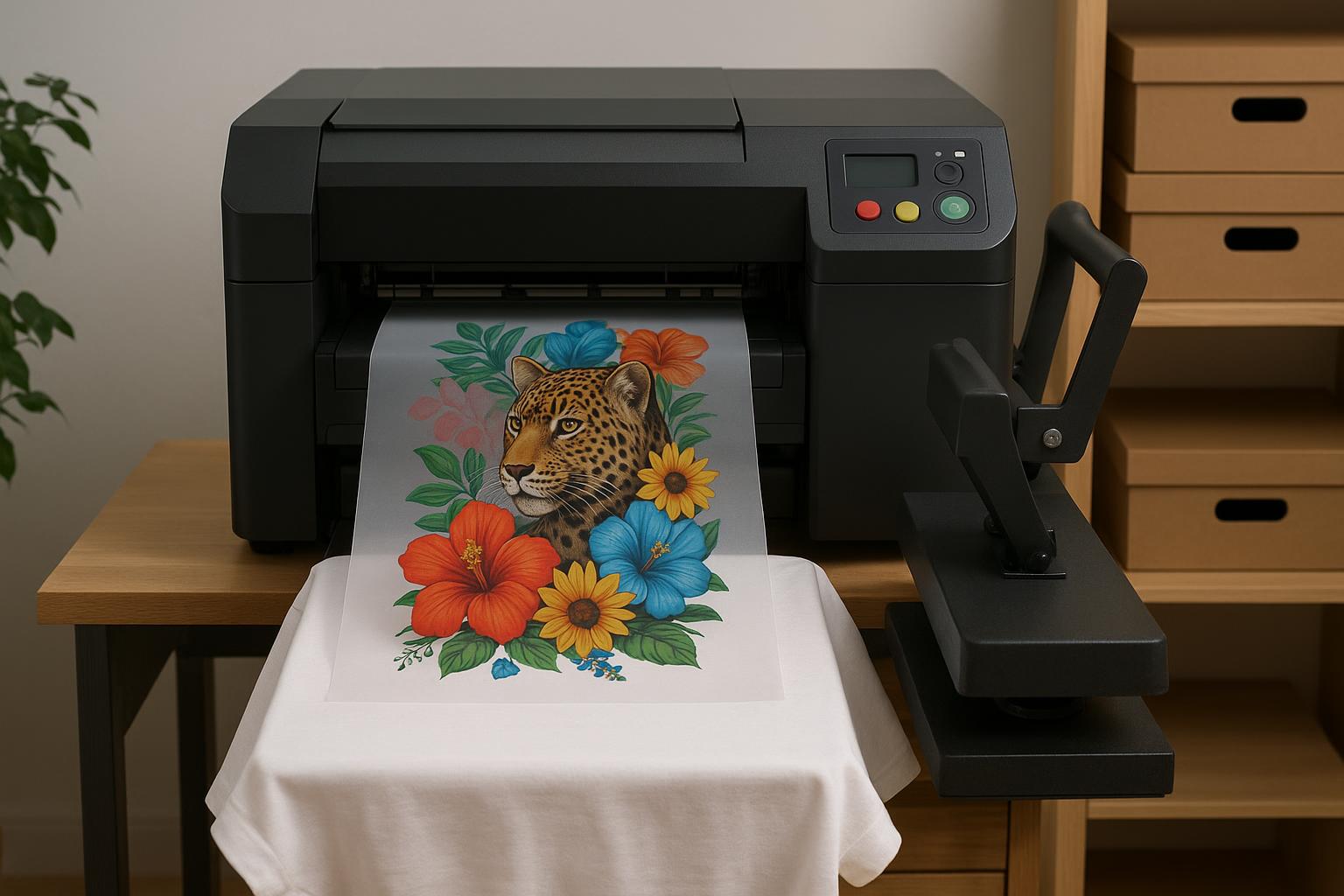
Direct-to-film (DTF) printing has become an attractive option for small businesses that want to produce customized apparel without investing in a large industrial production line. From T-shirts and hoodies to tote bags and promotional garments, DTF technology can support a wide range of products while offering flexibility for short and medium-sized orders. However, choosing the right printer requires more than simply comparing the advertised print speed or purchase price.
Consider Your Expected Production Volume
The first question is how much you actually plan to print. A small business producing occasional custom shirts has very different requirements from a company handling daily orders from online customers.
For low-to-medium production, a compact DTF printer can often provide a practical balance between productivity and operating costs. Smaller equipment also takes up less workspace, which is important for home-based businesses, studios, and small print shops. Before purchasing, estimate your expected daily or weekly output and choose a printer that can comfortably handle that workload without paying for capacity you will rarely use.
Evaluate Printer Size and Workspace Requirements
Available workspace is another important consideration. DTF printing involves more than the printer itself. You may also need space for film handling, powder application, curing, ink storage, and finished transfers.
Desktop-sized models can be especially useful for businesses with limited floor space. For example, the LINKO L-A3 DTF Printer is designed around a compact A3 format, making it suitable for businesses that want DTF capabilities without dedicating a large production area to printing equipment.
A smaller footprint can also make workflow organization easier. Before buying, measure your available workspace and consider ventilation, electrical requirements, access for maintenance, and room for handling printed materials.
Check the Printing Width
Printing width directly affects the types of designs you can produce. An A3-class printer can be suitable for many common apparel applications, including T-shirts, sweatshirts, bags, and other promotional products.
If your business mainly produces standard garment graphics, an A3 printer may provide sufficient flexibility. However, businesses planning to produce larger graphics or handle high-volume commercial orders may need a wider-format solution.
Think about the products you sell today, but also consider where you expect the business to be in the next one to three years. Buying equipment that matches your actual business model is usually more practical than choosing the largest machine available.
Consider Print Quality and Color Performance
Customers expect custom apparel to look professional, so print quality should be a major part of the purchasing decision. Look at factors such as color reproduction, resolution, white-ink performance, image detail, and consistency between print jobs.
White ink is particularly important in DTF printing because it provides the foundation for designs printed on dark or colored garments. A reliable ink circulation system and consistent white-ink performance can help reduce problems such as uneven coverage and clogged printheads.
It is also useful to test detailed graphics, gradients, small text, and colorful artwork before making a final decision.
Don’t Ignore Software and Workflow
A DTF printer is only one part of the production process. RIP software, color management, film, powder, ink, and curing equipment all influence the final result.
Small businesses should consider how easy the complete workflow is to learn and operate. If employees need extensive training to prepare files or manage print settings, the learning curve can increase production costs.
It is worth checking whether the printer supports commonly used file formats and whether the manufacturer provides appropriate software, setup instructions, and technical documentation.
Look at Maintenance Requirements
Maintenance is one of the most overlooked factors when purchasing a DTF printer. Even a relatively compact machine requires regular attention, particularly because DTF printing relies heavily on white ink.
Ask how often the printhead needs cleaning, how the ink system is maintained, what consumables are required, and how easy it is to access components that need routine servicing.
A printer that is easy to maintain can help reduce downtime and make it easier for a small business owner to keep production running consistently.
Compare Total Operating Costs
The purchase price is only part of the investment. Small businesses should also estimate ongoing costs for ink, DTF film, powder, maintenance supplies, electricity, replacement components, and software.
A machine with a lower initial price may not necessarily be cheaper to operate over several years. Instead of comparing equipment based solely on upfront cost, consider the estimated cost per transfer and how that cost fits into your pricing strategy.
Choose a Manufacturer That Offers Support
Technical support can be particularly valuable for small businesses that do not have dedicated equipment technicians. Before purchasing, investigate the manufacturer’s experience, documentation, warranty terms, spare-parts availability, and customer support options.
It is also useful to review the manufacturer’s complete product range to understand whether it offers solutions that can grow with your business. DTF LINKO provides different DTF printing solutions for businesses with varying production requirements, allowing buyers to compare equipment based on their specific workflow and application.
Final Thoughts
Choosing a DTF printer for a small business should be based on more than print speed or purchase price. Production volume, printer size, printing width, image quality, maintenance, software compatibility, operating costs, and after-sales support all deserve careful consideration.
For a business starting with customized apparel or operating within a limited workspace, a compact DTF printer can provide an accessible way to enter the market. The key is to select equipment that matches current production needs while leaving enough flexibility for future growth. By evaluating the complete printing workflow rather than focusing on a single specification, small businesses can make a more informed investment and build a reliable foundation for custom printing.