




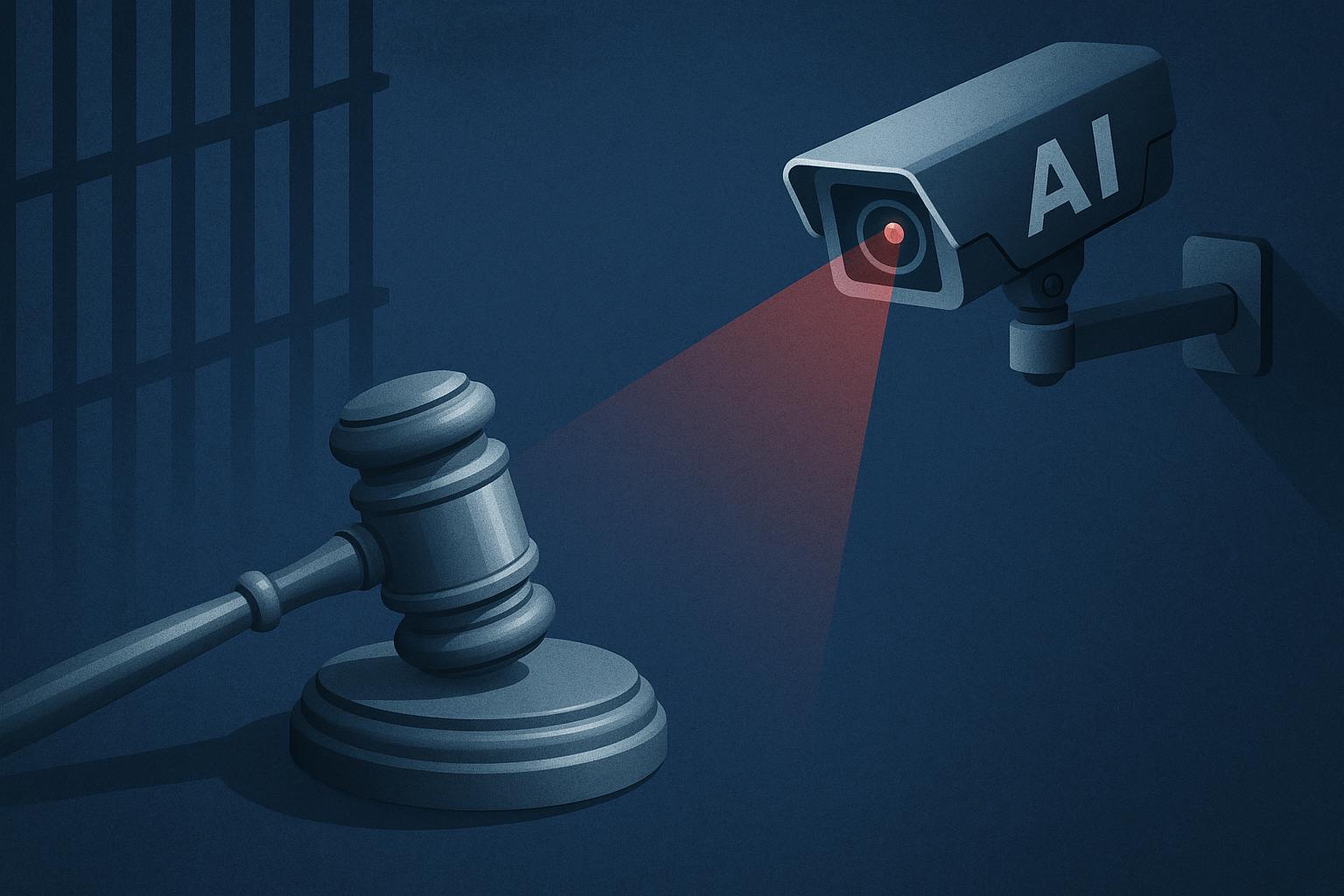
You might not know it, but law enforcement agencies are already using artificial intelligence each and every day. Police departments across the country are taking full advantage of AI-powered tools that identify suspects and analyze crime patterns, so they can respond quickly to potential threats.
There is a belief that these technologies make the country safer by identifying criminals and alerting police to their whereabouts. However, as AI becomes more common in everyday police work, concerns are growing about how these tools impact civil liberties.
While traditional policework relies heavily on human judgment and observation, AI systems make recommendations and decisions based on data and probabilities. The technology uses this data to influence who is stopped or arrested, and important questions about fairness and accountability arise as a result.
As the use of algorithmic policing expands, it’s important to understand its impact on individual rights. Here’s a rundown of how AI is changing law enforcement across the country.
The Most Common AI Tools Used in Policing Today
Many AI tools work quietly behind the scenes. One of the most widely discussed technologies is facial recognition software, which compares images from surveillance cameras or photos to large databases to identify potential suspects. While supporters believe it is highly accurate, the technology still relies on probabilities and, therefore, will never be right 100% of the time.
Another tool is predictive policing software. These systems look at past crime data to predict where future crimes could occur and who might be involved. The police can then use this information to increase patrols in certain areas or keep an eye on specific individuals, potentially stopping a crime from occurring in the first place.
There are also AI-powered license plate readers that track vehicle movements. This technology can create detailed records of these vehicles that can be searched and analyzed quickly to see who was nearby when a crime was committed.
Together, these tools help law enforcement process massive amounts of information. However, they can also strongly influence decisions about suspicion and arrest, even when the data is incomplete or misleading.
Where AI Policing Falls Short
A significant issue with AI systems is that they rely on data instead of human expertise. They only reflect the data they are trained on, so if past data contains bias or errors, the technology will repeat and even amplify those problems.
Using biased or faulty data can lead to certain communities being flagged more often, not because of higher wrongdoing, but because of historical policing patterns.
Issues can also arise if facial recognition software, for instance, is mostly trained using people from one race, gender, or age bracket. Since the technology will have less data from other groups, it could struggle to identify the right person.
A false match in facial recognition or a flawed prediction can result in someone being questioned or arrested without solid evidence. Unlike a human officer, an algorithm can’t explain its reasoning, making it difficult for the accused to understand why they were targeted or how to challenge the decision.
Mistakes are hard to trace, so the risk is that technology begins to drive outcomes without proper oversight, putting civil liberties at risk in the process.
There’s also the issue of surveillance networks tracking everyday citizens who have done nothing wrong. These people could have their movements recorded or their data analyzed without their knowledge, even if they aren’t accused of a crime.
As surveillance expands, the line between public safety and personal privacy becomes increasingly difficult to define, and this issue will require more attention moving forward.
Technology Needs Guardrails
AI has the potential to support law enforcement in meaningful ways, but it should not operate without limits. Protections are necessary when technology influences decisions that affect personal freedom. Transparency and human oversight should remain part of the justice system so we don’t end up in a situation where technology makes all the decisions.
Bail will also become increasingly important because it could be the only way for citizens who are wrongly accused of a crime to secure their release and fight the charges against them. Learning how bail and the bail bonds process work is incredibly valuable as we transition toward a data-driven and technology-based law enforcement system.