




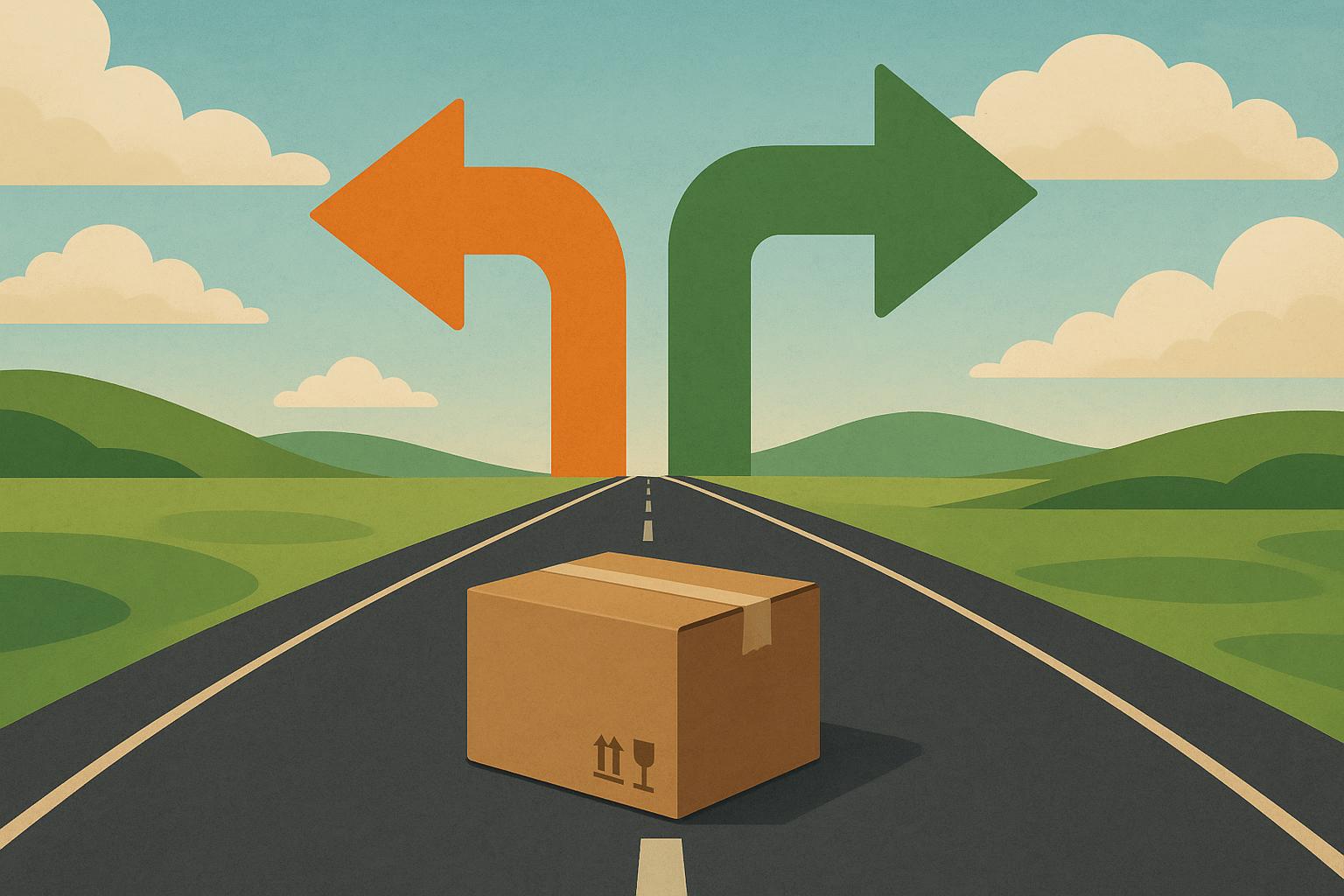
Freight decisions often get reduced to a single question; how fast does it need to get there?
That matters, obviously. But speed isn’t the only variable doing the work. Cost, flexibility, reliability, handling risk, route complexity and customer expectations all start moving once the transport mode changes. That’s why the conversation around air freight vs. road freight matters more than people sometimes assume. It’s not only a logistics choice. It’s a business decision with ripple effects.
Because once freight goes wrong, the problem rarely stays inside the transport line. It shows up in stock availability, customer trust, deadlines, margins and internal stress that no one had budgeted for.
Speed Has a Cost, But So Does Delay
Air freight usually enters the conversation when urgency is obvious.
A shipment’s time-sensitive. Stock’s needed quickly. A delay would cost more than the premium attached to moving it fast. In those cases, speed carries clear value. But businesses sometimes focus so heavily on transit time that they underthink the broader trade-off. Paying more for air can be sensible. Paying more for air out of panic, poor planning or preventable timing pressure is a different story.
Road freight, by contrast, often suits freight that doesn’t need the same urgency and can move more cost-effectively through established domestic routes. That can support stronger margins and more predictable operating costs, especially when delivery windows are realistic from the outset. Slower does not automatically mean worse. It often means the business planned well enough not to buy speed at the last minute.
The useful comparison, then, isn’t only “which one is faster?” It’s “what does the business actually need this shipment to achieve?”
Freight Choice Affects More Than the Transport Leg
This is where the decision becomes more strategic.
A shipment moved by air may arrive faster, though the higher cost changes the financial logic around it. A shipment moved by road may be more economical, though the timeline requires better forecasting and less tolerance for late changes. The mode you choose starts influencing inventory planning, fulfilment promises, customer communication and how much flexibility the business has if something shifts unexpectedly.
That matters because freight is rarely an isolated event. It sits inside a wider system. Warehousing, stock levels, production timing, retail commitments, project deadlines; all of it gets shaped by how goods move and when they arrive. A poor freight decision can create downstream pressure very quickly, even if the transport itself technically “worked”.
And once those pressures build, they usually cost more than the original freight line suggested.
Reliability and Handling Matter Too
Speed and price tend to dominate the conversation, though handling risk matters a lot as well.
Different goods tolerate movement differently. Some shipments are robust enough that the main concern is efficiency. Others are time-sensitive, fragile, high-value or less forgiving of extended transit and multiple touchpoints. In those cases, the best mode may depend as much on risk exposure and handling conditions as on headline transit time.
That’s where businesses need to think a little more carefully than the obvious comparison encourages. The cheapest option can become expensive if it increases damage risk, misses a commercial deadline or forces the team into reactive customer management afterwards. Likewise, the fastest option can be poor value if the urgency was avoidable and the business keeps paying premium rates to compensate for weak planning upstream.
Freight decisions are often judged by what happened on the road or in the air. They should usually be judged by what happened to the business because of that choice.
The Right Choice Depends on the Shape of the Pressure
There isn’t a universally correct answer between air and road freight.
There’s only the option that best suits the job, the timing, the budget and the commercial consequence of getting it wrong. Some shipments justify speed. Others justify patience and cost control. The stronger decision comes from understanding where the real pressure sits rather than defaulting to urgency or economy out of habit.
That’s why this shipping decision changes more than delivery speed. It affects cost structure, workflow stability, customer expectations and the amount of pressure your business ends up carrying if something slips.
The transport mode may look like a logistics detail from the outside. Inside the business, it often shapes much more than that.