




Airlines can’t keep pretending the climate crisis doesn’t exist. With aviation pumping out over 2% of global greenhouse gases and passenger numbers expected to double by 2040, the industry faces an uncomfortable truth: business as usual isn’t an option anymore.
But here’s where things get messy. Should aviation transform itself gradually through steady improvements, or does the urgency of climate change demand radical reinvention? The answer isn’t as straightforward as environmental activists or industry executives might have you believe.
The slow-and-steady crowd
For years, environmental concerns took a backseat to profits. Airlines replaced planes every couple of decades, manufacturers tweaked designs for marginal fuel savings, and everyone patted themselves on the back for modest efficiency gains.
Some argue this approach still makes sense. Aircraft development takes forever – we’re talking decades from drawing board to commercial service. Safety regulations demand exhaustive testing that can’t be rushed. Infrastructure investments run into billions of dollars that can’t simply be written off because activists are getting impatient.
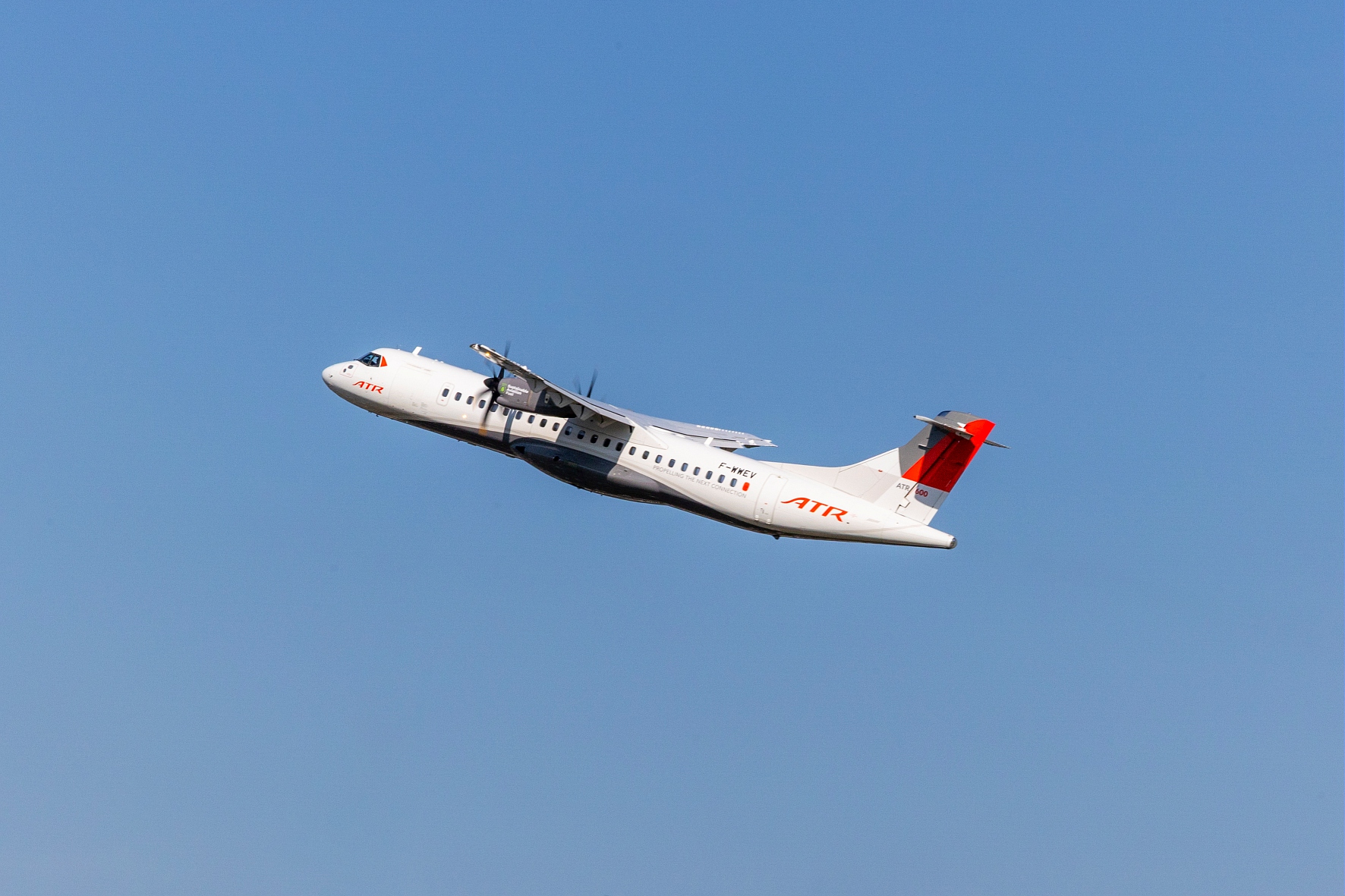
Take ATR’s approach in regional aviation. Their turboprop planes already burn 45% less fuel than similar-sized jets: not through revolutionary breakthroughs, but through decades of careful engineering. The recent PW127XT engine upgrade only improved fuel efficiency by 3%, but multiply that across thousands of aircraft and you’re talking real impact and you’ll find a new path toward sustainable aviation.
Even more impressive was ATR’s successful test flight using 100% sustainable aviation fuel. No fancy new engines, no radical redesigns, just existing technology proving it can handle revolutionary fuel. Sometimes evolution works.
The burn-it-all-down brigade
But critics have a point: incremental progress isn’t cutting it. Current emission trajectories miss 2050 climate targets by embarrassing margins. Maybe we need hydrogen engines, electric aircraft, or propulsion systems that haven’t been invented yet.
ATR’s EVO concept tries to split the difference. This next-generation turboprop promises significant reductions in fuel consumption through hybrid propulsion, improved aerodynamics, and full compatibility with SAF. It’s still recognizably a turboprop, but the technology package represents a genuine leap forward.
Revolutionary change advocates love pointing to other industries where rapid transformation succeeded. Solar panel costs crashed faster than anyone predicted. Electric cars went from curiosity to mainstream in barely a decade. Digital technologies routinely obliterate established players who move too slowly.
Why shouldn’t aviation follow the same pattern?
The complex reality
Here’s what both sides miss: aviation probably needs both approaches running simultaneously. Airlines can’t wait 20 years for hydrogen planes while emissions keep climbing. But they also can’t bet everything on today’s technology reaching impossible efficiency levels.
Smart companies like ATR seem to grasp this contradiction. They combine emissions reductions with the development of breakthrough technologies for future deployment, at the same time.
The International Civil Aviation Organization’s net-zero commitment by 2050 essentially forces this dual approach. Success probably means squeezing every possible improvement from current aircraft while simultaneously developing their replacements.
Whether that adds up to evolution or revolution might depend on your perspective. From inside the industry, each change feels incremental. From the outside, the cumulative transformation could look pretty revolutionary by 2050.