




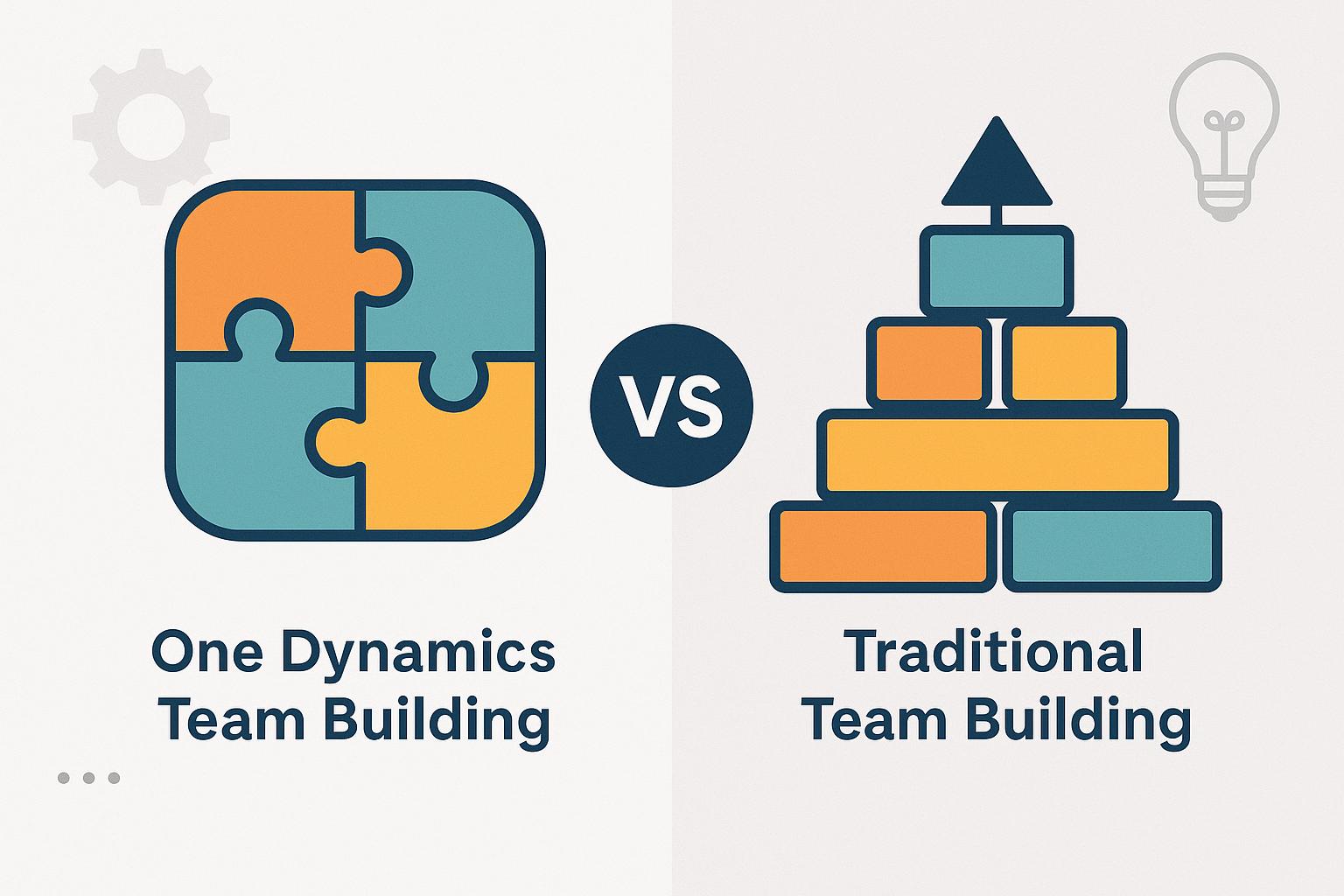
In the quest for more productive and cohesive teams, businesses often face the challenge of choosing between innovative methods and tried-and-true approaches. The debate between One Dynamics Team Building and traditional team building is particularly relevant. Each offers distinct advantages and unique methodologies that cater to different organizational needs. This article examines these two approaches, highlighting their methods, benefits, and outcomes, to determine which yields better results.
One Dynamics Team Building: A Modern Approach to Collaboration
One Dynamics Team Building leverages contemporary strategies that focus on adaptability and real-time collaboration. This approach often incorporates tools like Kanban Board Metrics to monitor team progress and ensure tasks are completed efficiently. An Agile Retrospective Facilitator plays a crucial role, guiding teams through reflection sessions to identify improvements, fostering a cycle of continuous improvement. The emphasis on dynamic interaction and feedback aligns with modern business needs, offering a flexible framework that can adjust to changing project landscapes. Furthermore, One Dynamics Team Building integrates a Risk Mitigation Framework, which helps teams anticipate and minimize potential hurdles. This proactive approach ensures that projects remain on track, reducing downtime and enhancing productivity. By focusing on adaptability and immediate feedback, One Dynamics Team Building prepares teams to handle complex challenges with agility and precision.
According to a recent Harvard Business Review report, organizations employing dynamic team-building strategies have seen a significant increase in employee engagement and satisfaction. Such outcomes are attributed to the method’s emphasis on real-time problem-solving and collaborative innovation.
Traditional Team Building: Foundations and Limitations
Traditional team building relies on established practices that have been used for decades, such as outdoor activities, trust exercises, and structured workshops. While these methods can effectively build camaraderie and improve communication, they often lack the agility and immediate applicability found in contemporary approaches. Traditional team building typically follows a more rigid structure, which may not always align with the fast-paced changes faced by modern organizations.
These methods often emphasize the importance of hierarchy and predefined roles, with a focus on long-term relationship building rather than immediate project outcomes. While effective in some settings, this approach can be limiting when rapid adaptation and agile responses are required. For example, the absence of tools like Gantt Charting Software can make it challenging to visualize real-time progress and adjust plans accordingly.
However, traditional team building remains valuable for fostering essential interpersonal skills and trust among team members. It provides a solid foundation for teams that require a stable and consistent framework, especially in environments where change is less frequent.
Comparative Analysis: Dynamics vs. Traditional Methods
When comparing One Dynamics Team Building to traditional methods, several key differences emerge. One Dynamics Team Building emphasizes real-time collaboration and adaptability, often utilizing tools such as the Stakeholder Engagement Matrix to ensure all voices are heard and considered during decision-making processes. This approach is particularly beneficial in industries that require quick decision-making and continuous adaptation.
Conversely, traditional team building focuses on strengthening existing relationships and building trust over time. It may not offer the same level of agility as One Dynamics Team Building, but it provides a reliable structure that can be advantageous in stable environments. The choice between these approaches often depends on the specific needs and goals of the organization.
A Forbes article highlights that businesses employing dynamic team-building techniques report higher Net Promoter Scores (NPS), indicating greater satisfaction among team members. This increased satisfaction can lead to better retention rates and improved overall performance.
Real-world Outcomes: Success Stories from Both Approaches
Organizations that have adopted One Dynamics Team Building often report significant improvements in project efficiency and team satisfaction. For instance, a tech startup implemented this method and achieved a 30% reduction in project completion time, thanks to the effective use of Value Stream Mapping and scrum methodologies.
On the other hand, a large manufacturing company that employed traditional team-building techniques successfully fostered long-term employee relationships, leading to a stable workforce with minimal turnover. The company found that regular team-building retreats strengthened bonds and maintained morale, crucial for their operational stability.
Both approaches have proven successful in various contexts, but the key lies in selecting the method that aligns with the organization’s strategic objectives and cultural environment. Utilizing One Dynamics Team Building can offer a fresh perspective on collaboration, as demonstrated by the success of One Dynamics Team Building’s innovative programs.
Conclusion
Ultimately, the choice between One Dynamics Team Building and traditional team building depends on the specific needs and goals of the organization. While One Dynamics Team Building offers a modern, agile approach that enhances adaptability and immediate feedback, traditional methods provide a solid foundation for building trust and long-term relationships. By understanding the strengths and limitations of each, companies can implement the strategy that best supports their team’s success and organizational growth.