




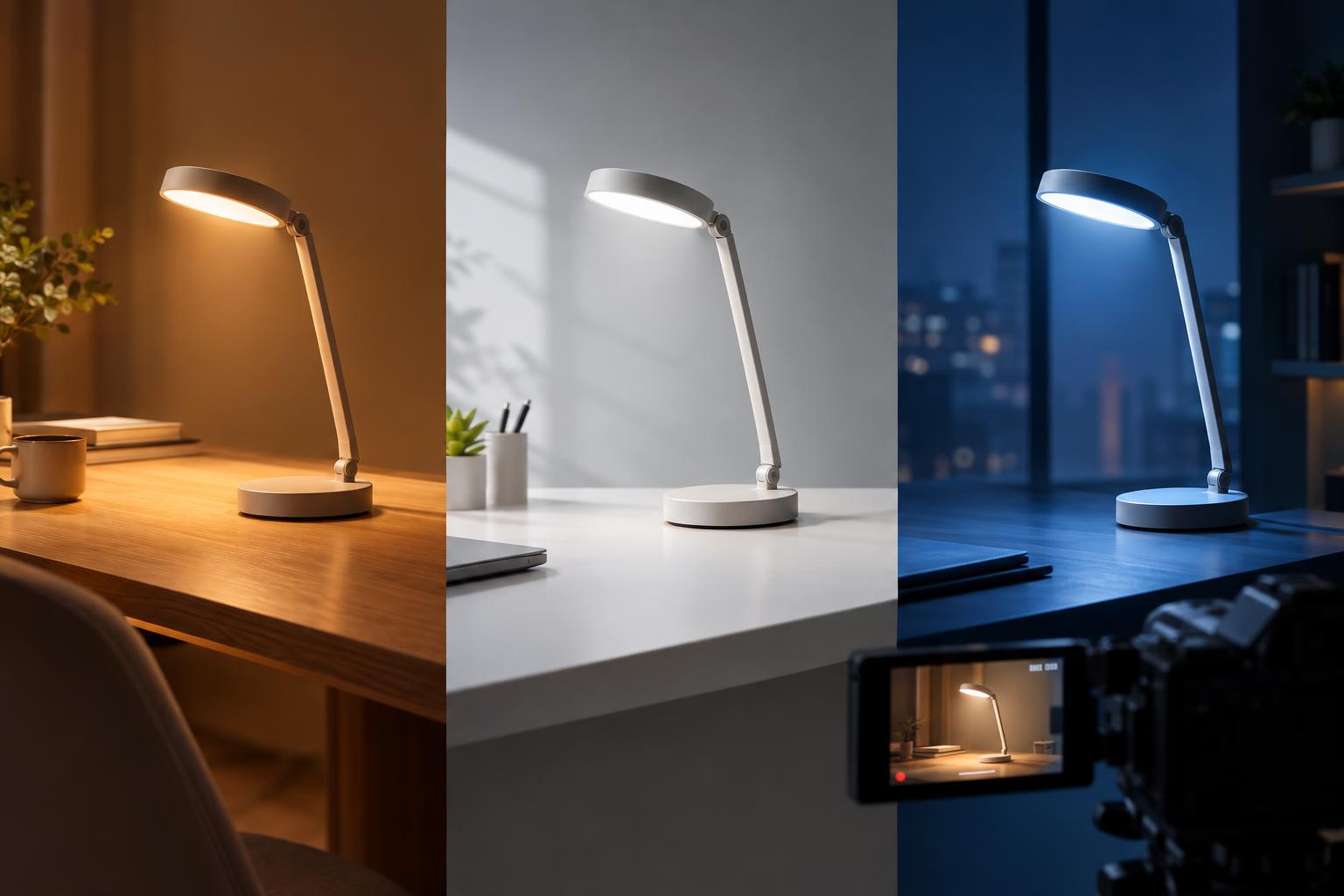
A desk lamp can make the same corner feel like a place to work, read, or wind down. For a proposed product video, I would build the story around that change rather than begin with a spinning object on a blank background. The lamp would remain the visual constant while the surrounding scene shifts from a notebook to an open book and finally a quiet evening arrangement. The video would explore mood without pretending to prove technical lighting performance.
My first decision would be to keep the product visible in all three scenes. If the camera concentrates entirely on the room, the viewer may remember the atmosphere and forget the lamp. I would choose a simple desk, a restrained palette, and a camera position that shows both the lamp’s outline and the surface it illuminates. A consistent frame would help the audience notice the change in context without needing an explanation between shots.
Give the lamp a stable visual identity
That continuity is the creative problem I would explore with seedance 3.0. The AI video model supports text-to-video, image-to-video, and reference-based generation involving text, images, video, and audio. I would begin from an authorized product photograph with a clear view of the base, stem, and shade. The written direction would establish the scene and desired movement, while additional references would be included only when they clarified a specific part of the concept.
A photograph with strong reflections or a hidden power cable could create ambiguity about the object’s shape. I would therefore prefer a straightforward image under even light for the main reference. If exact buttons, dimensions, or construction details mattered to the product story, I would show them through real footage or approved stills. Generated atmosphere can support a concept, but it should not quietly become evidence for features that the actual lamp does not have.
The first scene would place a notebook beneath the lamp, with the camera slightly above desk level. I would leave enough room to see the pool of light and the surrounding darkness, but avoid making the contrast so extreme that the lamp disappears. The intended feeling is concentration. A slowly turning page could add movement, although I would first test the simpler version with the notebook still and only a modest camera adjustment.
Keep each scene’s action small
For the opening Seedance 3.0 shot, my brief would describe a quiet desk, a matte lamp, a closed pen beside an open notebook, and a gentle forward movement. I would not ask the lamp to rotate, switch modes, and change colour while the camera circles it. Those actions would imply product functions and overload the scene. A small movement toward the work surface would be enough to guide attention from the object to its use.
The second scene would replace the notebook with a book and soften the overall mood. I would aim for a visible relationship between the page and the lamp rather than an exaggerated glow. The book’s words would not need to be readable; any text essential to the message would be added separately in editing. A real close-up of a hand resting beside the book could provide a human detail without asking the generated shot to perform a complex page-turning action.
Seedance 3.0 would help me compare possible framings for this reading scene, but I would keep the product reference and camera height consistent. If every shot changed the lamp’s apparent size, the sequence would feel less like one product in several moments and more like unrelated images. I would choose the version that preserves a recognizable silhouette, even if another result has more dramatic light. Continuity is part of the story, not an optional finishing touch.
Build a rhythm from day into evening
For the final setting, I would remove most of the desk objects and introduce a small cup at the edge of the frame. The light would feel warm and contained, with the room receding behind it. A short reference video could suggest the slow pace of the camera movement, while a permitted audio passage could communicate a relaxed rhythm. I would keep those references free of unrelated visual elements that might pull the concept toward a different kind of room.
The reference-based approach in Seedance 3.0 would allow me to describe what each material contributes: the product image establishes appearance, the scene image establishes composition, and the motion reference suggests tempo. I would complete the music and sound edit separately. An audio reference is useful creative input, but it is not a reason to assume that the finished clip will automatically match every beat or deliver the exact sound treatment needed for the campaign.
Spend revisions on the visible problem
Before generating many alternatives, I would review seedance 3.0 pricing and decide how much room the project has for exploration. My first comparison would be between two clear camera choices, not a dozen loosely different moods. If the lamp’s shade changes shape, that is the problem to solve. If the product remains stable but the light feels harsh, I would revise the lighting direction while keeping the rest of the scene similar.
A useful revision might reduce a sweeping camera move to a slight shift toward the desk. Another might remove a reflective object that draws attention away from the lamp. I would compare the beginning, middle, and end of each clip, looking for changes in the base, cable, or shade. A short clean segment could be more useful than a longer clip with a distracting transformation. The edit should not rely on speed to hide an unstable product.
Make three moods feel like one film
In the final assembly, I would connect the scenes through matching compositions and restrained cuts. Seedance 3.0 would support the development of moving images, while the editor would handle the order, typography, and sound. I would add any product name or verified specification as a separate text layer. A short pause at the end of each scene would let viewers register the lamp before the next context arrives, especially when the video plays without sound.
The deliverable would be a concise product concept film that shows how one object can belong to several moments in a day. I would check the vertical version separately so the lamp and its light remain visible together. The sequence would not claim measured brightness, improved health, or a guaranteed change in productivity. It would do a simpler creative job: make the viewer picture a desk becoming a workspace, a reading corner, and a quiet place to end the evening.