




Niv Levy brings a multidisciplinary perspective to discussions on earthquake preparedness through his leadership roles in both construction and law. As President of Home Vision Remodel in Los Angeles, he oversees construction project management, regulatory compliance, subcontractor coordination, and quality control for residential and commercial projects. His experience evaluating foundations, structural components, and retrofit strategies directly informs the topic of earthquake damage mitigation for US homeowners. In parallel, Niv Levy serves as President of Levy Law Offices in Beverly Hills, where his practice centers on contract drafting, review, and breach of contract matters. This legal background supports a practical understanding of insurance considerations, construction agreements, and risk management. His professional work is complemented by a strong commitment to community service, including pro bono legal assistance for single mothers and support for seniors and veterans. Together, these roles provide a factual, experience-based foundation for examining earthquake risk, insurance options, and structural preparedness.
Understanding and Preparing for Earthquake Damage as a US Homeowner
Most homeowner’s insurance policies in the United States do not offer coverage for damage caused by earthquakes. Depending on where homeowners live and their risk of earthquake damage, they should consider investing in two impactful tools to mitigate earthquake damage: earthquake insurance and earthquake retrofit construction projects.
Before exploring the two main options for mitigating the cost of earthquake damage repairs, property owners should educate themselves on the basics of earthquake frequency and earthquake damage in the US. The nation typically experiences approximately 176 earthquakes each year, according to the US Earthquake Report, although only about 16 of these are major earthquakes. However, both earthquake frequency and intensity have increased in recent years, increasing the likelihood.
Earthquake distribution is not even throughout the nation. Homeowners in Alaska, California, and Hawaii face a significantly higher risk of earthquake damage compared to other Americans since these states are along the Pacific Ring of Fire, a series of subduction zones that generate considerable tectonic activity. Other states carry an above-average risk for earthquakes, including Washington and Oregon, which are adjacent to the Cascadia Subduction Zone, as well as Nevada, Utah, Oklahoma, and Texas.
Homeowners on the East Coast should also consider the benefits of earthquake insurance and earthquake retrofitting. Memphis, Tennessee, and Charleston, South Carolina, lie along the New Madrid Fault Zone and the Summerville Fault, respectively. The New Madrid Fault Zone has been responsible for several of the largest earthquakes in North American history.
Most of the most significant American earthquakes have occurred in Alaska, including a 9.2 magnitude earthquake in 1964. However, Oregon, Alaska, Hawaii, and Missouri have also experienced significant quakes. Of course, even relatively minor earthquakes can cause considerable property damage depending on where they occur. The 1994 Northridge earthquake had a magnitude of 6.7 and caused $40 billion in damage, equivalent to nearly $90 billion in 2025 dollars, adjusted for inflation. According to a joint study by the U.S. Geological Survey and the Federal Emergency Management Agency, earthquakes cause nearly $15 billion in damage annually.
With these astronomical figures in mind, American homeowners may wonder how to protect their homes against the costly damage that earthquakes can cause. To begin, individuals and families living in high-risk earthquake zones should assess a home for earthquake damage before moving in. Earthquake damage inspections should occur as part of a standard foundation inspection, in addition to checking load-bearing walls, beams, columns, and arches for signs of stress.
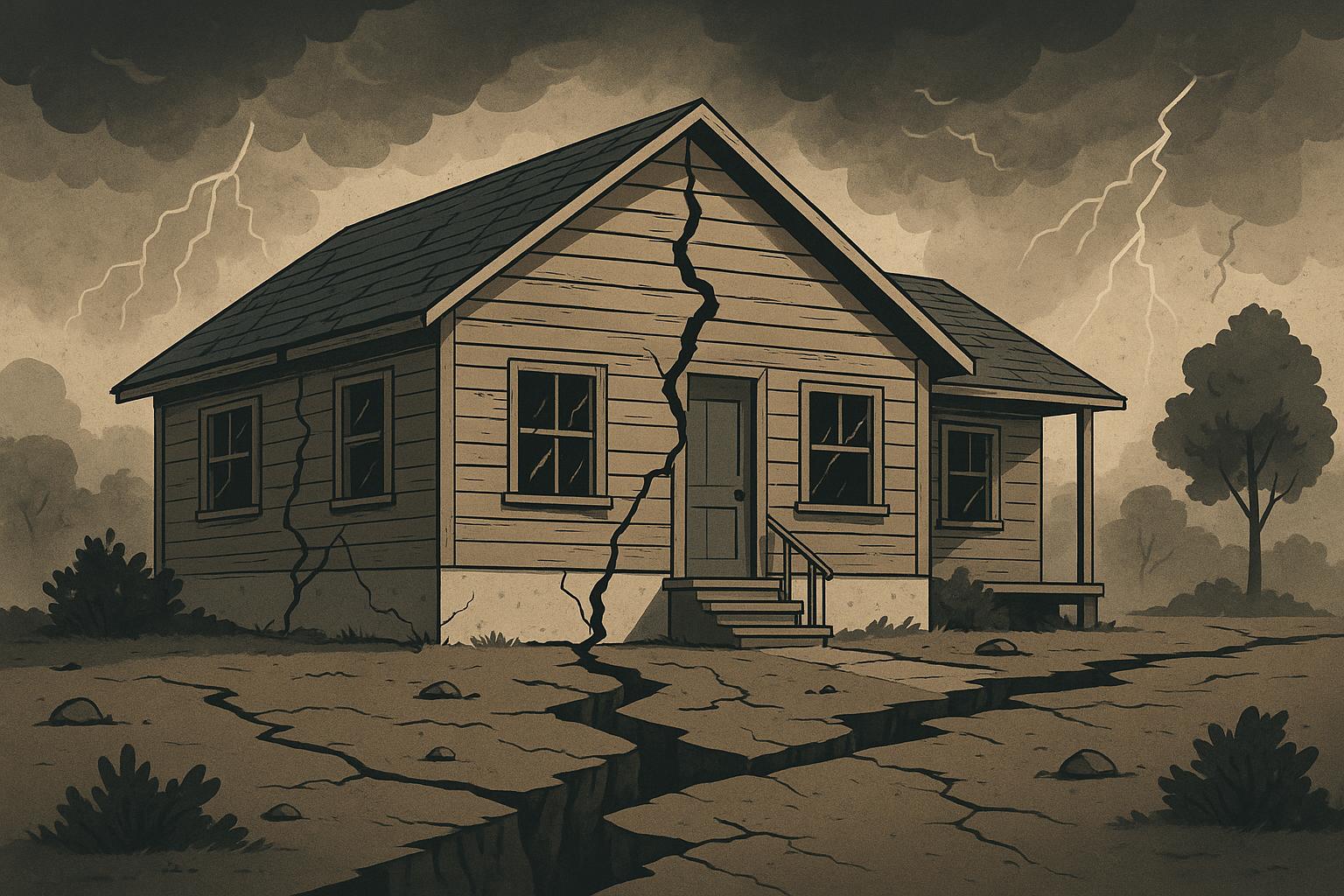
Whether a person is considering moving into a high-risk zone or already lives in a house at risk for earthquake damage, they should research their options for earthquake insurance. Earthquake insurance helps offset the costs of property damage caused by ground shaking or collapse. These damages can carry hefty price tags and may involve destroyed walls and large cracks in the foundation.
Of course, homeowners should strive to protect their homes against damage before it occurs. Earthquake retrofitting projects and related foundation improvements typically involve the installation of custom frames and high-grade beams, as well as slab foundation and raised foundation upgrades. Construction teams specializing in earthquake retrofitting jobs may also offer specialized earthquake repair services.
Individuals and families residing in low-risk areas may not require earthquake insurance. However, they can still benefit from retrofitting projects, as various scenarios can cause foundational damage that necessitates costly repairs.
About Niv Levy
Niv Levy is a licensed general contractor and attorney based in Beverly Hills, California. He serves as President of Home Vision Remodel, where he leads construction project management, regulatory compliance, and quality assurance for residential and commercial projects. He is also President of Levy Law Offices, focusing on contract drafting, review, and breach of contract matters. Niv earned his Juris Doctor from Southwestern Law School in Los Angeles and completed his undergraduate studies at the University of California, Santa Barbara. His professional work is complemented by ongoing community service and pro bono legal support.