




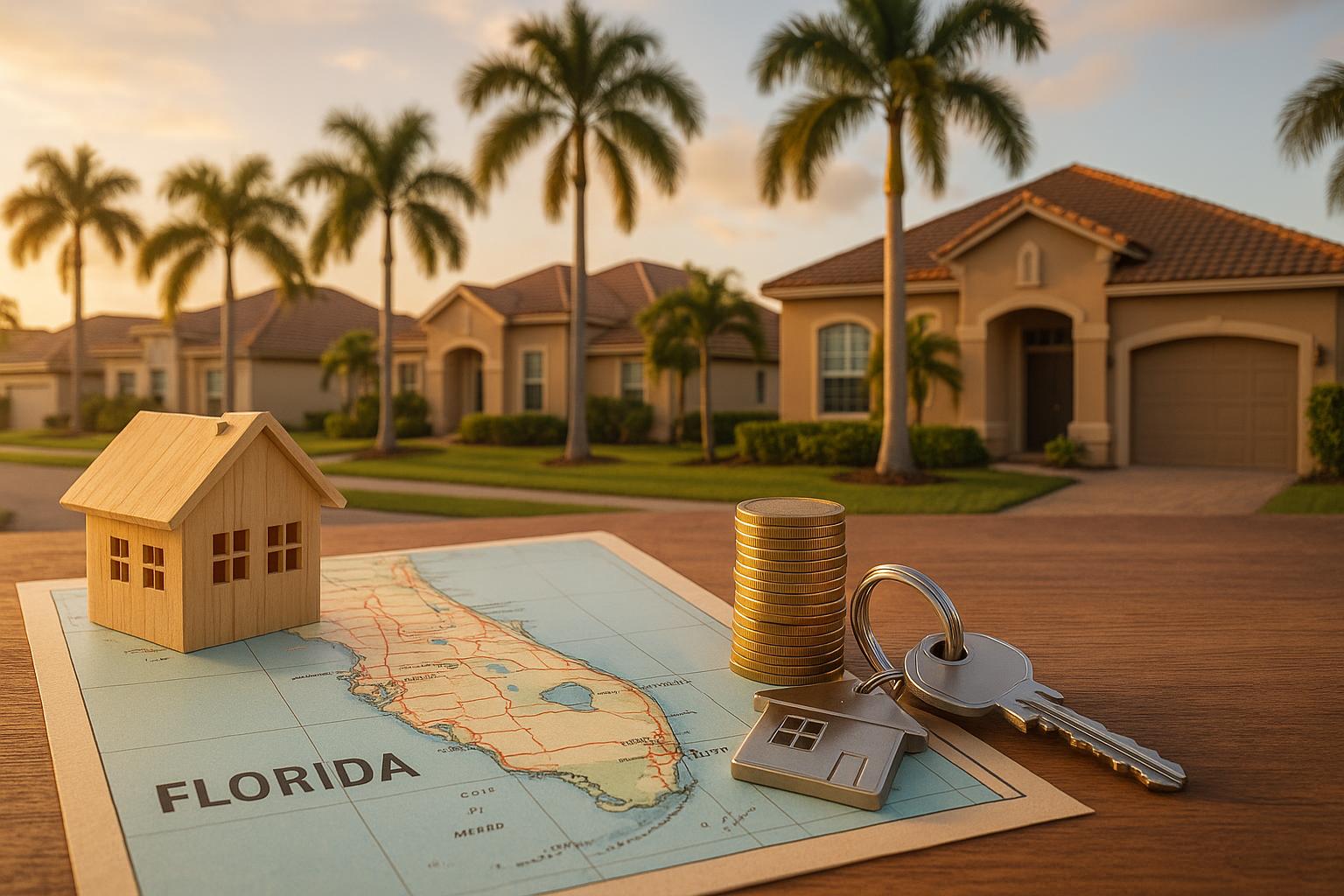
Florida has been one of the more reliably interesting states for land investment for the better part of two decades. Population growth, migration from higher-cost states, steady tourism infrastructure, and a business environment that attracts relocation from multiple industries have all contributed to land values moving in a direction that rewards early buyers.
But knowing that Florida is a strong market and knowing how to actually buy vacant land in Florida in a way that makes financial sense are two different things. The second one requires a bit more than a general bullish attitude toward the Sunshine State.
Understand What You’re Actually Buying
Vacant land is not the same asset class as a house. There’s no depreciation to write off in the traditional sense, no tenant income to offset carrying costs, and no appraisal process that works the same way residential purchases do. What vacant land has that houses don’t is simplicity. No tenants. No maintenance. No contractor emergencies at inconvenient hours. Just a parcel with a legal description, a tax bill, and whatever potential the location and zoning allow.
When buyers decide to Buy Vacant Land Florida for the first time, the ones who succeed typically start by getting specific about purpose. Are they holding for appreciation? Planning to build eventually? Looking to sell to a developer once the area fills in around the parcel? Each of those goals implies a different type of parcel, a different location priority, and a different acceptable price range.
Florida’s Growth Corridors Are Not a Secret
The I-4 corridor between Tampa and Orlando is the most discussed growth corridor in Florida’s land market, and for good reason. Population density is increasing, commercial development is pushing further outward, and parcels that were firmly rural five years ago are now in the path of expansion. Similar dynamics are playing out in the Space Coast region around Brevard County, the Charlotte Harbor area south of Sarasota, and parts of the Panhandle that are seeing migration from both retirees and remote workers.
None of this means land in these areas is cheap. It means the growth trajectory is documented and visible. For buyers willing to look slightly outside the established growth paths, rather than at the epicenter where prices have already moved, the value proposition improves considerably.
Start With the Holding Costs, Not the Purchase Price
One of the most common missteps first-time land investors make is focusing entirely on purchase price and underestimating what the land costs to own between buying and eventual sale or development. Florida property taxes on vacant land are generally low, but they’re not zero. HOA fees exist in some subdivided rural parcels. Access maintenance agreements sometimes carry annual costs.
A parcel that looks like a bargain at $4,000 becomes less attractive if the annual holding cost is $300 and the realistic appreciation timeline is ten years. Run the numbers before committing. The parcel that costs $6,000 with $80 annual taxes and no HOA often represents a better actual return.
Discount Lots Simplifies the Entry Point
For buyers new to vacant land, one of the genuine advantages of working with a specialist like Discount Lots is the reduction in complexity. The company sources parcels below market rate and presents them with documentation already assembled: legal descriptions, tax status, access information, and zoning classification. That removes the research burden that slows most first-time buyers down.
The buy vacant land Florida process through Discount Lots also includes flexible payment options, which matters for buyers who want to diversify into land without committing a large lump sum upfront. Monthly payment structures make land investment accessible at a price point that doesn’t require liquidating other assets.
Due Diligence Is Shorter Than You Think
Residential real estate due diligence involves inspections, appraisals, mortgage underwriting, and timelines that stretch for weeks. Land due diligence is faster. The core checklist involves confirming legal access, verifying the tax status is current or the delinquency is priced in, checking zoning for compatibility with intended use, and doing a physical or satellite review of the parcel’s terrain and any obvious natural constraints.
Most of that can be completed within a few days by a motivated buyer. Florida’s county property appraiser websites are excellent, typically including parcel maps, tax history, zoning classification, and ownership records in one searchable database. Spending two hours in those records before making an offer is due diligence well spent.
Timing and Patience Are Both Part of the Strategy
Florida land investment is not a quick flip strategy in most cases. The buyers who do well over time are those who bought with a long enough horizon to let the market come to them, held at low cost, and sold when demand reached their area. That’s not exciting, but it’s reliable.
The buyers who struggle are those who expected rapid appreciation and got frustrated when nothing happened in year one. Land is patient capital. The state of Florida is continuing to grow in ways that reward patient buyers who got in at the right price.
Discount Lots exists to help buyers find the right price on vacant land across Florida. The inventory reflects below-market sourcing and transparent documentation. Starting a land investment journey doesn’t require expertise. It requires a clear goal, a realistic holding cost calculation, and a seller whose process is straightforward. Those three things are available. The question is whether the timing feels right.