




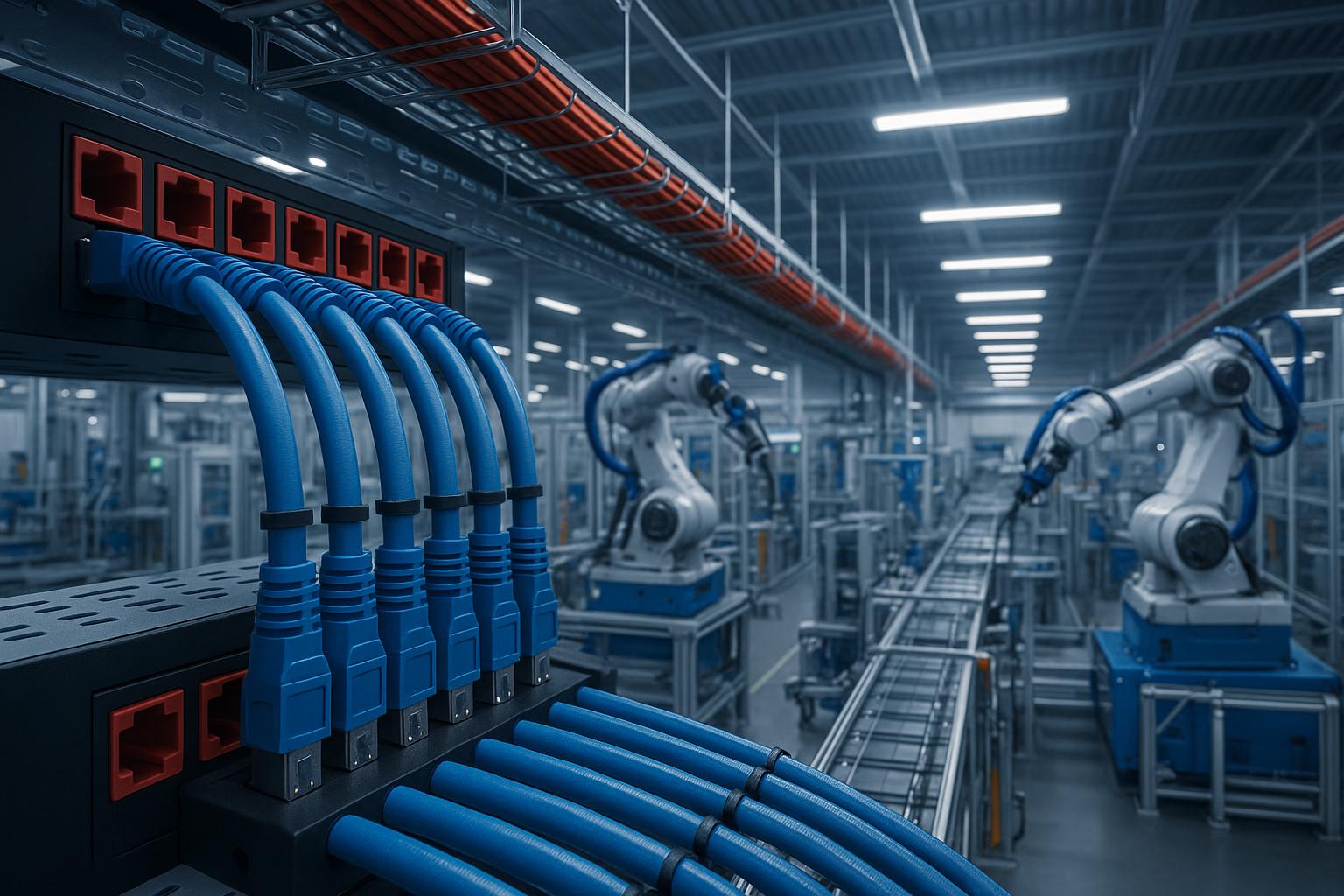
Every industrial breakthrough starts with a foundation. Robotics, automation, and data driven manufacturing all rely on a stable flow of information. Machines can only respond in real time
when the network beneath them performs without delay. This is why infrastructure now leads innovation.
High speed connectivity is not a luxury anymore. It is the core utility that keeps modern industry running. Choosing the right cabling infrastructure shapes productivity, safety, and long term scalability from the ground up.
Data is the New Industrial Fuel
Factories and logistics hubs generate massive volumes of data every second. Sensors, controllers, and analytics systems continuously exchange information. When data transmission slows, production slows with it. Industrial leaders who have upgraded their physical networks report measurable gains in uptime and consistency.
Industrial networking solutions depend on reliable wired connections because wireless signals fluctuate in noisy environments. Cabling carries the responsibility of keeping systems synchronized without interruption.
Why Wiring Beats Hardware Upgrades
Companies often replace switches and controllers while ignoring older cables. That choice creates a performance bottleneck. New hardware pushes signals faster and at higher frequencies. Legacy wiring cannot always support that load.
Speed drops, packets repeat, and systems experience micro delays. Engineers with field experience know that stable networks begin with cable replacement, not device replacement.
Once the infrastructure improves, existing hardware often performs better without further investment.
Plenum Safety Meets Industrial Demands
Modern industrial buildings use shared air spaces for climate control. Cables running through these areas must meet strict safety standards.
Plenum-rated Ethernet cables are engineered to reduce smoke and toxic emissions during fire exposure. This protects personnel and equipment while maintaining signal integrity.
In environments where compliance matters, plenum rated infrastructure aligns safety with performance rather than forcing a compromise.
Cat6 as an Industrial Standard
Cat6 design supports higher bandwidth and lower interference. Its tighter twists and insulation help maintain signal shape across longer distances. In manufacturing environments filled with motors and electrical noise, this matters deeply.
A Cat6 plenum cable also combines performance with fire safety, making it suitable for mixed use facilities. Many installers prefer this category because it supports current needs while staying ready for future expansion.
Material Quality Defines Reliability
The materials inside a cable determine how consistently a network performs under real workloads. While many options look similar from the outside, conductor quality affects signal strength, heat tolerance, and long‑term durability.
Copper versus Alternatives
Not all conductors behave the same under load. Copper coated aluminum may pass initial tests, yet it struggles under sustained high frequency transmission. Pure copper conductors offer lower resistance and better heat handling.
Networks built with a Cat6 plenum pure copper cable show fewer retransmissions and steadier speeds over time. This reliability becomes visible during peak production cycles when systems operate at full capacity.
Longevity and Maintenance
Infrastructure should last decades, not years. Copper maintains conductivity with minimal degradation. Aluminum based options oxidize faster and increase resistance. Maintenance teams often trace intermittent faults to conductor quality rather than configuration errors.
Choosing the right material reduces troubleshooting time and prevents production downtime.
Business Scale Depends on Cable Choice
Growth introduces complexity. New machinery, monitoring systems, and automation layers all add traffic. High-speed data cables for business must support expanding workloads without restructuring the network. Cabling upgrades done correctly allow teams to scale by adding endpoints rather than rebuilding infrastructure. This flexibility reduces disruption and shortens deployment cycles.
Key outcomes companies see after upgrading infrastructure include:
- Faster machine communication with lower latency
- Improved system stability during peak operational hours
- Reduced network related downtime and troubleshooting
This shift happens because the physical layer no longer restricts performance.
Infrastructure as Competitive Advantage
Factories that invest early move faster later. Stable wired networks allow real time analytics, predictive maintenance, and tighter quality control. High performance networking cables play a quiet yet decisive role in this transformation. They ensure that data reaches decision systems immediately and accurately.
Competitors relying on outdated infrastructure struggle to match that responsiveness.
Conclusion
The next industrial revolution is not driven by machines alone. It is powered by the unseen network that connects them. Infrastructure decisions made today define how efficiently businesses adapt tomorrow.
Plenum safe design protects people. Cat6 standards support bandwidth growth. Pure copper ensures reliability under pressure. When companies prioritize cabling from the start, their technology investments deliver full value. In modern industry, progress begins beneath the surface, one cable at a time.