




Customer service leaders are under pressure from both directions. Customers expect faster responses than ever, while businesses are expected to control costs, extend availability, and improve consistency at the same time. That combination is exactly why more companies are reevaluating the way they staff and support customer interactions.
For years, outsourcing and automation were treated as separate strategies. A business either hired an outside support team, or it invested in software to reduce manual work. Today, the most effective companies are doing both.
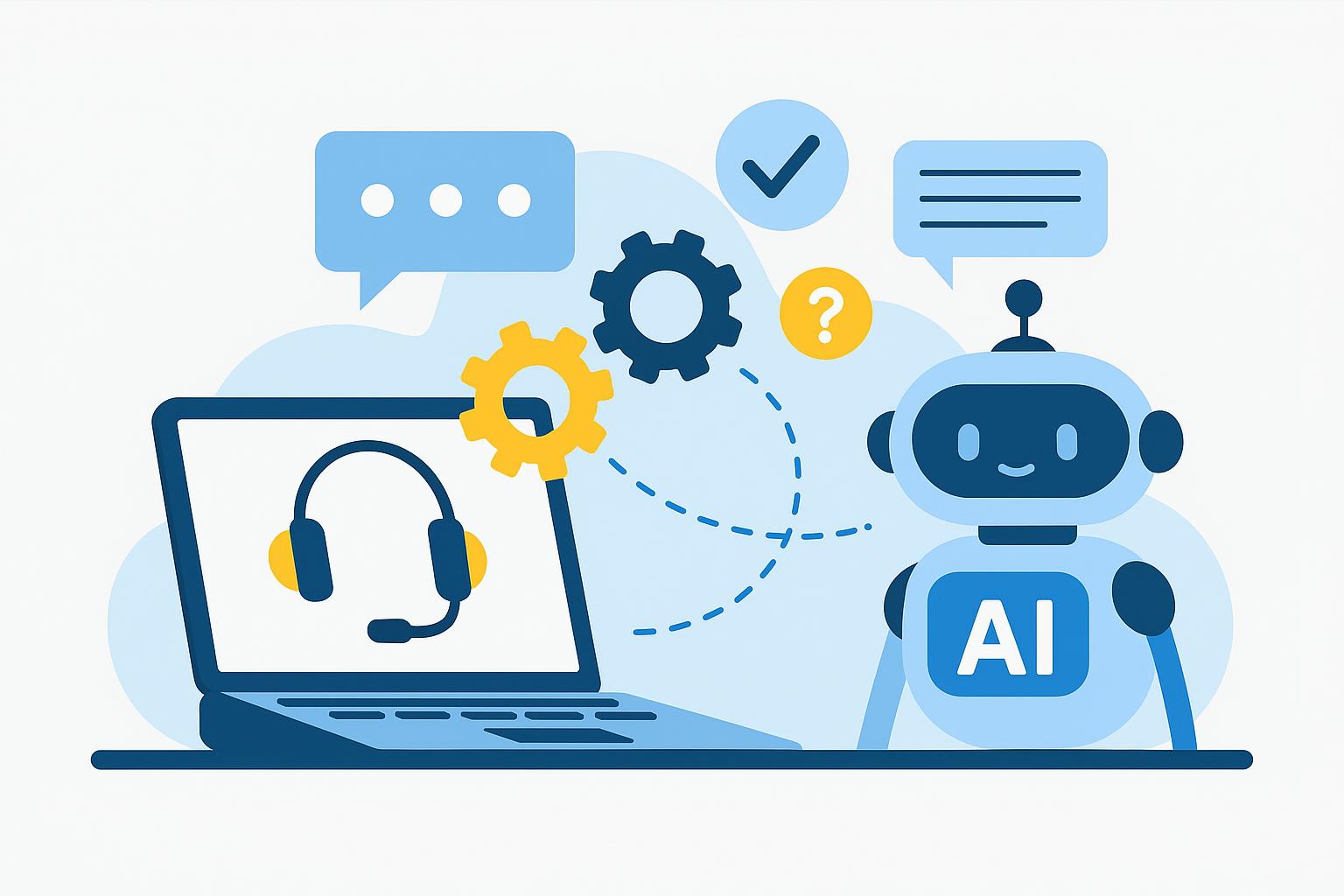
AI and outsourced customer service are no longer competing approaches. Used together, they create a more flexible and resilient support model.
Why the old support model is harder to sustain
Traditional in-house support comes with obvious strengths. It gives companies direct control, close oversight, and strong alignment with brand standards. But it also creates limits.
Coverage gaps appear after hours. Staffing becomes difficult during seasonal spikes. Growth increases cost faster than many teams expect. Even basic tasks, like answering repetitive calls or handling routine status questions, can consume valuable time that trained agents should be using on more complex work.
Outsourcing helps solve the staffing side of the problem. AI helps solve the efficiency side. Put them together, and a business can redesign how customer service actually works.
What AI should handle first
The best use of AI is not to force automation into every conversation. It is to identify the parts of support that are repetitive, predictable, and time-sensitive.
Examples include:
- greeting inbound callers
- capturing names, callback details, and basic request information
- answering frequently asked questions
- routing urgent calls to the correct destination
- confirming appointments or basic scheduling windows
- collecting lead information after hours
These tasks matter, but they do not always require a live specialist from the first second of the interaction.
When AI covers these steps well, outsourced agents can spend more time resolving edge cases, calming frustrated customers, and handling the issues that benefit most from human attention.
Where outsourced teams become more valuable
A common fear around AI is that it reduces the need for trained support teams. In reality, it can make those teams more valuable.
When automation filters out repetitive work, outsourced agents are freed to focus on higher-impact conversations. They can step in when a customer needs reassurance, when a request falls outside the scripted flow, or when the business needs brand-sensitive handling.
This changes the role of outsourced support from “cheap overflow labor” to “skilled exception handling.”
That distinction matters. Customers do not judge support by how many tickets were automated. They judge it by whether their issue got resolved quickly and clearly.
Why hybrid support wins
The best setup is a hybrid one:
- AI responds immediately.
- It gathers context and handles routine needs.
- When the issue becomes complex, the conversation transfers to a human.
This creates a smoother experience for both sides.
Customers get fast answers without feeling abandoned inside an automated maze.
Agents get context before joining the conversation, which reduces handle time and repetition.
Businesses gain more coverage without needing to overstaff every hour of the day.
A practical example is Joy’s “How It Works” page, which outlines a workflow-led AI answering model that automates routine call handling while still supporting escalation to live operators when needed.
What to measure
If a business wants to combine outsourcing and AI successfully, it should not just watch cost per contact. It should also track:
- first response time
- abandonment rate
- percentage of calls handled without human intervention
- transfer success rate
- lead capture rate
- appointment conversion rate
- customer satisfaction after escalation
These metrics help companies see whether AI is actually improving the experience or simply deflecting work.
For outside perspective, Gartner has written about how customer service leaders are redesigning support around automation and smarter workflows, while Microsoft highlights how AI can improve productivity in customer experience operations. Zendesk also continues to report on how AI is changing service expectations, especially around speed and personalization.
Outsourcing is not going away. AI is not going away either. The smart move is not choosing one over the other. It is designing a support model where each does the work it is best at.
Let AI handle the repetitive front line. Let outsourced human teams handle the conversations that require flexibility, empathy, and judgment. Businesses that adopt that balance will be better positioned to serve customers efficiently without making the experience feel robotic.