




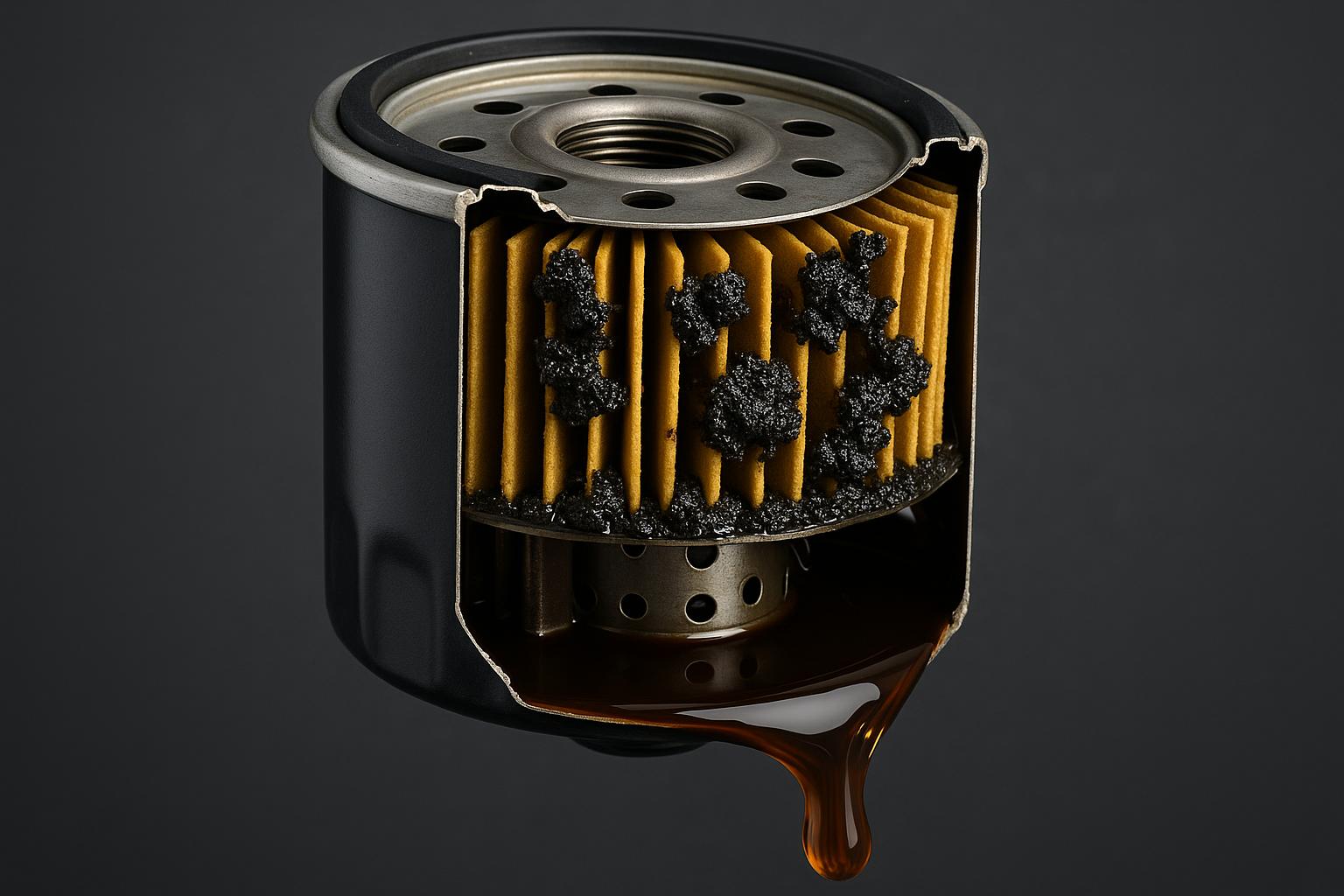
Your engine oil may look clean from the outside, but while your engine is running it continuously collects microscopic particles, combustion byproducts and material released through normal wear. Many of these contaminants are too small for you to see, yet allowing them to circulate repeatedly can accelerate wear on precisely fitted engine components. Your oil filter helps control this hidden contamination by capturing particles while still allowing enough oil to circulate through the engine.
Trapping Fine Particles Before They Recirculate
Your oil filter contains filter media, usually formed into pleats to create a large filtration surface within a compact housing. As pressurised oil passes through this material, particles above the media’s effective filtration range become trapped rather than returning to bearings, camshafts and other lubricated components.
Because filters are designed for specific engines, selecting the correct replacement is just as important as changing it on time. If your vehicle calls for a Ryco Z436 oil filter for reliable engine protection, for example, you should still confirm compatibility against the manufacturer’s specifications rather than relying on physical size or appearance alone. Filters that look similar externally can differ in their internal construction, flow characteristics and operating requirements.
Capturing Contaminants Produced by Engine Wear
Even a healthy engine produces tiny amounts of metallic debris as moving surfaces operate against one another. Pistons, bearings, valve train components and other parts are separated by lubricating oil, but microscopic wear particles can still enter the lubricant over time.
Your filter captures many of these particles before they complete repeated journeys through the lubrication system. This matters because abrasive material suspended in oil can contribute to additional surface wear. Effective filtration therefore helps your lubricant perform its primary job of maintaining a protective film between moving components.
Removing Combustion Byproducts From the Oil
Engine oil can also become contaminated by substances created during combustion. Small quantities of soot and other residues can enter the crankcase, particularly as oil accumulates kilometres and operating hours.
Some contaminants remain extremely small, while others combine into larger particles that your filter can capture. Regular oil and filter changes prevent the filter media from becoming excessively loaded and help remove accumulated contamination from the lubrication system rather than allowing it to remain in circulation indefinitely.
Maintaining Oil Flow as Contaminants Accumulate
Filtration cannot come at the expense of adequate lubrication. In a full-flow oil filter system, pressurised oil normally passes through the filter before reaching critical engine components. As trapped material builds up within the filter media, however, resistance to oil flow can increase. Your filter is therefore designed to manage contamination while maintaining sufficient flow under its specified operating conditions.
Many filters incorporate a bypass valve that provides an alternative oil path if resistance becomes unusually high, such as when the filter is heavily restricted or the oil is particularly thick during a cold start. This helps prevent oil starvation, although bypassed oil may temporarily receive less filtration. Replacing the filter at appropriate service intervals reduces the likelihood of excessive restriction.
Preventing Oil Drainback Between Engine Starts
Some oil filters also contain an anti drainback valve. Its purpose is to reduce the amount of oil flowing backwards out of the filter after you switch the engine off.
Keeping oil within the filter can help the lubrication system establish pressure more quickly when you restart the engine. This is particularly relevant where the filter’s mounting position would otherwise allow it to empty while the vehicle is parked. Like other internal filter features, the correct design depends on your engine’s lubrication system.
Keeping Hidden Contamination Under Control
You cannot judge engine oil cleanliness simply by looking at the dipstick. Microscopic wear particles, combustion residues and other contaminants can circulate long before they become obvious to you. Your oil filter manages this unseen material by combining carefully selected filter media with controlled oil flow and supporting components such as bypass and anti drainback valves. Using the correct filter and replacing it alongside your oil at the recommended service interval helps keep contaminants from repeatedly circulating through the parts your engine depends on.