




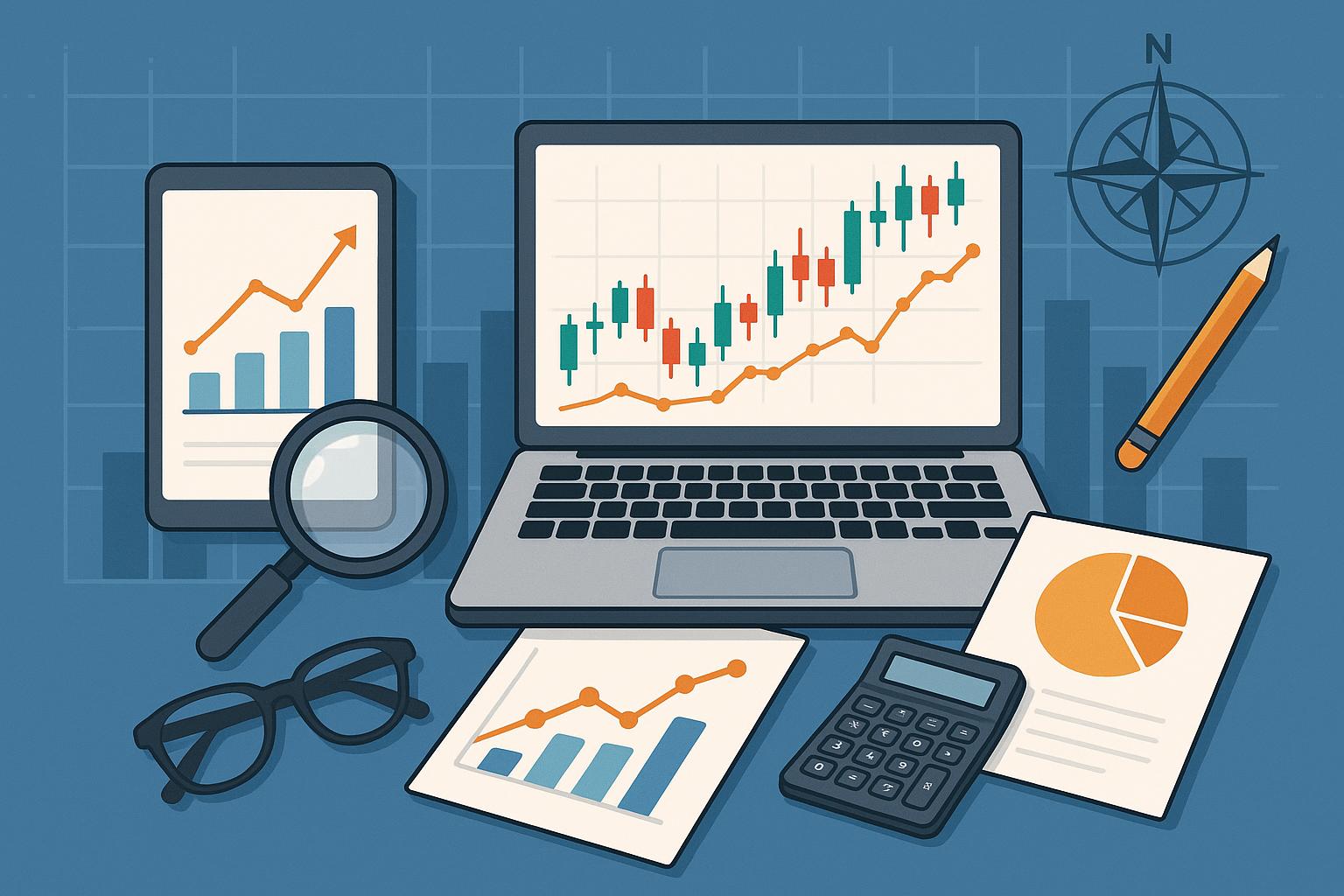
Discover powerful insights through the essential tools for analyzing market trends in today’s volatile markets. Skilled traders count on specialized tools and technical indicators to decode market movements with accuracy and confidence. A trading education platform can provide the practice environment you need to master these tools without real financial risk.
The Foundation: Why Market Trend Analysis Matters
Market trends reflect the collective behavior of participants, driven by supply, demand, sentiment, and external factors. Effective analysis combines historical data, real-time insights, and predictive modeling. Traditional methods like manual charting have evolved into sophisticated platforms integrating big data, machine learning, and visualization. In 2026, tools that offer automation, accessibility, and integration with AI stand out, helping users navigate volatility with greater confidence.
Technical Analysis Tools: Charting the Path Forward
Technical analysis focuses on price action, volume, and patterns to forecast future movements.
TradingView remains a gold standard for charting and technical analysis. It offers interactive charts, hundreds of indicators (like Moving Averages, RSI, MACD), community ideas, and real-time data across stocks, forex, crypto, and more. Its social features allow traders to share insights, while Pine Script enables custom indicators. Ideal for beginners and pros alike, TradingView’s free tier is robust, with premium plans unlocking advanced alerts and multi-chart layouts.
TrendSpider takes automation to the next level. This all-in-one platform uses AI for pattern recognition, automated trendlines, Fibonacci retracements, and multi-timeframe analysis. It excels at backtesting strategies and reducing emotional bias, making it perfect for active traders who want to save time on manual chart review. Features like raindrop charts and heatmaps provide unique visual perspectives on market dynamics.
StockCharts delivers award-winning charting with advanced technical visualizations. Users benefit from customizable scans, expert commentary, and integration with fundamental data. Its ACP (Advanced Charting Platform) supports sophisticated strategies, appealing to serious investors focused on technical precision.
Fundamental and Data Platforms: Digging Deeper
Fundamental analysis examines financial health, economic indicators, and qualitative factors.
Yahoo Finance and similar free portals provide accessible entry points with stock quotes, financial statements, news, and basic charting. For more depth, Bloomberg Terminal (though premium) offers unparalleled real-time data, analytics, and communication tools used by professionals worldwide.
AlphaSense stands out as an AI-powered market intelligence platform. It scans earnings calls, filings, news, and research using natural language processing to uncover hidden trends and sentiment shifts. Enterprises rely on it for competitive intelligence and early warning signals.
FAST Graphs simplifies fundamental valuation by visualizing earnings, dividends, and growth metrics against stock prices. It helps value investors identify mispricings quickly through clear, data-rich graphs.
AI and Predictive Tools: The Future of Forecasting
Artificial intelligence is transforming market analysis by processing vast datasets faster than humans.
AI-powered platforms like those in TrendSpider or specialized tools use machine learning for predictive analytics. Models such as LSTMs and Transformers capture temporal dependencies in price data, improving forecast accuracy for volatile assets.
Perplexity AI and similar generative tools aid secondary research and trend scanning by synthesizing web data with citations. For consumer and broader market trends, Google Trends reveals search interest patterns, helping identify emerging topics and seasonal behaviors.
Enterprise solutions like Quantilope, Brandwatch, and SimilarWeb provide sentiment analysis from social media, review sites, and web traffic. These tools track brand perception and competitive positioning in real time.
TipRanks aggregates analyst ratings, insider activity, and smart score metrics, blending AI with human expertise for stock recommendations.
For financial modeling and forecasting, tools integrating with Excel or dedicated platforms (like Shortcut or Claude in Excel) automate scenario analysis and three-statement models, boosting efficiency for FP&A teams.
Visualization and Research Platforms
Data visualization turns complex information into actionable insights. Tableau excels here, connecting to multiple sources for interactive dashboards that highlight trends across markets.
Survey and consumer insight tools like SurveyMonkey, Attest, and Qualtrics complement quantitative market research with AI-driven analysis of responses.
Choosing and Integrating Tools Effectively
No single tool does everything. Start with your goals: day trading favors technical platforms like TradingView; long-term investing benefits from fundamental ones like FAST Graphs; enterprises need comprehensive intelligence like AlphaSense.
Consider integration, cost, data privacy, and learning curves. Many offer free trials—test compatibility with your workflow. Combine tools: use Google Trends for macro signals, TradingView for entries/exits, and AI for validation.
Best practices include cross-verifying signals, staying updated on tool features, and avoiding over-reliance on automation. Human judgment remains crucial for interpreting context, especially in unprecedented events.
Conclusion: Empowering Smarter Decisions
In 2026, essential tools for analyzing market trends blend accessibility, automation, and intelligence. From TradingView’s versatile charts to AlphaSense’s AI insights and predictive modeling, these solutions democratize sophisticated analysis. By adopting them strategically, investors and businesses can anticipate shifts, mitigate risks, and seize opportunities in an increasingly complex world.
Invest time in mastering a few core tools rather than chasing every new feature. The market rewards those who combine technology with disciplined strategy. Stay curious, analyze rigorously, and adapt—the trends of tomorrow depend on the tools you use today.