




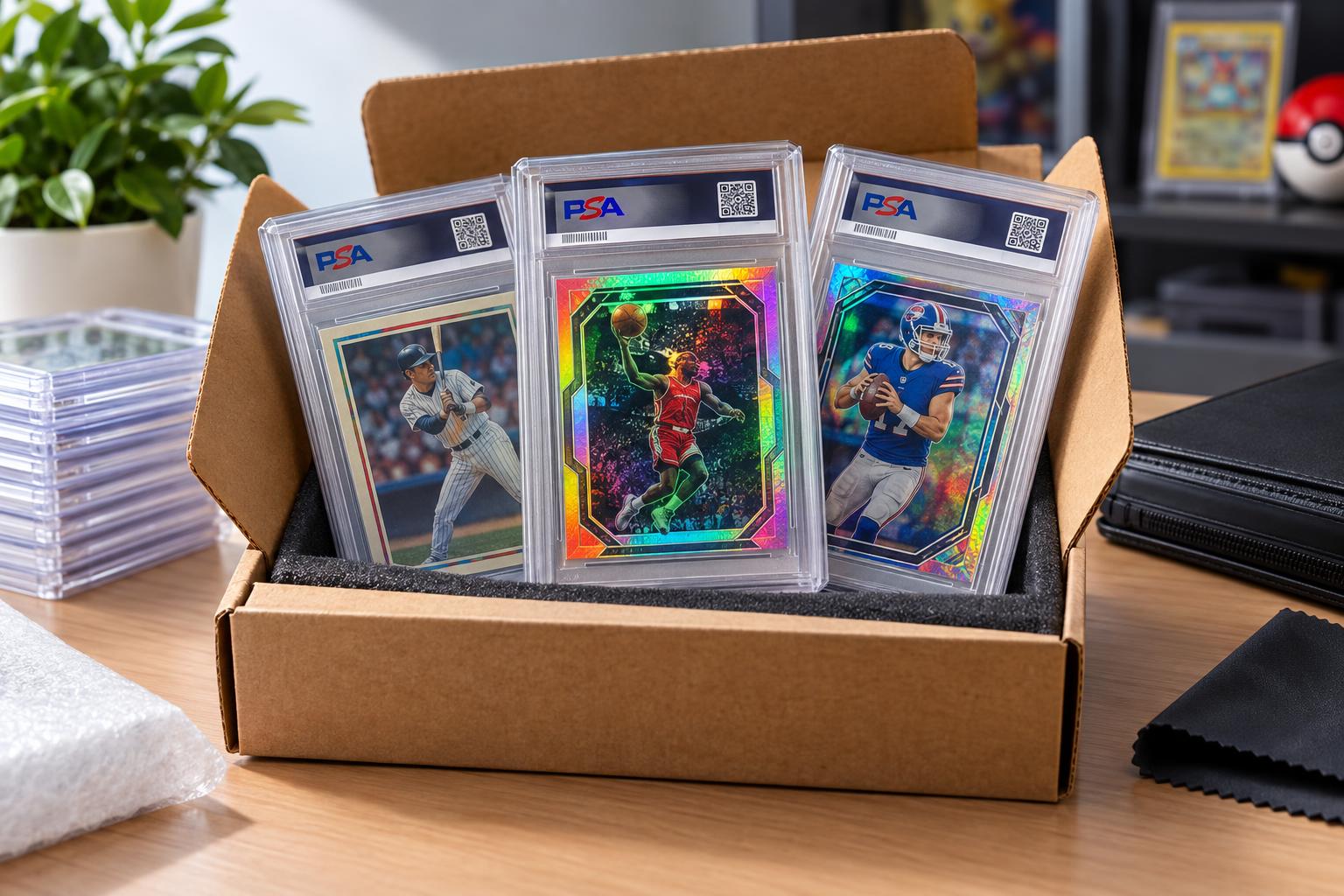
There is a particular kind of quiet when a package of PSA graded cards lands on the table. You know what is inside, or you think you do, but you still peel the tape slower than you need to. The foam comes away, and there it is: your card, sealed in a hard plastic holder, with the familiar label along the top. For a lot of newer collectors, that is the first time a card feels finished. The urge is to show it around or stand it on a shelf straight away. It is worth pausing. A few simple checks now will tell you the slab is sound, and help you decide how to look after it from here.
Check the Slab and the Label First
Before you do anything else, look at the label. The card name, year, set, and grade should match what you submitted. The certification number is the one to take seriously. Type it into PSA’s online cert verification and confirm that the record matches the holder in your hand.
If something looks off — a different grade, a qualifier you were not expecting, or a cert that does not resolve — stop and contact PSA with photos before you move the slab around any more than you have to. Most of the time everything lines up, and that small check just lets you enjoy the card properly.
Hold the slab by the edges. Fingerprints on the front plastic are annoying to clean later, and a paper towel can leave fine scratches.
Inspect the Case for Scratches or Cracks
The holder is clear, which makes it easy to confuse a mark on the plastic with a mark on the card. Tilt the slab under a lamp or by a window and look across the surface, not only straight through it. Hairline scratches, a cloudy rub at a corner, or a chip along the edge usually sit on the case, not on the card.
Pay attention to the seams and corners. A crack is uncommon, but it is the thing you want to catch on day one, while you still have packing materials and a shipping record. If the case is damaged, photograph it and reach out to PSA. Do not try to pry the holder open. A PSA grade belongs to a sealed slab. Once that seal is broken, the grade no longer applies.
A soft microfiber cloth is enough for dust or a fingerprint. Skip household cleaners and anything abrasive.
How to Store or Display Your PSA Graded Cards
Once you are happy with the slab, you have a practical choice: put it away, or put it on show. Neither is wrong. It depends on how often you want to see the card, and how much handling it will get.
If it is going into storage, a purpose-made slab box or a padded case keeps holders from knocking against each other in a drawer. Loose stacking on a shelf looks tidy for a week, then one slab slides and you get a scuff you cannot polish out. Keep boxes out of direct sun, and away from a windscreen or a hot cupboard. The card is sealed, but heat is still unkind to plastic.
If you want to display it, use a stand or a frame made for a PSA holder, and pick a spot that does not catch harsh afternoon light all day. Take it off the stand with two hands. Most damage to a new slab happens in the first month, when you are still getting used to how rigid and slippery the case is.
The Grading Case Protects the Card, Not Itself
This is the part many new collectors only learn after a scuff appears. The PSA holder does a good job of protecting the card. The card cannot be bent, spilled on, or thumbed at the corners. That is the point of grading.
The case is a different story. The outer plastic can be scratched by a zip, chipped on a desk edge, or rubbed dull by sitting against another slab. Those marks sit on the holder, so they do not change the grade on the label. They do change how the card looks when you hold it up, and they are irritating precisely because the card inside is fine.
You cannot buff a deep scratch out of a sealed holder, and you should not open it to start again. The case is doing its job. It just was never meant to be handled like a raw card in a penny sleeve.
How Slab Guards Protect the Case Without Opening It
A slab guard is a thin outer cover that slips over the sealed holder. It takes the knocks and the shelf rub so the case underneath stays clearer for longer. You do not open the PSA slab to use one, and you do not affect the grade. The cert, the label, and the seal stay as they are.
If you have started looking for slab guards for graded cards, Dragonscale Supplies is one straightforward place to find a sleeve that fits a standard PSA holder. You slide the slab in, check that the label is still easy to read, and put the card back in its box or on its stand. That is the whole routine.
It is especially useful if the slab will travel to a card show, sit in a display with other holders, or come in and out of a box often. For a card that will live in a closed box and rarely be moved, it is optional. For anything you pick up regularly, it is a small, practical way to keep the case looking clean.
A Simple Routine After the First Day
You do not need a complicated system. A short habit is enough:
- Check the cert and look over the case when a slab first arrives
- Store holders so they are not rubbing against each other
- Pick the slab up by the edges, and set it down on a clean surface
- Use a microfiber cloth if the plastic picks up fingerprints
- Add a slab guard if the card will be displayed, carried, or handled often
If you remember only one thing, make it this: treat the holder as something that can mark, even though the card inside is already protected.
Conclusion
The week your first PSA graded cards come back is exciting, and it should be. Open the package, check the label against the cert record, and inspect the case for scratches or cracks before you find a home for the slab. Then decide, calmly, whether it belongs in a box or on a stand.
The holder will look after the card. A little care, and a slab guard if the case will see regular handling, will look after the holder. You do not need to overthink it, and you do not need to open anything. Once those first checks are done, you can enjoy the card the way you meant to when you sent it in.