




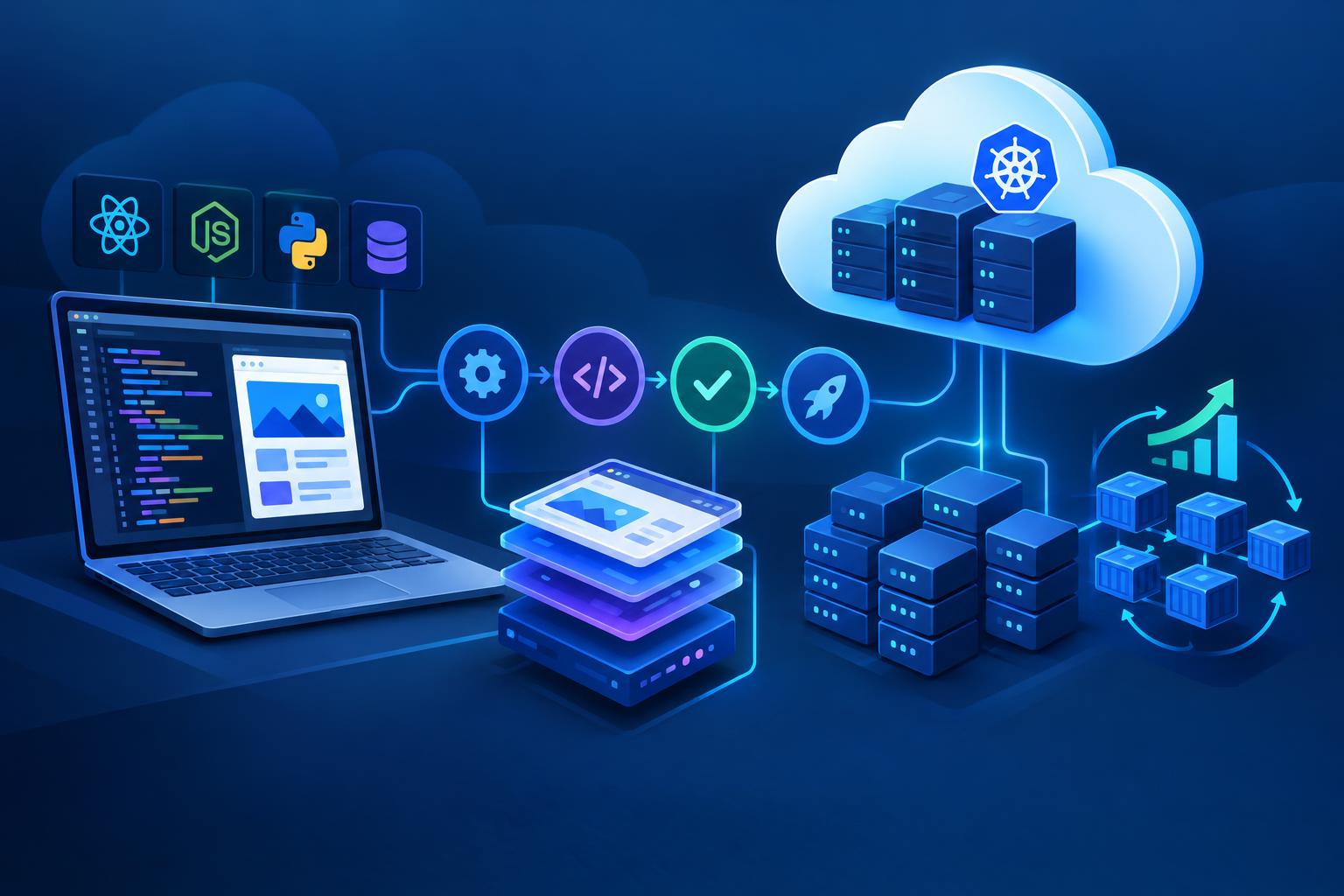
Every startup dreams of the moment its product takes off. Signups spike, a feature goes viral, or a big customer comes on board. But that moment can quickly turn into a crisis if the app slows down, crashes, or racks up an unexpected cloud bill. Building something that scales is not luck. It comes from pairing the right talent early, and that is why savvy founders hire cloud engineers and full-stack developers as a combined engine for growth.
Full-stack developers are the builders who turn ideas into working products. They handle the interface users see, the server logic behind it, and the database that stores everything. For a lean team, they are invaluable because one person can move a feature from concept to release without long handoffs. When you hire full stack developers, you gain speed, flexibility, and a team member who understands the product from end to end.
Cloud engineers bring a different strength. They design the infrastructure that keeps the product running smoothly as demand grows. That means choosing the right services, automating deployments, managing security, and keeping costs under control. Founders who hire cloud engineers early avoid the painful scramble of retrofitting infrastructure after the app is already straining under real traffic.
Together, these two roles cover the full journey from code to customer. Product companies that hire full stack developers and hire cloud engineers together get applications that are not only feature-rich but also fast, stable, and ready to grow. That combination is what separates a prototype from a product people can depend on.
What Each Role Contributes
A full-stack developer works across the application layers. On the front end, they build responsive interfaces using frameworks like React or Vue. On the back end, they create APIs, business logic, and data models using tools such as Node.js, Python, or Java. They also integrate payments, authentication, and third-party services. Their focus is shipping features that users love, quickly and reliably.
A cloud engineer focuses on where and how that code runs. They set up environments on platforms like AWS, Google Cloud, or Azure, configure load balancing and auto-scaling, build CI/CD pipelines, and set up monitoring and alerts. They also handle networking, backups, and disaster recovery. Their goal is making sure the application stays available and performs well no matter how many users arrive.
Neither role can fully replace the other. A brilliant app on weak infrastructure will buckle under load. Strong infrastructure with a poorly structured application will still deliver a frustrating experience. Scalable apps need both strengths working in sync.
How They Work Together to Ship Scalable Apps
The collaboration begins at the design stage. The full-stack developer shapes how the application is structured, while the cloud engineer advises on which architecture will scale best. Together they decide whether a simple monolith is enough for now or whether services should be split to allow independent scaling later. These early decisions save enormous effort down the line.
During development, cloud engineers build automated pipelines so that every code change is tested and deployed safely. Developers can then push updates several times a day without fear of breaking production. This tight feedback loop is a major advantage for startups, where learning from users quickly is everything.
Containers and infrastructure as code make the partnership even smoother. When the cloud engineer defines environments in code, the developer gets consistent setups for testing and staging. Surprises caused by “it worked on my machine” nearly disappear. Auto-scaling rules then let the application add capacity during traffic surges and scale back down when demand drops, which keeps performance high and spending sensible.
After launch, the collaboration shifts to observation and refinement. Cloud engineers track performance, errors, and costs, then share insights that help developers optimize slow queries, heavy API calls, or inefficient code paths. Developers, in turn, tell cloud engineers about upcoming features that may need new resources. This constant exchange keeps the product healthy as it evolves.
Why This Pairing Favors Startups and Product Companies
Speed matters more than almost anything in an early-stage company, and this pairing delivers it. Full-stack developers shorten the path from idea to release. Cloud engineers remove the infrastructure friction that normally slows teams down. Together they let a small team ship at a pace that once required a much larger department.
Cost discipline is another benefit. Cloud spending can balloon quietly through oversized servers, idle resources, or inefficient architecture. A cloud engineer who monitors usage and right-sizes resources can protect precious runway. A full-stack developer who writes efficient code reduces the load in the first place. For founders watching every dollar, that combined efficiency has a direct impact on the bottom line.
Reliability builds trust. Customers rarely forgive repeated outages, especially from a young company still earning its reputation. Strong infrastructure, smart monitoring, and clean application code keep the product stable, and stability turns first-time users into loyal customers and referrers.
What to Look for When Building the Team
When you hire full stack developers, look for real shipping experience across the whole stack, not just familiarity with a single framework. Ask about products they have taken from idea to production, how they handle trade-offs, and how they communicate with designers and product managers. Ownership and curiosity matter as much as technical skill.
When you hire cloud engineers, look for hands-on experience with a major cloud platform, automation tools, and security best practices. The best candidates think about cost and reliability from day one, and they can explain complex infrastructure decisions in plain language that non-technical founders understand. Certifications help, but proven production experience matters more.
Many startups find it challenging to source this talent locally and quickly. Vetted remote talent networks offer a practical alternative, widening the pool of candidates and often shortening the time from search to productive contributor. Whichever route you choose, prioritize people who collaborate well, because the real value shows up in how these two roles work together.
Setting the Team Up to Succeed
Give both roles shared goals tied to product outcomes, such as uptime, page speed, release frequency, and cost per user. Encourage developers to learn the basics of cloud infrastructure and engineers to understand the product roadmap. Hold regular reviews of performance and cost data so decisions are based on evidence rather than guesses.
The Bottom Line
Scalable apps are the result of strong code running on strong infrastructure, built by people who work in harmony. Founders and product leaders who invest in both capabilities give their startups the speed to launch, the stability to grow, and the cost control to last. Bring these two skill sets together early, and your product will be ready when growth arrives.