




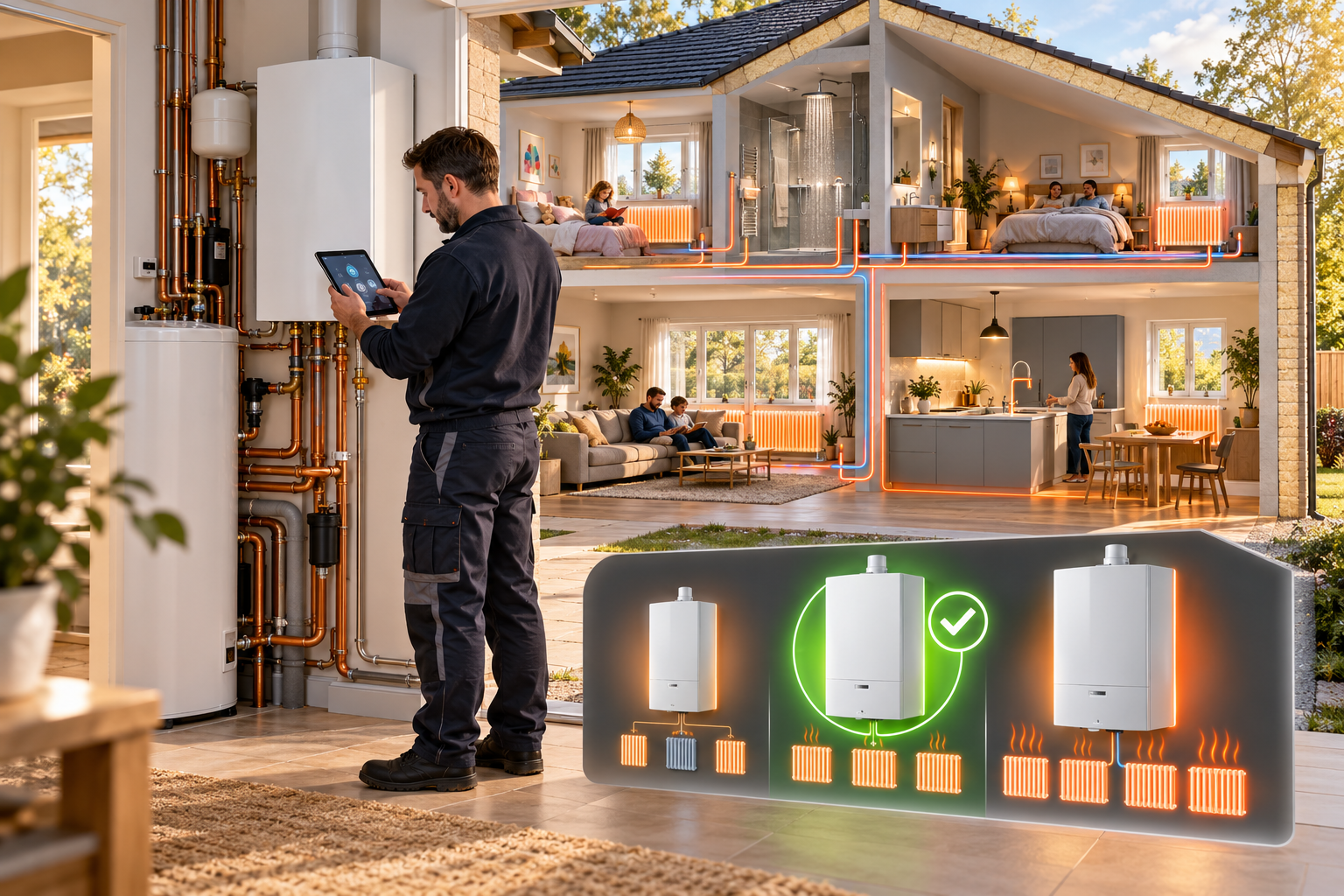
Selecting a boiler is not just selecting the unit that can fit into the available space. The requirements of the family in terms of heating and hot water should be considered as well to choose the right size of the boiler that can serve them comfortably. There are many factors considered by boiler installers while suggesting the size of the boiler.
What Determines the Right Boiler Size?
Property Size and Heat Requirements
The size of the property is another crucial first factor to consider. A smaller building with fewer rooms may require less output than a larger building with more than one bedroom and sitting room.
But it is also necessary to take into account other factors such as the number of radiators operating, room layout, insulation, and overall heating demand of the building.
Number of Bathrooms
Water heating requirements could determine the suitable boiler. A house that has one bathroom and uses water moderately would differ in its requirements from another house with many people using several bathrooms.
In houses that require more hot water, there should be a supply of enough water without inconveniencing the family members.
Household Hot Water Usage
How many people are residing in the property makes a difference in this respect. A couple living in a small property will have less need for hot water compared to a bigger family who might use the shower and bath taps regularly during the day.
That’s why the answer to how to select an appropriate boiler size is more complicated than just considering the floor area.
Understanding Boiler Output
The output of the boiler is measured in kilowatts (kW). With respect to heating, the amount of heat needed depends on the heating needs of the property to be kept at an adequate temperature.
When considering the boiler, the amount of hot water that will be required plays a vital role since the water will be heated depending on the requirement.
Knowing how to calculate the boiler size for residential properties will enable one to realise why installers take into consideration all the features of the property and not just its physical size.
When Should You Replace Your Boiler?
A homeowner could be prompted by age, inefficiency, the evolving demands of the household, or maintenance concerns to seek out a new unit. In cases where there have been alterations to the property or the uses of the home have been altered, the current boiler may no longer be the best option.
Professional evaluation can determine whether the existing setup will still suffice or whether an alternative is more desirable. This is especially important when thinking about installing a new heating system.
Conclusion
The right boiler should be chosen after analyzing the full heating and hot water needs of a building, rather than just based on its size. Household needs, bathrooms, number of radiators, insulation, and even the old system are all taken into account when making the choice. A professional boiler installer will be able to help you pick the right size boiler.
Get professional advice for your heating needs from Squires and Duran Plumbing & Heating.
FAQs
How will I get to know what size of the boiler I require?
The size of the boiler required will be based on various things such as the size of the property, heat requirement, number of radiators, bathrooms, and hot water requirement.
Is a larger boiler always good?
Not necessarily. It is important to have the correct output of the boiler according to the needs of the property.
Would the number of bathrooms make any difference regarding the size of the boiler?
Yes, since several bathrooms may require more hot water use, especially simultaneously.
Would the size of the boiler change if I add rooms to my property?
Yes, since the addition of rooms may lead to increased heating needs.
Could an installer give advice about the best boiler to install in my property?
Yes, an installer can evaluate the property and its heating and hot water demands and recommend the most suitable boiler and installation setup.