




Key Takeaways
- Self-driving cars are transforming urban transportation by enhancing safety, efficiency, and accessibility.
- Autonomous vehicles (AVs) present both opportunities and challenges for city infrastructure and traffic management.
- Effective integration of AVs requires thoughtful urban planning and policy development.
The Rise of Autonomous Vehicles in Urban Settings
Autonomous vehicles have rapidly evolved from research innovations to key players in city transportation systems. As urban centers like London and Denver welcome self-driving taxis to their streets, the daily commute is being reimagined for millions. The emergence of the autonomous self-driving taxi service model demonstrates how driverless transportation solutions can efficiently navigate busy, complex environments and adapt to shifting patterns of urban mobility.
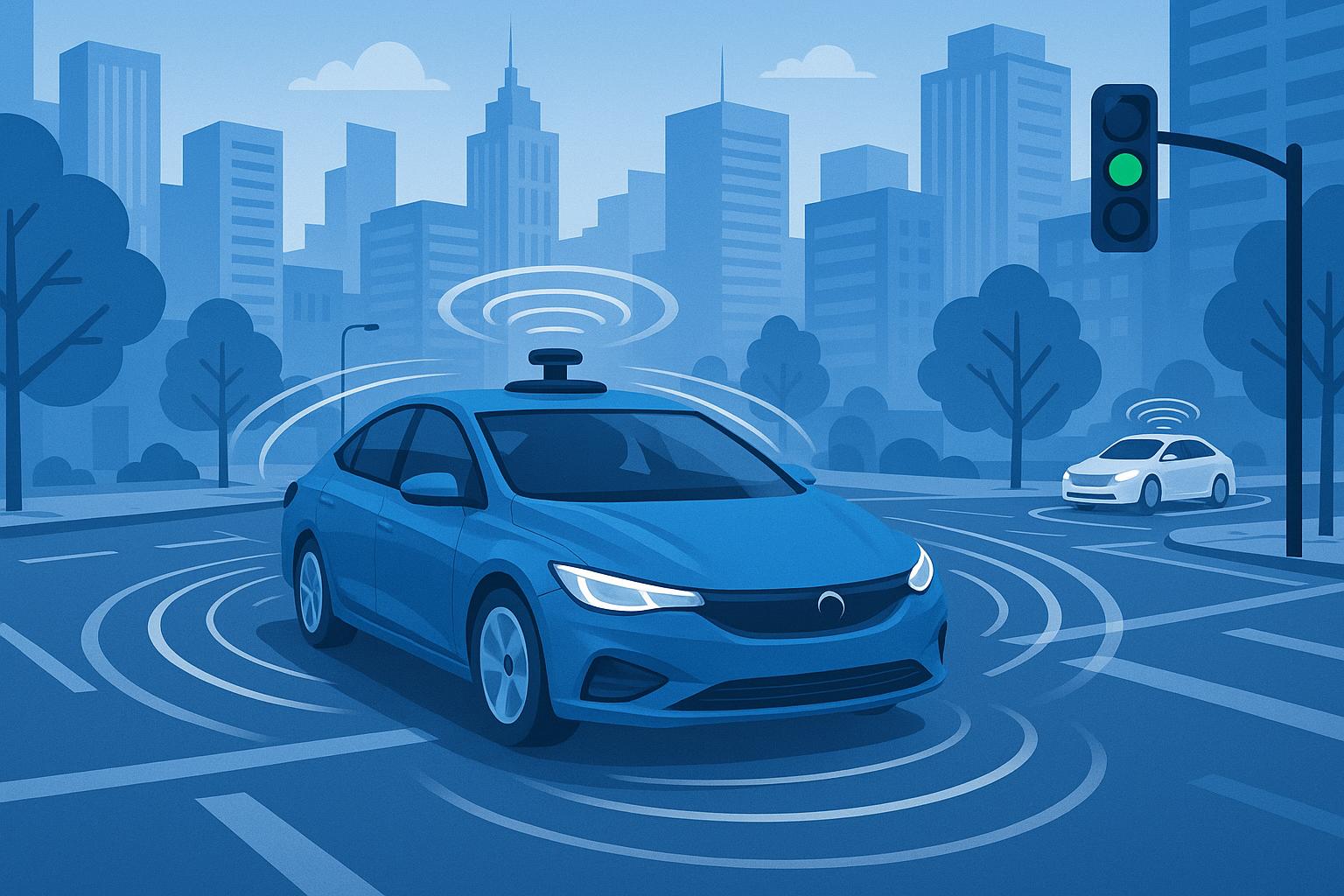
Early real-world deployments are shedding light on the practicalities, challenges, and benefits of integrating autonomous vehicles into city life. By leveraging AI, cameras, LIDAR, and other advanced technologies, these vehicles learn to interpret traffic signals, avoid obstacles, and provide consistent, reliable service. Preview drives and pilot programs are building both public trust and regulatory frameworks in anticipation of further expansion.
Cities worldwide are contending with transportation bottlenecks while grappling with issues such as emissions and road safety. Recognizing the promise of autonomous vehicles in addressing these concerns, decision-makers are intensifying research and pilot projects to assess their viability and refine the urban experience. These rapid developments in automation are not merely technological feats but also early glimpses of a new era defined by responsive, efficient urban travel.
The transition toward city-wide adoption of autonomous vehicles is not without growing pains. Urban planners caution that while autonomous vehicles can drive positive change, unchecked expansion might lead to increased congestion or underexplored social impacts. Continued research and adaptation will be essential to balance innovation with practical urban needs.
Enhancing Safety and Reducing Traffic Accidents
A primary advantage of self-driving cars is their potential to significantly reduce accident rates caused by human error. AVs employ a suite of sensors and algorithms to monitor every aspect of traffic at all times, enabling them to react instantly to unforeseen developments, road conditions, or other drivers’ actions. Compared with human drivers, AVs can process information at the millisecond scale and execute precision maneuvers to mitigate collision risk.
As cities collect more data from autonomous vehicle deployments, safety protocols and best practices are continuously improved. Regulatory agencies and technology providers are working together to set comprehensive safety benchmarks, ensuring that as AVs multiply on city streets, overall road safety will advance in step with the technology itself.
Impact on Traffic Congestion and Urban Planning
The effect of AVs on traffic congestion is a point of vigorous debate among experts. Some models project that, without oversight, self-driving cars might attract more people to use private vehicles, thereby heightening road congestion rather than alleviating it. Shared autonomous services and strategic deployment in conjunction with public transport systems are portrayed as viable tools for counteracting this risk.
For cities aiming to future-proof infrastructure, harmonizing AV rollouts with coordinated traffic management, zoning updates, and support for sustainable urban mobility is paramount. Smart intersection technology, adaptive traffic signals, and more efficient use of curb space also play key roles in accommodating both AVs and traditional transit methods.
Revolutionizing Parking and Land Use
The introduction of AVs is also redefining parking in metropolitan areas. Self-driving cars can drop passengers at their destinations and relocate to less-congested areas for storage, freeing up considerable space currently devoted to parking lots and on-street spaces. Urban developers are already exploring transforming these reclaimed spaces into parks, retail areas, and communal gathering places, thereby enhancing the quality of life and urban vibrancy. Reduced demand for parking infrastructure may also lower development costs and create opportunities for more affordable housing projects in densely populated cities. In turn, city planners can prioritize pedestrian-friendly streetscapes and expanded green spaces that encourage social interaction and active transportation. As autonomous mobility continues to evolve, the repurposing of urban land could become one of the technology’s most transformative and lasting benefits.
Economic Implications and Job Market Shifts
As with any disruptive technology, widespread AV adoption will have economic ripple effects, most notably on the job market. Roles traditionally filled by professional drivers may decrease in demand; however, new opportunities are expected to arise in sectors such as fleet management, AV system maintenance, cybersecurity, and transportation analytics. Urban policymakers and economic development leaders are looking to create retraining and support programs to help transition the workforce to this evolving landscape.
Environmental Considerations and Sustainability
Many autonomous vehicles are designed as electric or hybrid models, helping reduce city carbon footprints and supporting sustainability initiatives. Besides reducing direct emissions, AVs can optimize driving patterns to lower fuel consumption and minimize energy waste. Cleaner air and quieter streets align with broader climate goals and can make urban environments much healthier for residents.
Policy and Regulatory Challenges
Integrating AVs into cities involves navigating complex regulatory, ethical, and practical dimensions. Policymakers need to establish frameworks for liability, insurance, data privacy, and public safety benchmarks. Building consensus among technology developers, city officials, and community stakeholders is an ongoing process. Flexible policies that adapt to rapid advancements, as well as transparent dialogue with the public, are vital ingredients for successful deployment.
Conclusion
The ongoing evolution of self-driving cars is ushering in a new chapter for urban transport – one marked by safety, adaptability, and enhanced connectivity. By preparing for the associated challenges and capitalizing on the many opportunities, cities can ensure that AVs deliver significant benefits. Careful planning, broad collaboration, and forward-thinking regulation will ensure these transformative vehicles contribute positively to the urban future.