




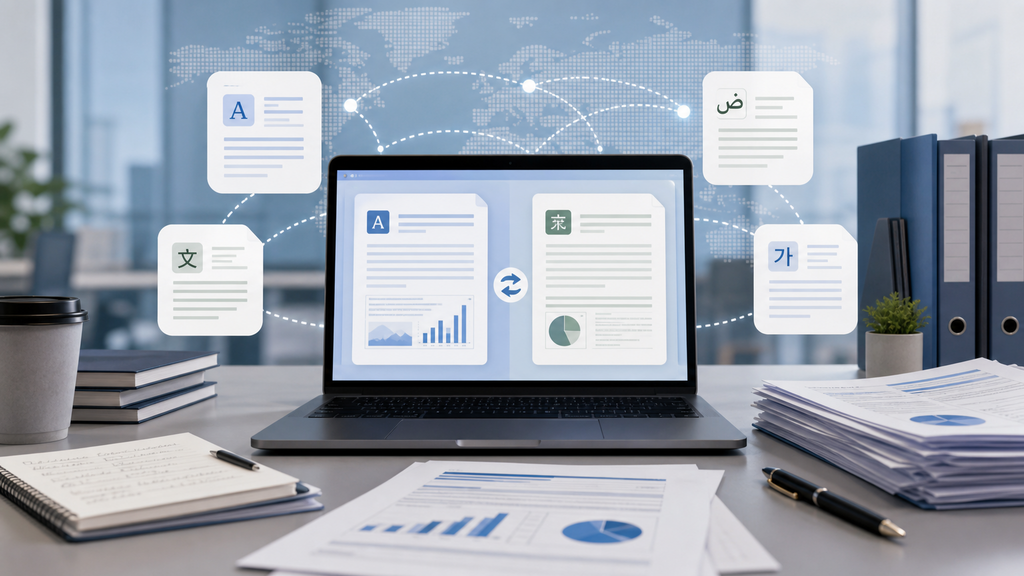
Modern business is built on documents. Contracts, product briefs, research reports, training manuals, sales decks, supplier specifications, customer instructions, and internal policies all move through teams every day. When those teams work across countries or markets, the same documents often need to be understood in more than one language.
That sounds simple until the work becomes urgent. A product team may need to review a supplier document before a launch. A sales manager may need to understand a client brief from another region. A startup may be preparing materials for investors, partners, or customers in a new market. A support team may need to translate user guides so customers can solve problems without waiting for a local office.
In these situations, document translation is not just a language task. It is a business workflow problem.
Why Document Translation Is Still Difficult
Most teams already know how to translate short text. A sentence, email, or chat message can be copied into an online translation tool. The challenge begins when the content is inside a file.
Business documents usually contain formatting. A report may include headings, tables, charts, footnotes, bullet points, and captions. A product specification may have technical terms and structured sections. A training document may include screenshots and step-by-step instructions. A presentation may need the translated text to fit into existing slides.
If a team copies everything manually, the formatting can break. If the file is long, the process becomes slow. If the content is technical, the first translation may need careful review. If several people are working on the same document, version control can become confusing.
This is why companies increasingly look for faster document translation workflows. They do not only want translated words. They want a process that helps them keep work moving.
Where AI Changes the Workflow
AI translation tools are useful because they can help teams create a first translation much faster than a fully manual process. Instead of starting with a blank page, a team can begin with an initial translated draft, then review it for accuracy, terminology, tone, and context.
This is especially helpful for everyday business documents that do not require formal certified translation. Internal reports, meeting materials, product research, customer education content, and draft market documents often need to be understood quickly. In many cases, the team needs a usable working translation before deciding whether to invest in a final professional review.
The best use of AI is not to remove human judgment. It is to reduce the repetitive work before human review begins.
For example, a product manager may receive a technical document from a supplier. AI can help create a readable version in the team’s working language. The manager can then focus on technical accuracy, missing details, and decisions. A marketing team may receive customer feedback from another region. AI can help translate the material quickly so patterns and concerns become easier to identify.
Practical Use Cases for Business Teams
One common use case is supplier communication. Global supply chains often involve documents in multiple languages. Product descriptions, quality checklists, manufacturing notes, shipping instructions, and compliance documents may need to be reviewed by teams in different countries. Faster translation helps reduce delays when teams need to respond quickly.
Another use case is customer support. Many companies create help guides, FAQs, onboarding documents, and troubleshooting instructions in one language first. If those materials can be translated efficiently, more customers can solve problems on their own. This can reduce support pressure while improving the customer experience.
Sales and marketing teams also benefit. When entering a new market, teams may need to adapt brochures, product overviews, case studies, and presentation documents. AI translation can help them prepare drafts for local review instead of waiting until every file is manually translated from the beginning.
Education and training teams can use the same approach. A company may have internal training documents that need to be shared with employees in different regions. Translating these materials faster can make onboarding more consistent across offices.
Legal, medical, financial, and official documents still require careful professional review. AI can help with early understanding and internal preparation, but high-risk content should not be published or signed without expert checking.
Keeping Quality Under Control
Speed is useful only if teams also manage quality. A translated document can create problems if terms are inconsistent or if important context is missed.
The first step is to identify which documents need full professional review and which ones are suitable for internal working translation. A casual internal summary does not require the same process as a legal contract or regulatory filing.
The second step is to keep a glossary. Product names, feature names, industry terms, department names, and technical phrases should be translated consistently. This is important for customer-facing documents and internal training materials.
The third step is to review formatting. A translated file may have longer text than the original. That can affect tables, slides, captions, and headings. Someone should check whether the final document is still readable and organized.
The fourth step is to involve a person who understands the target audience. Language is not only grammar. It includes tone, business expectations, cultural context, and local usage.
AI helps the workflow move faster, but people still decide whether the translation is ready to use.
Choosing the Right Tool
When teams evaluate translation tools, they should look beyond simple word conversion. A useful document workflow should be easy for non-technical users, support common file-based tasks, and make review practical.
Browser-based tools can be especially useful for small teams because they do not require complex software setup. A team member can upload a file, translate it, review the result, and share the output without building a new production process.
Tools such as an AI document translator can support this type of workflow by helping teams handle multilingual documents more efficiently. For businesses that work across regions, this can reduce the time spent copying text between files and make it easier to prepare documents for review, support, training, or market research.
The right tool should still fit the team’s risk level. A company should think about privacy, document sensitivity, file types, review needs, and internal approval rules before adding any translation workflow to regular operations.
A Better Process for Global Work
The companies that benefit most from AI document translation are usually not trying to automate every decision. They are trying to remove unnecessary friction.
If a team can understand a foreign-language report in minutes instead of days, it can respond faster. If customer-facing materials can be drafted in several languages before local review, market teams can move with less delay. If internal documents can be translated for employees in different regions, training becomes more consistent.
These improvements are small on their own, but they matter when repeated across many documents and teams.
AI document translation should be seen as part of a larger business process. It works best when teams combine fast translation, clear review rules, consistent terminology, and human judgment. Used this way, it can help organizations work across languages without turning every document into a bottleneck.
As more companies operate internationally, the ability to understand and prepare multilingual documents quickly will become a practical advantage. The teams that build better translation workflows now will be better prepared for global customers, partners, suppliers, and employees.