




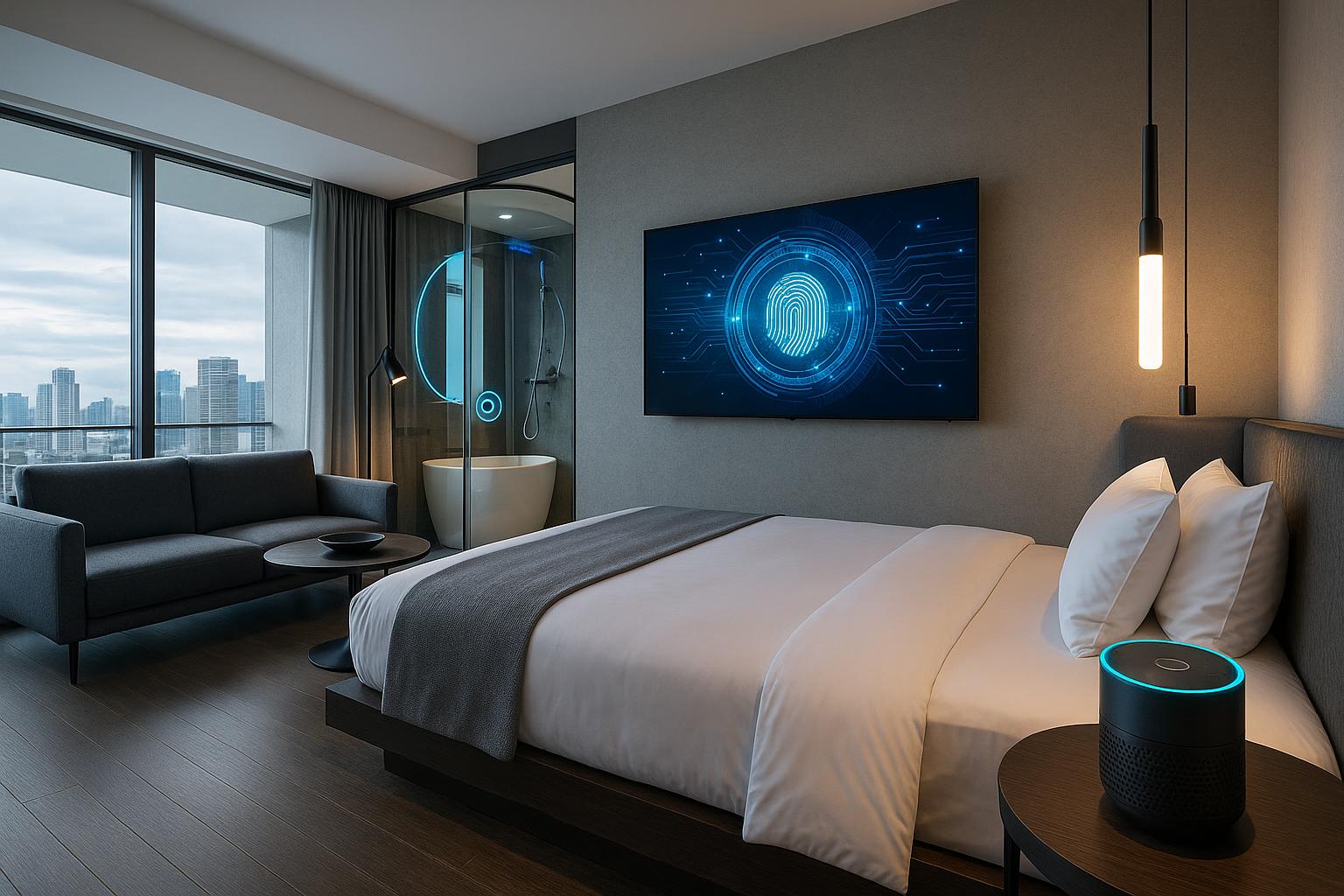
The hospitality industry is evolving rapidly as hotels integrate advanced technologies to create more personalized, efficient, and immersive guest experiences. From app-controlled rooms and AI-powered concierge services to robotic room service and biometric wellness systems, high-tech hotels are redefining what modern travel looks like. Smart sensors, voice assistants, and connected mobile apps now allow guests to control lighting, temperature, and entertainment with a simple command or tap on their phone.
Across North America, several hotels stand out for their cutting-edge innovation. These properties blend luxury with the latest hospitality technology products, offering everything from automated check-ins to futuristic sleep-optimization rooms. If you’re a tech enthusiast, or simply curious about the future of hospitality, these high-tech hotels should be on your travel radar.
1. YOTEL New York – New York City, USA
Located near Times Square, YOTEL New York is widely recognized as one of the most futuristic hotels in North America. Its design and services are built around automation and convenience.
One of its most famous features is YOBOT, a robotic luggage concierge that stores guests’ bags in high-tech lockers. This robotic arm retrieves and deposits luggage quickly and safely, reducing the need for traditional bell service. Self-service check-in kiosks further streamline the arrival process, allowing guests to skip the front desk entirely.
Inside the rooms, called “cabins”, guests find motorized SmartBeds, customizable mood lighting, and high-speed connectivity. The design emphasizes efficiency and digital control, reflecting the broader trend of micro-hotel concepts where compact spaces are optimized through technology.
Other tech perks include:
- Adjustable smart beds that convert between seating and sleeping positions
- Integrated entertainment systems and smart hospitality TVs
- App-based services for room requests and hotel information
The result is a sleek, futuristic stay designed for modern urban travelers.
2. Hotel 1000 – Seattle, USA
Seattle’s Hotel 1000 is a pioneer in intelligent hospitality design. While it maintains a refined, luxury aesthetic, the building is infused with subtle technology that enhances comfort and privacy.
One notable feature is its infrared room-occupancy sensors. These sensors detect when guests are inside the room, signaling housekeeping staff not to disturb them. This system minimizes interruptions and improves operational efficiency.
The hotel also offers unique tech-driven amenities, including:
- A virtual golf simulator with real-course experiences
- Automated room controls for lighting, temperature, and entertainment
- High-speed connectivity designed for business travelers
Rather than showcasing flashy gadgets, Hotel 1000 integrates technology seamlessly into the guest experience. The focus is on personalization and convenience, two key pillars of the modern smart-hotel movement.
3. Arlo Hotels – New York City & Miami
Arlo Hotels has emerged as a leader in tech-driven boutique hospitality. With locations in New York and Miami, the brand focuses on digital connectivity and smart room features designed for younger, tech-savvy travelers.
Each room typically includes a tablet or mobile interface that allows guests to control various room settings and request services. This approach consolidates multiple hotel interactions, room service, housekeeping, or concierge assistance, into a single digital platform.
Arlo also invests heavily in infrastructure to support smart tourism initiatives and integrated technology systems across the guest journey.
Key technology highlights include:
- Mobile check-in and digital key access
- High-speed Wi-Fi and streaming-ready TVs
- Centralized messaging systems for guest services
By combining technology with stylish design and social spaces, Arlo has created a hospitality experience tailored for digital-first travelers.
4. Equinox Hotel – New York City, USA
If there is one hotel pushing the boundaries of wellness technology, it’s the Equinox Hotel in Manhattan’s Hudson Yards district.
The property’s standout feature is its Sleep Lab rooms, which combine scientific research with cutting-edge technology to improve rest. These rooms feature cooling beds with sleep tracking, circadian lighting systems, and guided relaxation programs delivered via in-room tablets.
Guests can follow customized nighttime routines, including breathing exercises, calming soundscapes, and optimized temperature settings designed to enhance sleep quality.
Other high-tech features include:
- Advanced soundproofing and blackout systems
- Smart thermostats and climate control
- Personalized wellness technology and biometric insights
By blending fitness, science, and hospitality, the Equinox Hotel demonstrates how technology can transform something as simple as a good night’s sleep.
5. Hotel Marcel – New Haven, USA
Technology in hospitality isn’t just about convenience, it’s also about sustainability. Hotel Marcel in New Haven, Connecticut, is widely recognized as one of the most technologically advanced eco-friendly hotels in North America.
The hotel is designed as a net-zero energy property, meaning it produces as much energy as it consumes. Solar power, energy-efficient building systems, and smart climate controls help achieve this goal.
Guest rooms feature modern amenities such as smart thermostats, digital room controls, and high-speed connectivity that support both comfort and sustainability.
This combination of environmental innovation and digital technology shows how the future of hospitality may balance luxury with responsible energy use.
What Makes a Hotel “High-Tech”?
The properties above share several defining characteristics that distinguish them from traditional hotels. Modern smart hotels typically incorporate:
1. Smart Room Controls
Guests can adjust lighting, temperature, entertainment, and even curtains through voice assistants or mobile apps.
2. Mobile-First Guest Experiences
From booking to checkout, smartphones increasingly serve as the primary interface for interacting with the hotel.
3. IoT-Powered Personalization
Connected sensors and devices gather data to personalize room settings and services based on guest preferences.
4. Robotics and Automation
Some properties use robots for tasks such as luggage handling or room delivery, reducing wait times and labor demands.
5. Wellness and Biometric Technology
Sleep optimization, fitness tracking, and recovery technologies are becoming common in luxury hotels.
Together, these innovations create a more responsive and immersive hospitality environment.
The Future of High-Tech Hospitality
As digital technology continues to advance, the concept of the smart hotel will only expand. Artificial intelligence, facial recognition, augmented reality tours, and immersive entertainment are already beginning to reshape the travel experience. Hotels are also investing in sustainability technology and predictive analytics to improve efficiency while reducing environmental impact.
For travelers, this means hotel stays will become increasingly personalized and frictionless. Imagine walking into a room that automatically adjusts lighting, temperature, and music based on your past preferences, or a concierge AI that knows your favorite restaurants before you even ask.
North America’s most high-tech hotels are already giving us a glimpse of that future. By combining luxury design with cutting-edge innovation, they show how technology can transform hospitality into something far more interactive, comfortable, and memorable.