




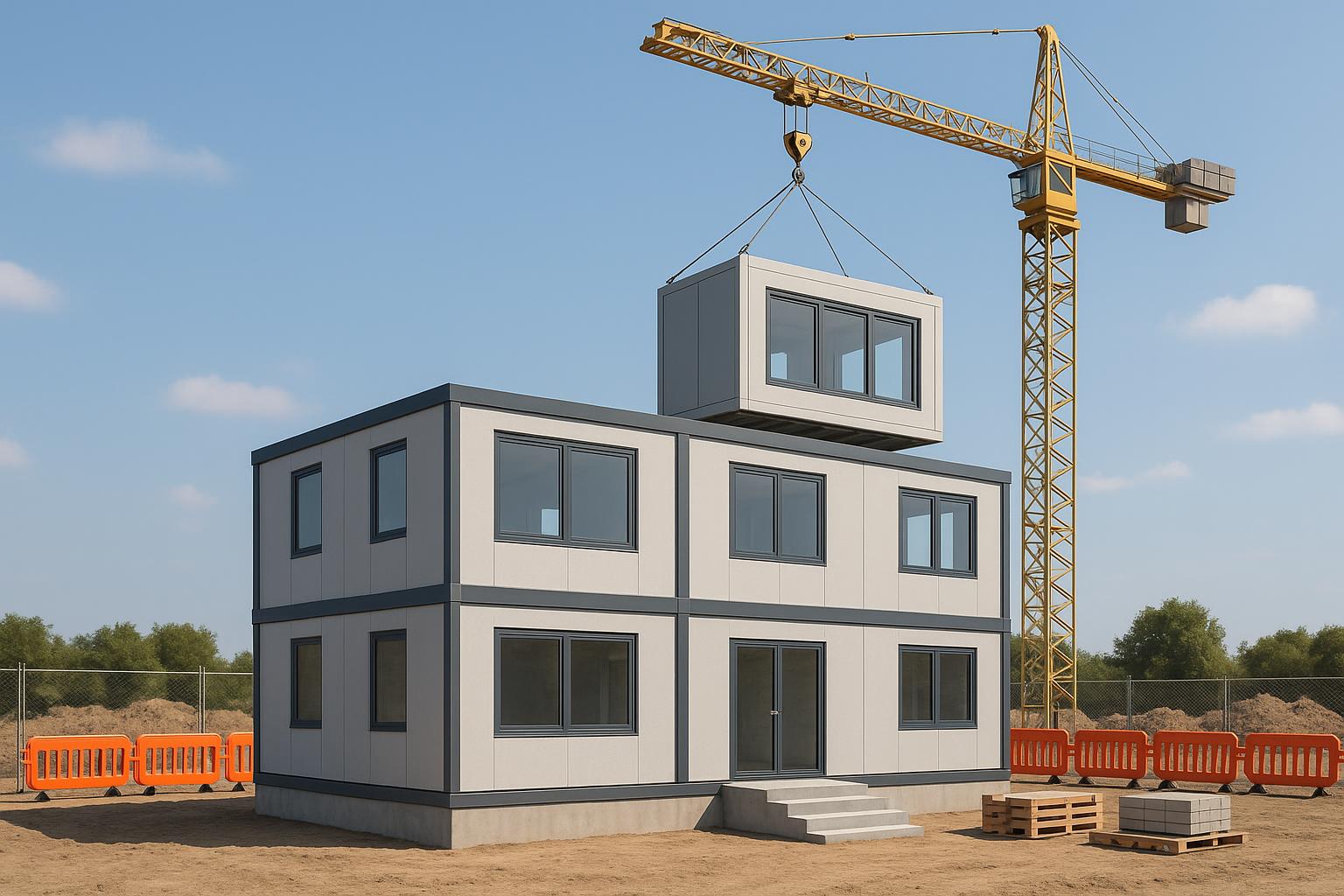
Modular construction is often associated with large-scale developments, major education projects, or multi-building commercial sites. But that only tells part of the story. Some of the biggest advantages of modular are actually felt most clearly on a smaller scale.
When you are creating a small office building, every decision matters more. There is less room for wasted space, fewer opportunities to work around disruption, and often much more pressure to get the project delivered quickly and cleanly. For many businesses, a small office is not a side project sitting on an empty plot. It is an active part of a working site, and the build needs to fit around the day-to-day running of the business.
That is exactly why modular construction has become such a strong choice for small office projects. It offers a more controlled, efficient and predictable way to create high-quality workspace, without many of the delays and headaches that come with traditional construction. When time, space and budget all feel tight, that level of control can make a huge difference.
Why small office projects need a different approach
Small office buildings come with their own set of pressures. On paper, they may look simpler than a larger development, but in reality they can be more demanding. There is often no spare land to work with, no easy place to relocate staff, and no appetite for months of noise, mess and uncertainty.
A growing business might need extra office space quickly. A commercial site may need a separate admin base that feels professional and permanent. An existing office might no longer suit the way the team works. In all of these cases, the project needs to happen with as little disruption as possible.
Traditional building methods can make that difficult. On-site construction naturally brings deliveries, trades, changing site conditions and long programmes that are harder to predict. Smaller businesses tend to feel those effects more sharply. A project delay is not just frustrating. It can affect staffing, customer experience and wider operations.
Modular construction changes that process from the start. Instead of carrying out the majority of work on your premises, most of the building is manufactured off-site in a factory-controlled environment. That means far less activity on your site and a much shorter installation period once the building is ready to be delivered.
Making the most of a smaller footprint
One of the biggest strengths of a small modular office building is the ability to design with real precision. In a smaller space, layout matters. You cannot afford to lose valuable room to awkward circulation, oversized meeting areas or storage that has been added as an afterthought.
With modular, the design process gives you the chance to resolve these details early. Rather than making adjustments during a live build, you can plan the workspace carefully before manufacturing begins. That leads to a more deliberate, more efficient end result.
A well-designed small office can still feel bright, comfortable and professional when the space is used properly. That might mean creating a layout that improves movement through the building, placing workstations to make the most of natural light, or balancing open-plan working with quieter enclosed areas. It may also involve integrating storage neatly into the structure so that it supports the space rather than taking over it.
Smaller office buildings work best when every part of the design has a purpose. Meeting rooms should be sized for how they will actually be used. Breakout areas should feel useful, not squeezed in. Access routes should feel natural. These things sound simple, but they make a huge difference to how the building performs day after day.
A better fit for active business sites
For many businesses, the biggest concern with any building project is disruption. Even a relatively modest office build can cause major issues if it drags on for too long or takes over too much of the site.
That is where modular construction becomes especially valuable. Because the building is manufactured off-site while groundworks are prepared in parallel, the overall programme becomes much more efficient. Your site is not tied up for months while the building slowly takes shape. Instead, the most intensive part of the process happens elsewhere, and installation is completed over a far shorter period.
For businesses operating from active commercial premises, this can make the project far easier to manage. Staff can keep working. Customers can still access the site more easily. Noise, congestion and disruption are greatly reduced compared with a traditional build. It turns the project from something that dominates daily operations into something that can be planned around far more comfortably.
For small teams in particular, that matters. A long, messy build is not just inconvenient. It can become a constant distraction. A shorter, more contained installation helps protect focus, productivity and day-to-day routines.
More certainty around costs and programme
Budget certainty matters on every project, but it often matters even more for smaller businesses. A large organisation may have more room to absorb delays or rising costs. Smaller teams usually do not. Unexpected changes can affect wider budgets, internal planning and confidence in the whole project.
One of the key reasons businesses choose modular construction is the clearer level of cost and programme control it can offer. Because manufacturing takes place indoors, the process is not vulnerable to the same weather-related delays that often affect site-based construction. Labour is also more consistent in a factory environment, which helps keep productivity steady and timelines more reliable.
That does not mean modular removes the need for careful budgeting, but it does reduce some of the uncertainty that businesses often worry about most. When the programme is more predictable and the process is more controlled, it becomes much easier to plan around the investment and manage expectations internally.
For many clients, that sense of clarity is a major part of the appeal. It is not only about building quickly. It is about knowing where the project stands, what comes next, and how it is progressing.
Planning, compliance and long-term confidence
A modular building must meet the same building regulations as any other permanent office building. The standards do not change simply because the construction method is different. What matters is that the building is properly designed, specified and delivered to suit its intended use.
Planning requirements will depend on the site, the size and purpose of the building, and the guidance of the local authority. For small office projects, it is especially helpful to understand these points early. A constrained site or a tight programme leaves less room for delays, so having expert support from the beginning can make the process much smoother.
Working with an experienced modular provider means those considerations can be addressed as part of a joined-up process. Design, compliance, manufacturing and delivery all need to work together, particularly when the available site space is limited. That joined-up approach helps reduce risk and keeps the project moving in the right direction.
When modular is the right choice
Modular construction is a strong option for small office buildings when the project needs to be delivered quickly, when disruption must be kept to a minimum, or when the site itself does not easily lend itself to a traditional build. It also suits businesses that want flexibility in the future, whether that means adapting the building, extending it or potentially relocating it later on.
At Paragon Space, small office projects receive the same level of attention as larger developments. The goal is not simply to deliver a building quickly. It is to create a space that feels polished, professional and built around the way your business works.
If you are planning a small office project and weighing up the best route forward, modular construction may offer exactly the balance of speed, quality and control that you need. Speak to Paragon Space to explore your options and find the right solution for your site, your team and your future plans.