




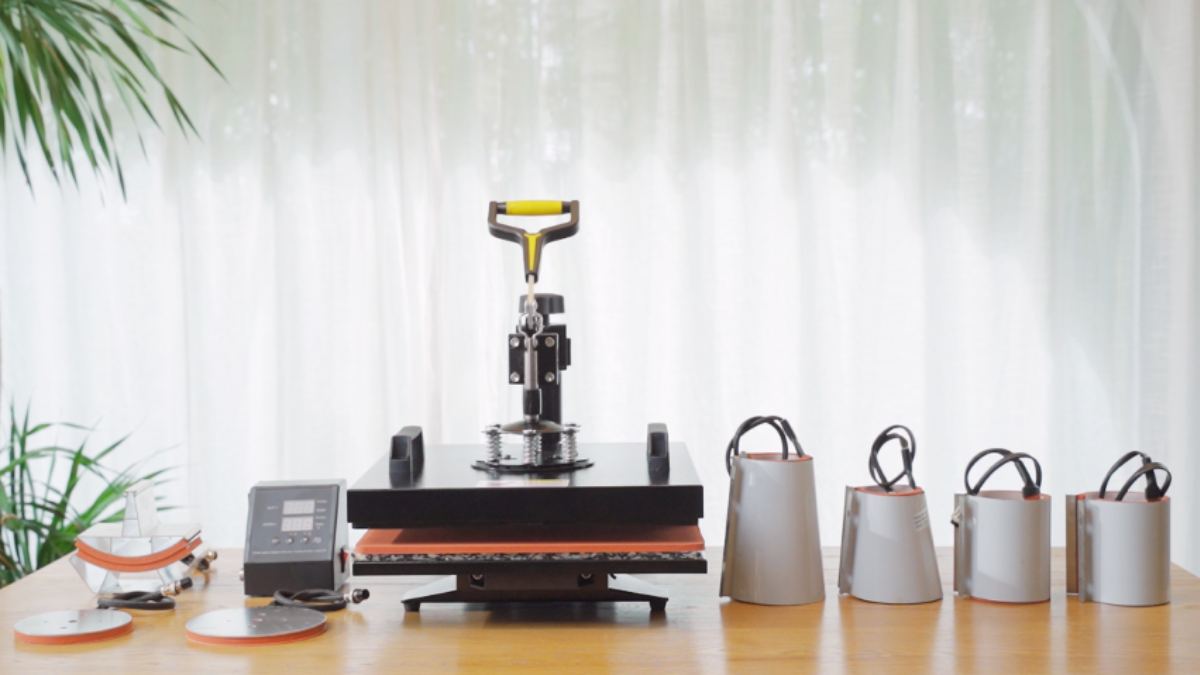
Heat press machines are one of the best ways to create a unique item by yourself because they can be used to produce various kinds of products in a short period. Therefore, more and more DIY enthusiasts are drawn to this special craft machine, on account of its convenience and high efficiency. While the troubles started coming in, whether heat press would be a beginner-friendly machine?
As far as I’m concerned, the answer should be yes. On the way to design DIY printing, it’s inevitable part that you may suffer setbacks. For example, it could be that your graphic design wasn’t just coming off well, or even that the design wouldn’t stick to surface. All things are difficult before they are easy. However, as long as you are able to handle press time and heat control with different type of materials, you will do well in printing with heat press machine like a duck to water. In this blog, we have gathered information and do short illustration so as to help beginner avoid unnecessary trouble and pay more attention to finish their DIY projects. Let’s jump in and learn more!
Heat Press Time and Temperature Chart
- Matte: 285°F-315°F / 3-12 Sec / Medium Pressure / Hot or Cold Peel
- Glitter: 315°F-350°F / 12-15 Sec / Medium Pressure / Hot or Cold Peel
- Metallic: 285°F-315°F / 10-15 Sec / Medium Pressure / Cold Peel
- Hologram: 305°F-315°F / 10-15 Sec / Medium Pressure / Cold Peel
- Vintage: 350°F / 10-12 Sec / Firm Pressure / Hot Peel
- Polyester: about 270°F / 10 Sec / Medium Pressure / Hot Peel
- Cotton: 380°F/ 15 Sec / Medium Pressure / Hot Peel
- Reflective Material: 305°F / 10-12 Sec / Firm Pressure / Cold Peel
- Stretchy Material: 335°F-350°F / 10-12 Sec / Hot Peel
- Stubborn material: 330°F/ 15 Sec / Medium Pressure / Hot Peel
- Metal-Like Finish: 320°F/ 20 Sec / Medium Pressure / Warm Peel
- High-Quality Digital Prints: 305°F/ 5 Sec / Medium Pressure / Hot Peel
- Graphic Transfer onto Light Garment: 385°F / 25-30 Sec / Firm Pressure / Hot Peel
- Graphic Transfer onto Dark Garment: 365°F / 25 Sec / Firm Pressure / Hot Peel
Setting Time
With the advancement of science and technology, the majority of heat press machines fit with digital time display settings on the market, which allow you to adjust temperature easily by pressing the “up or down” arrow keys or bottoms. Or you only need to switch knob to the time you have planned, if your heat press machine is traditional one. It’s currently available on the market, which press have an automatic shut-off function and will shut off the engine and even open the upper panel when the timer runs out. All kinds of improvement make heat transfer easier and more efficient during use. In practice, the action of adjusting temperature is not complicated, whereas it’s a special skill of how to handle accurate temperature when pressing.
Setting Temperature
Setting temperature as same as setting time, you are able to control proper value of temperature by using digital display settings or rotary knob. The only special thing is that the dial adds a Celsius or Fahrenheit sign. You can easily set it like other equipment of adjustable temperature.
Naturedly, it’s the most important to get the suitable materials and a high-quality heat press machine in the whole DIY process. However, time and temperature setting are critical factors in determining success or failure of the result as well. Following this guide, you will go ahead smoothly on the way to enjoy DIY fun!