




Dr. Ken Mwatha, a board-certified emergency medicine physician, has built a distinguished career providing high-acuity care in Baltimore’s busiest emergency departments. With experience spanning trauma response, critical diagnostics, and departmental flow management, he brings analytical precision and a deep understanding of human resilience to every aspect of his work. Beyond medicine, Dr. Mwatha’s interests reflect a broad appreciation for global cultures and histories, shaped in part by his long-standing passion for rugby—a sport closely tied to New Zealand’s national identity. Having competed for four years on the University of Wyoming rugby team, he maintains a strong connection to the sport and the traditions surrounding it. This background makes the topic of New Zealand’s rich history and cultural foundations especially fitting, particularly its Māori heritage and the country’s evolution into a modern, bicultural nation known for its deep respect for ancestry, community, and tradition.
History and Traditions of New Zealand
New Zealand, a southern hemisphere nation in Australasia, comprises two main islands and offers a unique blend of Maori seafaring traditions and Western European influences. The original Māori inhabitants called it Aotearoa, which translates to “land of the long, white cloud.”
Around 1250 AD, the Māori first settled in New Zealand. Their origin story starts with Kupe, a great Polynesian navigator, traveling across the vast Pacific until his wife, Kuramarotini, spotted a distant cloud-enveloped island. The creation myth has it that Maui, a trickster demigod, pulled the island out of the sea using a magical fishhook.
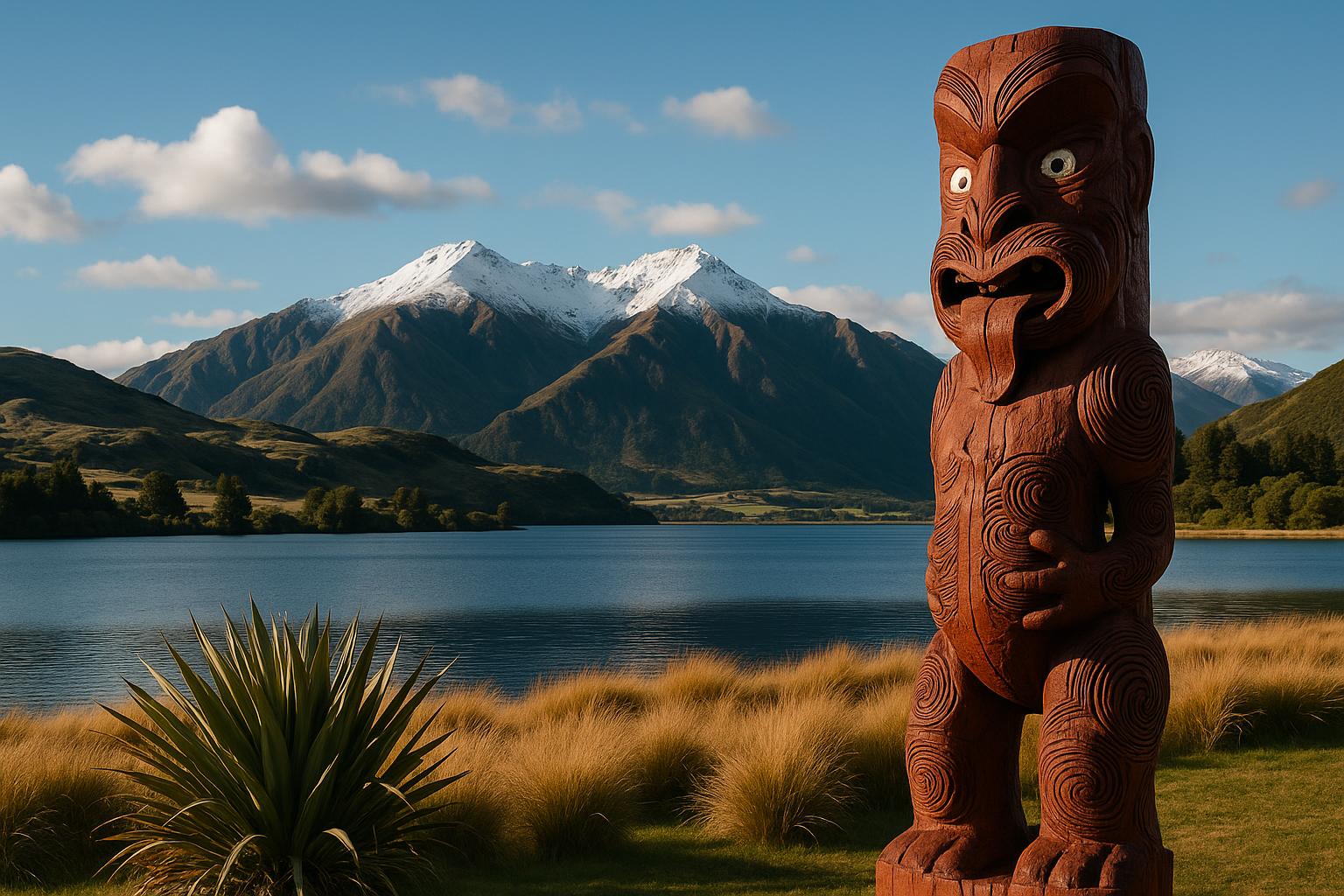
The Māori cultural tradition is diverse, animistic, and features dramatic performing arts, such as the haka. It combines chants honoring ancestors with rhythmic dance steps and pukana (wide-eyed, tongue-extending facial expressions). Such performances were traditionally either in preparation for battle or in celebration. Another hallmark of traditional Māori is ta moko, or elaborate tattoos that represent ancestry and genealogy (whakapapa), status, occupation, or significant events in one’s life. The Māori cooking tradition centers on the hangi, a method that utilizes heated river rocks to slow-cook meat buried in a pit oven.
Abel Tasman became the first European to reach New Zealand. His December 1642 encounter with the Maori proved fatal, with four of his crew members killed, along with several Maori warriors. In response to this incident, Tasman named it Golden Bay as Moordenaers’ (Murderers’) Bay. The next known contact between Europeans and Māori occurred 127 years later, with the October 1769 arrival of British explorer James Cook, the vanguard of international trade parties, in Te Tairāwhiti, also known as Poverty Bay.
Cook’s expedition focused on botany. A French vessel under the command of Jean François Marie de Surville arrived only a day later. Across the next half-century, contact between Maori people and the West was largely peaceful. Still, violent incidents made the headlines, as when Maoris attacked the British vessel Boyd and caused loss of life. It led British whalers to exact revenge, resulting in orders to steer clear of the islands, with members of the Anglican Church Missionary Society delaying an expedition.
Even with this friction, hundreds of sealers and whalers successfully traded with coastal Maori across the early 19th century. An intertribal conflict became the most protracted conflict of this era. Some believe that one-fifth of Maori perished in the so-called Musket Wars of the 1810s to 1830s. Historians today believe that, while they employed imported Western technologies, the conflicts would have happened anyway.
In 1840, Britain forged the Treaty of Waitangi, which established a process for creating a colony that would give equal status to both indigenous people and British settlers. The New Zealand Company’s plans to settle the land potentially defrauded the Maori of their ancestral lands, causing ill will, which made the treaty necessary. Captain William Hobson’s efforts on behalf of the Colonial Office gained consent from no less than 40 Maori chiefs.
Ultimately, the treaty led to a Eurocentric governance system, as the Maori, who owned land communally, did not participate in the House of Representatives, which limited representation to individual landowners, renters, or lessees. While the new colony created four Māori parliamentary seats in 1867, these represented a small fraction of the 76 total seats. Modern times have addressed the imbalance as 16.5 percent of the population consider themselves Māori, fairly represented in parliament, and the once-forbidden tongue of te reo Māori is now a national language.
About Ken Mwatha
Dr. Ken Mwatha is a board-certified emergency medicine physician who provides critical, high-acuity care at one of Baltimore’s major emergency departments. With experience ranging from trauma stabilization to rapid diagnostics, he has held attending physician roles at both St. Agnes Hospital and Harbor Hospital. He has contributed to medical research through work with Johns Hopkins on imaging studies, IBD genetics, and HIV mechanisms, and co-authored materials for emergency medicine trainees. A former collegiate rugby player with a lasting passion for the sport, Dr. Mwatha carries a deep appreciation for global cultures, travel, and traditions such as those of New Zealand’s Māori people.