




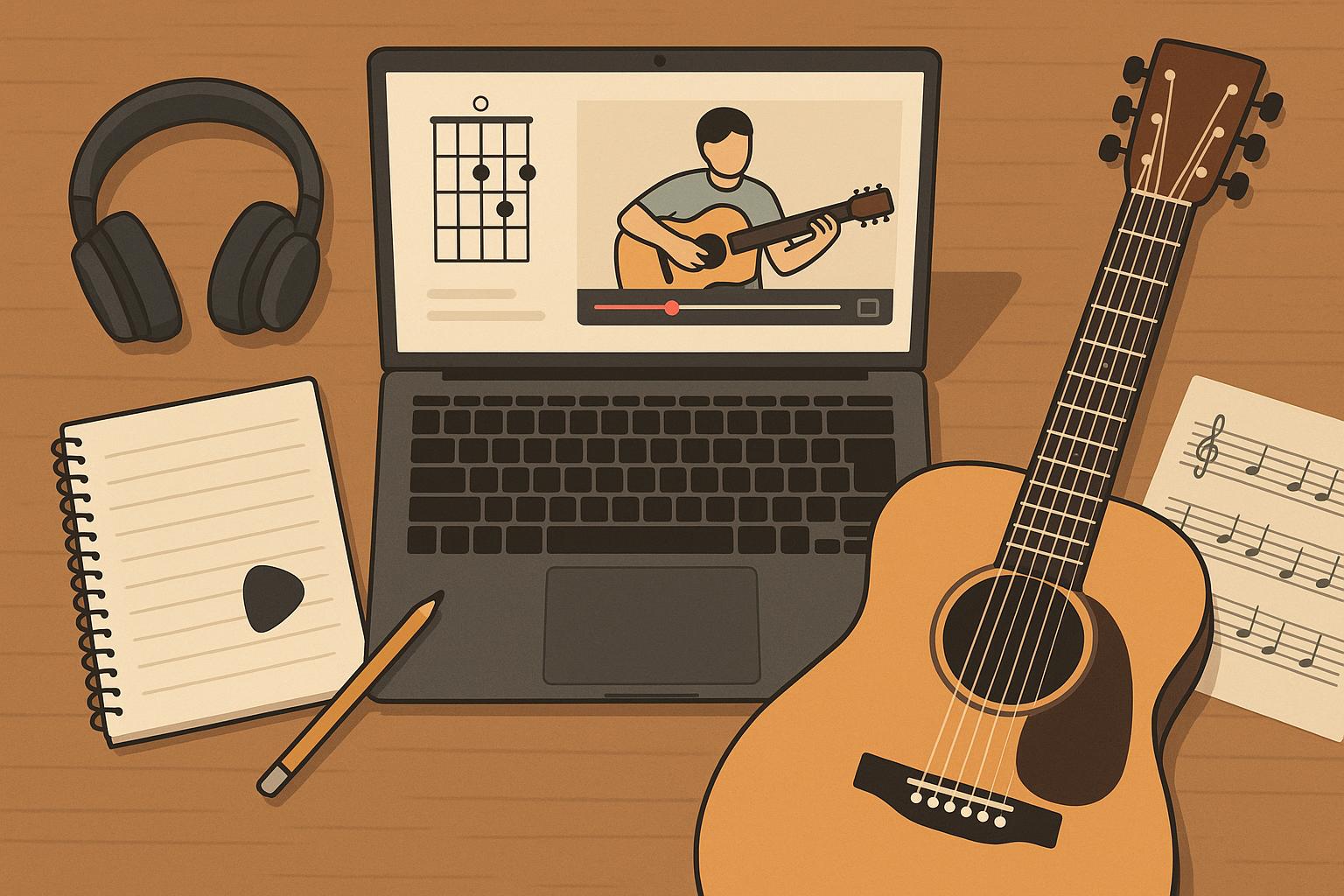
Learning the guitar has never been more accessible. Whether you want to play your favorite songs, perform on stage, or simply pick up a new hobby, you can now learn guitar online from the comfort of your home. With the right guidance, consistent practice, and structured lessons, beginners can build a strong foundation without attending an in-person class.
The challenge isn’t finding lessons, it’s choosing the right learning path. While free videos and apps are a good starting point, many learners struggle with incorrect techniques, lack of feedback, and inconsistent practice. That’s why many beginners eventually choose guitar courses online that offer live instruction and personalized guidance.
In this guide, we’ll walk you through the steps to start learning guitar online and what to look for in a course.
Step 1: Decide What You Want to Learn
Before you start, think about your goals.
Ask yourself:
- Do you want to play Bollywood songs?
- Are you interested in acoustic or electric guitar?
- Do you want to learn chords for singing?
- Are you preparing for performances or music exams?
Knowing your goal will help you choose lessons that match your interests and keep you motivated.
Step 2: Choose the Right Guitar
You don’t need an expensive instrument to begin.
For most beginners:
- Acoustic guitar is ideal for learning chords and rhythm.
- Electric guitar is better if you’re interested in rock, blues, or metal.
- Classical guitar is suitable for fingerstyle and classical music.
Choose a comfortable guitar that fits your budget and feels easy to hold.
Step 3: Learn the Basics First
Many beginners rush into learning songs. Instead, spend time building the fundamentals.
Start with:
- Guitar posture
- Holding the pick correctly
- Finger placement
- Open chords
- Basic strumming patterns
- Rhythm and timing
These basics make learning advanced techniques much easier later.
Step 4: Follow a Structured Learning Plan
One of the biggest mistakes beginners make is jumping between random YouTube tutorials.
A structured learning path usually follows this sequence:
- Understanding guitar parts
- Basic chords
- Chord transitions
- Strumming techniques
- Playing simple songs
- Finger exercises
- Barre chords
- Fingerstyle techniques
- Scales and improvisation
Following a step-by-step plan helps you progress steadily without feeling overwhelmed.
Step 5: Practice Consistently
Even 20–30 minutes of focused practice each day is more effective than practicing for several hours once a week.
A simple practice routine could include:
- 5 minutes of finger warm-ups
- 10 minutes of chord practice
- 10 minutes of rhythm exercises
- 10 minutes of learning a new song
- 5 minutes of revision
Consistency matters far more than long practice sessions.
Step 6: Learn from an Experienced Instructor
While free online resources are useful, they can’t correct your posture, finger positioning, or technique.
Learning with an experienced instructor offers several advantages:
- Real-time feedback
- Personalized lesson plans
- Better motivation and accountability
- Faster progress
- Correct technique from the beginning
Many students find that live online classes help them overcome learning plateaus much faster than self-learning.
Step 7: Apply What You Learn
The best way to improve is by playing music you enjoy.
As you progress, try:
- Playing along with your favorite songs
- Recording your practice sessions
- Performing for friends or family
- Joining online music communities
- Learning songs in different genres
Applying your skills regularly builds confidence and improves musicality.
How to Choose the Right Guitar Course Online
Not all online courses offer the same learning experience.
When comparing guitar courses online, look for:
- Live one-on-one or small-group classes
- Experienced instructors
- Flexible scheduling
- Personalized feedback
- Beginner-friendly curriculum
- Opportunities to perform and track progress
A structured course can save months of trial and error compared to learning entirely on your own.
Can You Really Learn Guitar Online?
Yes. Thousands of students successfully learn guitar online every year.
The key factors that determine your progress are:
- Regular practice
- Quality instruction
- A structured curriculum
- Patience and consistency
Whether you’re learning for fun or planning to perform professionally, online lessons can provide the flexibility and guidance needed to achieve your goals.
Where to Learn Guitar Online
If you’re looking for a structured learning experience, consider platforms that offer live classes instead of only pre-recorded videos. Interactive sessions allow instructors to correct mistakes, answer questions, and adapt lessons based on your progress.
For learners seeking personalized guidance, Spardha School of Music offers live one-on-one online music classes with experienced instructors. Students can learn at their own pace while receiving individual attention, making it easier to build confidence and develop strong playing techniques.
Final Thoughts
Choosing to learn guitar online is one of the most convenient ways to begin your musical journey. With the right instrument, consistent practice, and guidance from experienced teachers, beginners can develop strong fundamentals and enjoy steady progress.
Instead of rushing through lessons, focus on mastering the basics, practicing regularly, and learning from reliable instructors. Over time, these small, consistent efforts will help you become a confident guitarist.