




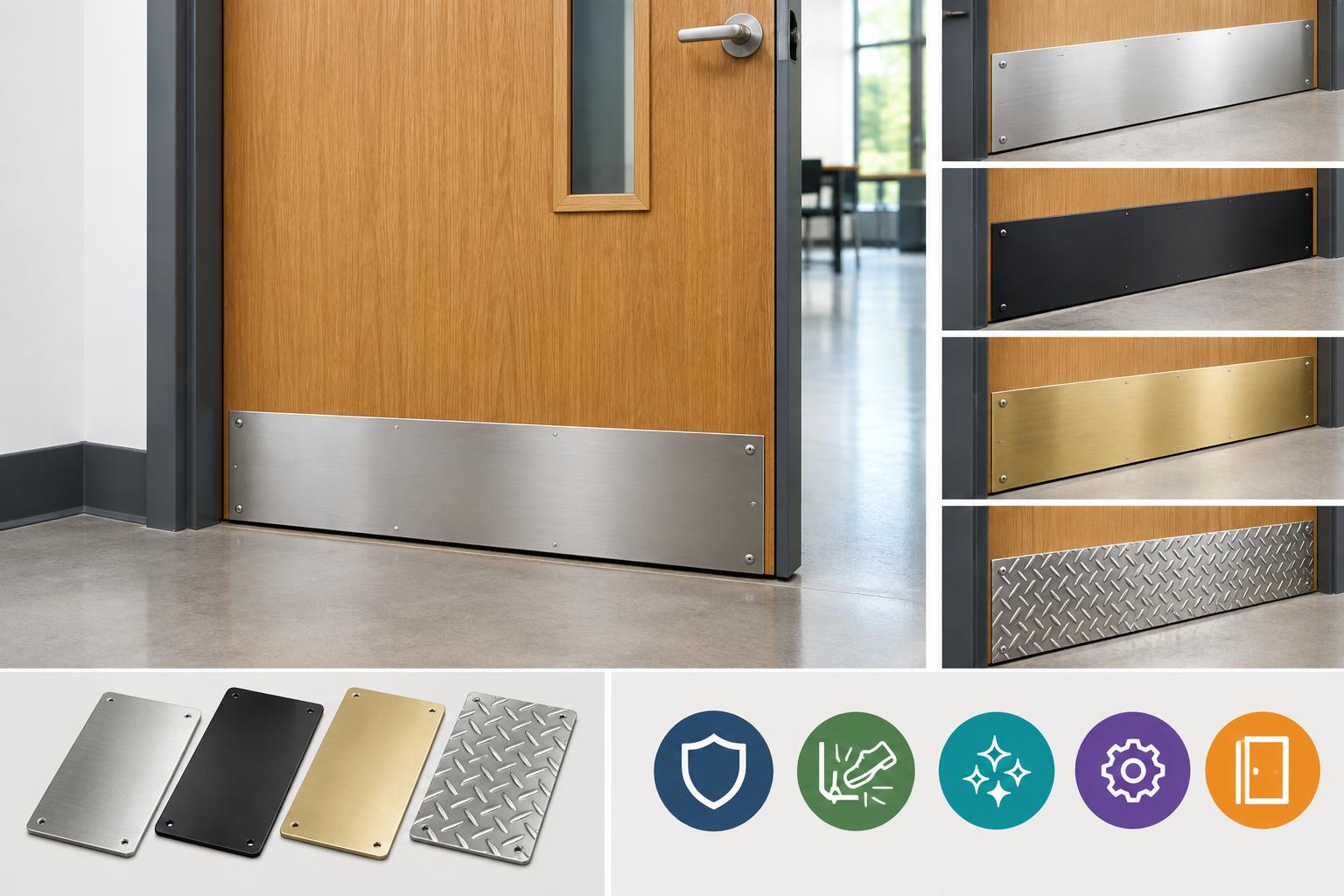
Doors in commercial buildings, offices, hospitals and industrial facilities are exposed to constant daily use. Footwear, cleaning equipment, delivery trolleys and other moving objects can gradually damage the lower surface of a door. Over time, repeated impacts may cause scratches, dents, chipped finishes and general wear, particularly in busy areas.
A simple way to reduce this damage is to install a protective metal plate near the bottom of the door. These fittings are commonly used in buildings where doors experience frequent contact with people, equipment or materials. Choosing the right material, dimensions and fixing method can help extend the service life of a door while maintaining a neat and professional appearance.
What Is a Door Kick Plate?
A door kick plate is a protective panel fitted to the lower section of a door. It is usually rectangular and made from durable materials such as stainless steel or aluminium. Its main purpose is to protect the door surface from impacts caused by shoes, bags, trolleys and other objects.
Kick plates are particularly useful on doors that close automatically or have handles on only one side. In these situations, people may use their feet or nearby equipment to push the door open, creating repeated contact with the lower panel.
The metal plate acts as a protective barrier between the door material and everyday impacts. It can be installed on wooden, composite and other suitable door surfaces, provided the fixing method is compatible with the door construction.
Where Are Kick Plates Commonly Used?
Kick plates are found in a wide range of commercial and industrial environments. Their practical design makes them suitable for locations where doors receive frequent use.
Offices and commercial buildings: Entrance doors, meeting room doors and corridor access points can experience continuous foot traffic. Protective plates help reduce visible damage and maintain the appearance of frequently used doors.
Hospitals and healthcare facilities: Hospital beds, medical equipment and supply trolleys regularly move through doorways. Kick plates help protect doors from repeated contact, especially in corridors and treatment areas.
Schools and educational institutions: Classroom doors, shared facilities and main entrances are exposed to frequent use by students, staff and visitors. Metal protection can help reduce everyday surface wear.
Warehouses and distribution centres: Trolleys, pallet equipment and material handling tools can accidentally strike doors during normal operations. A suitable kick plate provides an additional layer of protection.
Restaurants and food preparation areas: Staff often move between rooms while carrying supplies or equipment. Protective plates can help preserve door surfaces in busy service environments.
Different Types of Door Kick Plates
Kick plates are available in different materials and finishes. The most suitable option depends on the environment, expected impact levels, maintenance requirements and appearance of the door.
Stainless Steel Kick Plates
Stainless steel is a popular choice for applications requiring durability and resistance to corrosion. It is suitable for busy commercial environments and areas where regular cleaning is necessary.
Its surface is generally easy to maintain, making it a practical option for healthcare facilities, kitchens, laboratories and other settings where hygiene is important. Stainless steel plates are available in different finishes, including brushed and polished styles.
Aluminium Kick Plates
Aluminium plates are lightweight and offer useful protection against everyday wear. Their lower weight can make them suitable for many internal doors, particularly where a heavy protective fitting is unnecessary.
Aluminium also offers resistance to atmospheric corrosion, although its surface characteristics and durability depend on the alloy and finish. It can be a practical option for offices, commercial premises and general building applications.
Steel Kick Plates
Steel provides a strong protective surface and may be suitable for applications where durability is a priority. However, ordinary steel may require an appropriate coating or finish to protect it against corrosion, especially in damp environments.
Kick Plates and Push Plates: Understanding the Difference
Although kick plates and push plates are both used to protect door surfaces, they serve different purposes.
A kick plate is fitted near the bottom of a door to protect against contact from footwear, trolleys and other low-level objects. It generally covers a wider horizontal section of the door.
A push plate is usually installed at the height where people place their hands to push a door open. It protects the surface from repeated hand contact, scratches and general handling marks.
Both types of hardware can be useful in busy buildings. For example, a commercial entrance may use a push plate around the opening area and a separate kick plate near the bottom to protect against different forms of wear.
How to Choose the Right Door Kick Plate
Before purchasing a protective plate, consider the following factors to ensure that it suits the door and its operating environment.
Material: Choose stainless steel for applications where corrosion resistance and frequent cleaning are important. Aluminium may be suitable for lightweight internal applications, while coated steel can provide a durable option for general use.
Dimensions: Measure the door width and decide how much of the lower surface needs protection. The plate should be wide enough to cover the expected impact area without interfering with the door frame or surrounding hardware.
Height: Consider the typical height of impacts. A taller plate may provide greater coverage in areas where trolleys or equipment frequently contact the door.
Fixing method: Screw-fixed plates provide a mechanical fixing and are commonly used for secure installation. Check the door material and thickness before selecting suitable fasteners.
Finish: Choose a finish that complements the existing door furniture, handles, hinges and surrounding architectural design. Brushed and polished finishes can create different visual effects.
Maintenance requirements: Consider exposure to moisture, cleaning chemicals and general environmental conditions. The selected material should be suitable for the expected maintenance routine.
Installation and Maintenance Considerations
Correct installation is important for ensuring that a kick plate provides effective protection without affecting door operation.
Start by measuring the door and checking the available clearance around the frame and floor. The plate should be positioned evenly and securely, with enough space to prevent contact with the flooring when the door opens and closes.
For screw-fixed models, use fasteners suitable for the door material. Mark the fixing positions carefully and ensure that the plate sits flat against the surface. If the door has a special finish, fire rating or structural requirement, confirm that the proposed installation method is compatible with its specifications.
Regular maintenance is generally straightforward. Wipe the plate with a suitable cleaning product, remove accumulated dirt and inspect the fixings periodically. Avoid abrasive cleaning materials that may damage polished or brushed finishes.
Finding Quality Door Protection Hardware in Australia
Selecting suitable door hardware involves balancing durability, appearance, dimensions and installation requirements. For businesses managing multiple premises, choosing consistent fittings can also simplify maintenance and replacement.
RS Australia offers a range of door protection products, including stainless steel and aluminium kick plates, as well as push plates from its RS PRO range. Buyers can compare available product specifications, materials, fixing methods and dimensions to identify suitable options for their applications.
For businesses looking for a reliable door kickplate, reviewing the product details before ordering is an important step. Consider the door construction, expected impact levels, required coverage and environmental conditions to make an informed selection.
A well-chosen kick plate is a relatively simple addition that can help protect frequently used doors, reduce surface damage and maintain the appearance of commercial and industrial spaces over time.