




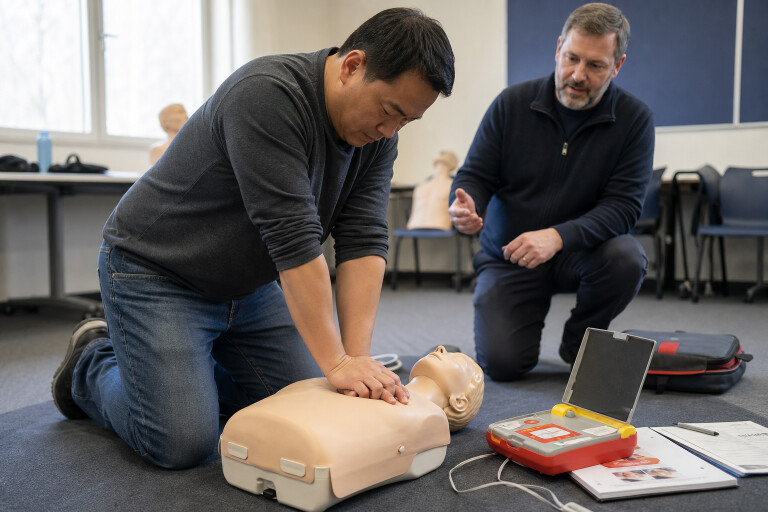
Table Of Contents
- Why CPR Renewal Still Matters
- Check The Expiration Date Early
- Choose The Right Course For The Role
- Compare Online, Blended, And In-Person Training
- Refresh Skills Between Renewal Dates
- Keep Clear Certification Records
- Use A Workplace CPR Checklist
- Avoid Common Renewal Mistakes
- Frequently Asked Questions
- Final Takeaway
CPR renewal is not simply an administrative task. It is an opportunity to revisit essential emergency-response skills, confirm that a credential still fits your role, and make sure your records are ready when an employer, licensing board, or new position asks for proof. If you are considering online CPR recertification, start by checking exactly what your workplace or profession requires before enrolling.
Many CPR credentials are issued for two years, but renewal policies can differ by course provider, employer, professional role, and state or local licensing requirements. A current certificate matters, but so does the ability to respond calmly, call for help, locate an AED, and use the techniques taught in an approved course.
1. Why CPR Renewal Still Matters
Emergency skills can become less familiar when they are not practiced regularly. Renewal training gives learners a structured chance to review the steps for responding to cardiac or breathing emergencies, practice compressions and AED use when included, and ask questions about situations they may encounter at work. It also helps distinguish between holding a card and feeling prepared to act.
Requirements are not identical for every learner. A teacher, fitness instructor, childcare worker, dental assistant, security professional, and hospital employee may all need different course content or documentation. Confirming the required level before registration protects against paying for training that an employer cannot accept.
2. Check The Expiration Date Early
Do not wait until the final week of validity to look for a class. Scheduling early gives you time to compare formats, find a hands-on session if one is needed, and correct missing records before a shift, onboarding date, or compliance review is affected.
Suggested Checklist
- Locate the expiration or renewal date on the certificate or digital record.
- Ask whether your employer requires renewal before the printed expiration date.
- Review any rules tied to your license, credential, or job classification.
- Set calendar reminders several months ahead and again 30 days before expiration.
- Save a secure digital copy of the current certificate.
3. Choose The Right Course For The Role
A general community CPR class may be appropriate for some roles, while a healthcare setting may require Basic Life Support, commonly called BLS. The American Heart Association describes its BLS course options for healthcare professionals and trained first responders as including both classroom and blended pathways, with a hands-on skills component required for successful completion.
Questions To Ask Before Registering
- Is this course designed for my actual work duties?
- Does my employer require CPR, CPR/AED, First Aid/CPR/AED, or BLS?
- Will I need a live or in-person skills evaluation?
- Can my employer verify the certificate after completion?
- Does the course follow the training standard named in my workplace policy?
Community CPR generally focuses on responding to common emergencies. Workplace training may add first aid, AED response, or site-specific expectations. Healthcare-provider BLS is broader and is intended for professionals who may need to respond as part of a clinical or trained response team. The least expensive option is only a good value when it meets the requirement.
4. Compare Online, Blended, And In-Person Training
The training format should fit both your learning needs and the credential requirements. Online courses can offer convenience and self-paced study. Blended courses pair online lessons with a practical session. In-person classes provide instructor guidance and live practice throughout the course.
- Online: Useful for flexible learning, but an online-only course may not meet workplace certification requirements.
- Blended: Combines digital coursework with an in-person skills session.
- In-person: Offers direct coaching, questions, practice, and immediate feedback.
The American Red Cross notes in its CPR renewal guidance that online-only training does not qualify for some workplace needs, while blended learning includes hands-on training in person. Always get format approval from the employer or licensing authority that will review your certificate.
5. Refresh Skills Between Renewal Dates
A certificate period should not be treated as two years without review. Short refreshers can make course material easier to recall when an emergency happens. Review the workplace emergency action plan, identify the nearest AED, and make sure staff know how to contact emergency services and give a precise location.
- Join brief team drills or scheduled skills refreshers.
- Review adult, child, and infant response procedures when they apply to your setting.
- Confirm that AED access points are clearly identified.
- Use course-provider materials rather than unverified social media demonstrations.
6. Keep Clear Certification Records
Good documentation reduces last-minute confusion. Individuals should keep certificates in a secure digital folder as well as any employer portal required by their organization. Employers can use a restricted spreadsheet, shared compliance system, or training-management platform to track upcoming deadlines.
Information To Record
- Learner name and job role.
- Course title, training level, and provider.
- Completion and expiration dates.
- Certificate ID or verification details, when available.
- Notes about required skills testing or special renewal conditions.
7. Use A Workplace CPR Checklist
- Identify positions that require CPR, AED, First Aid, or BLS training.
- Match each position with the appropriate course level.
- Audit current expiration dates and missing records.
- Schedule training before deadlines become urgent.
- Confirm whether hands-on evaluation is required.
- Store completion records in one secure, accessible system.
- Review the process after each training cycle.
A dental office may need to track clinical staff credentials, while a fitness center may focus on employees assigned to emergency response. Childcare programs, construction sites, and hospital units can each have different staffing patterns, risks, and documentation obligations. A single checklist can support all of them when the required course level is customized by role.
8. Avoid Common Renewal Mistakes
- Waiting until after the certificate expires to schedule training.
- Registering before checking employer acceptance.
- Assuming standard CPR and BLS are interchangeable.
- Assuming every online course includes practical skills testing.
- Leaving the only certificate copy in an email inbox.
- Failing to update workplace records after completion.
For example, an employee may accept a new healthcare position and later learn that a general CPR card does not meet the facility’s BLS requirement. That problem is usually avoidable by asking for the exact course name, accepted provider, and format before paying for registration.
9. Frequently Asked Questions
How Often Should CPR Training Be Renewed?
Many CPR credentials use a two-year renewal cycle. The exact timing should be confirmed with the course provider and the organization that requires the credential.
Can CPR Training Be Completed Online?
Online learning options are available, but employer acceptance varies. Some workplaces require a live skills demonstration or a blended course with an in-person session.
Is CPR The Same As BLS?
No. CPR is a core emergency-response skill, while BLS is a broader training level commonly used for healthcare professionals and trained responders.
What Happens If A Certificate Expires?
An expired credential can create a workplace or licensing gap. Check the relevant policy to determine whether you need a renewal course or a full course.
How Can Employers Track Many Employees?
Use a shared expiration calendar, monthly reviews, clear ownership of compliance tasks, and reminders well before deadlines.
10. Final Takeaway
CPR renewal is more than replacing a card. The strongest process connects the correct course level, practical skills, reliable records, and clear workplace expectations. Planning ahead gives learners and employers more time to choose the right format, complete any required skills session, and stay ready to respond when every second matters.