




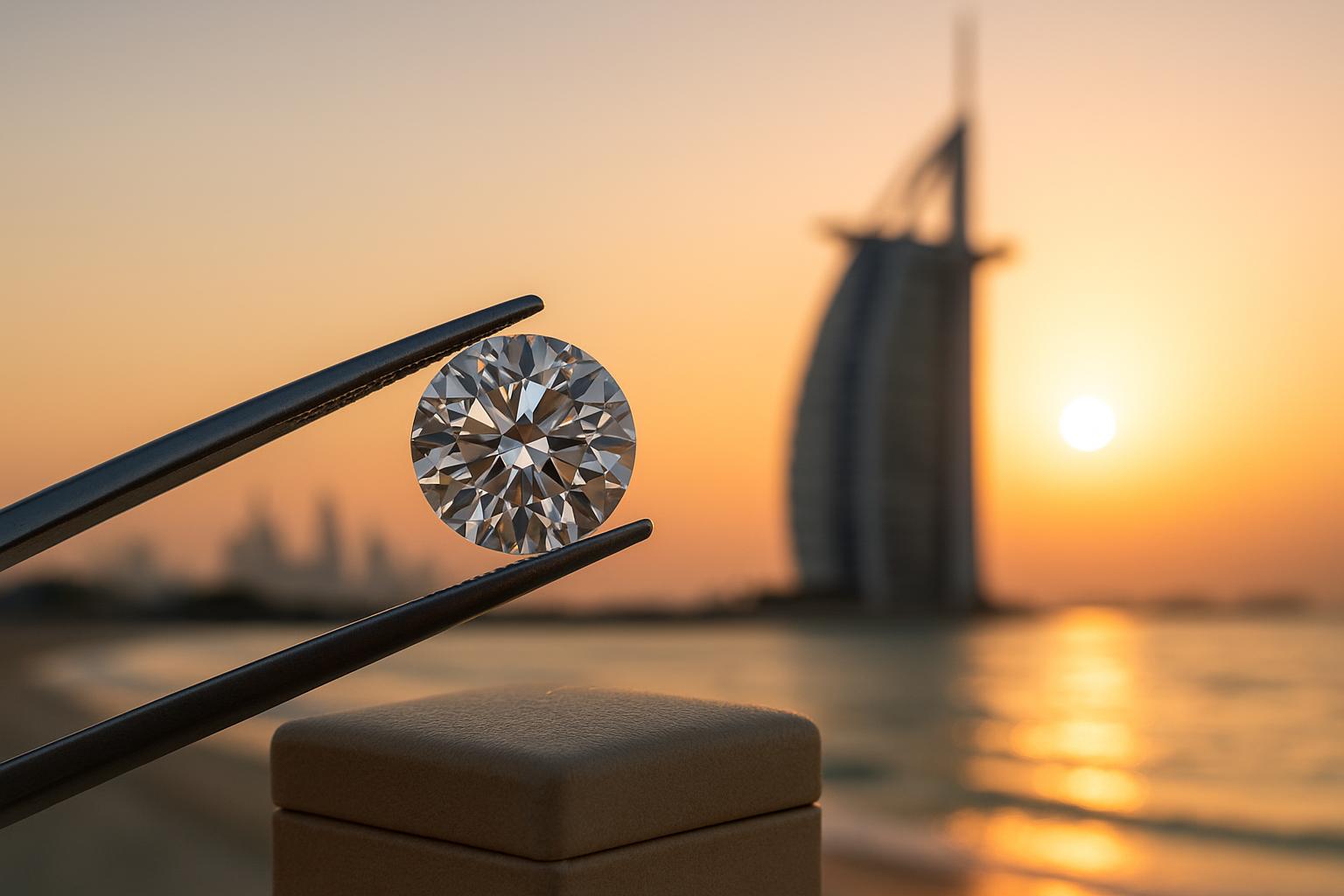
Dubai has sold gold for as long as it has sold anything. What has changed is what now sits alongside it. The city that built its reputation on bullion and bridal sets also supports a generation of jewellers working to order, certifying every stone and shipping across the Gulf and well beyond it. For a buyer, that is a better market and a more confusing one, and the difference between the two comes down to what you think to ask.
The market moved, and so did the questions
A decade ago, buying a diamond in the Gulf meant a shop, a tray and a negotiation. Much of that still exists, and there is nothing wrong with it. But it now sits alongside a made-to-order model: a design agreed first, a stone selected against a grading report, the piece built afterwards to fit the person who will wear it.
Anyone searching lab diamonds dubai will see both worlds in the same set of results — international sites shipping in, and workshops operating a few minutes from the city centre. The questions below separate them faster than any amount of browsing, and none of them require expertise to ask.
Which laboratory graded the stone?
Three grading laboratories carry weight: GIA, IGI and AGS. IGI is especially established for lab-grown diamonds and is widely accepted across the Middle East. Ask which one graded the stone, and ask to see the report itself rather than a summary of it.
The report gives you the four Cs — cut, colour, clarity and carat — and of those, cut does the most work; it is what determines whether a stone looks alive rather than merely large. GIA grades cut from Excellent to Poor, IGI from Ideal to Poor. Just as importantly, a report lets you compare two quotes on identical terms, which is the real reason to insist on one.
What karat, and is the gold solid?
Gold is where the difference between two similar-looking pieces usually hides. Ask for the karat, and ask whether the gold is solid or plated. Solid 18 karat gold holds its colour, wears predictably and can be repaired, resized and eventually recycled. Plated and vermeil pieces cannot take the same work, and the difference shows up years later rather than in the showroom.
FYNE, which launched in Dubai in November 2019 as the Middle East's first lab-grown diamond jewellery brand, works exclusively in solid 18kt gold, yellow and white. Whether or not that is where you end up buying, it is a straightforward specification to ask any jeweller for, and a straightforward one for them to answer.
Made to order, or off the shelf?
Made to order changes two things: what you can specify, and how long you wait. A piece built for you can be adjusted in shape, stone and proportion before anything is cast, which is the whole point. It also cannot be collected the same afternoon.
If you are buying to a date — a proposal, a wedding, a flight home — say so in the first conversation rather than the last. A jeweller who genuinely works to order will tell you honestly whether the timeline holds, and a vague answer at that point is itself an answer.
What happens in year three?
Aftercare is the question almost nobody asks and almost everybody eventually needs. Prongs loosen. Clasps wear. Rings are resized as hands change over a decade. Before you buy, ask what is covered, for how long, and what happens once that period ends.
Terms differ from jeweller to jeweller and are worth reading rather than summarising. What you are listening for is whether the workshop expects to see the piece again: cleaning, re-polishing, stone replacement and resizing offered as ordinary services suggest a jeweller who intends to stand behind what they made.
Certification, karat, timeline, aftercare. All four are answerable in a sentence by someone with nothing to hide, and all four are quietly revealing when they are not. Ask them in that order, in any showroom or any inbox, and a crowded market sorts itself out considerably faster than it first appears.