




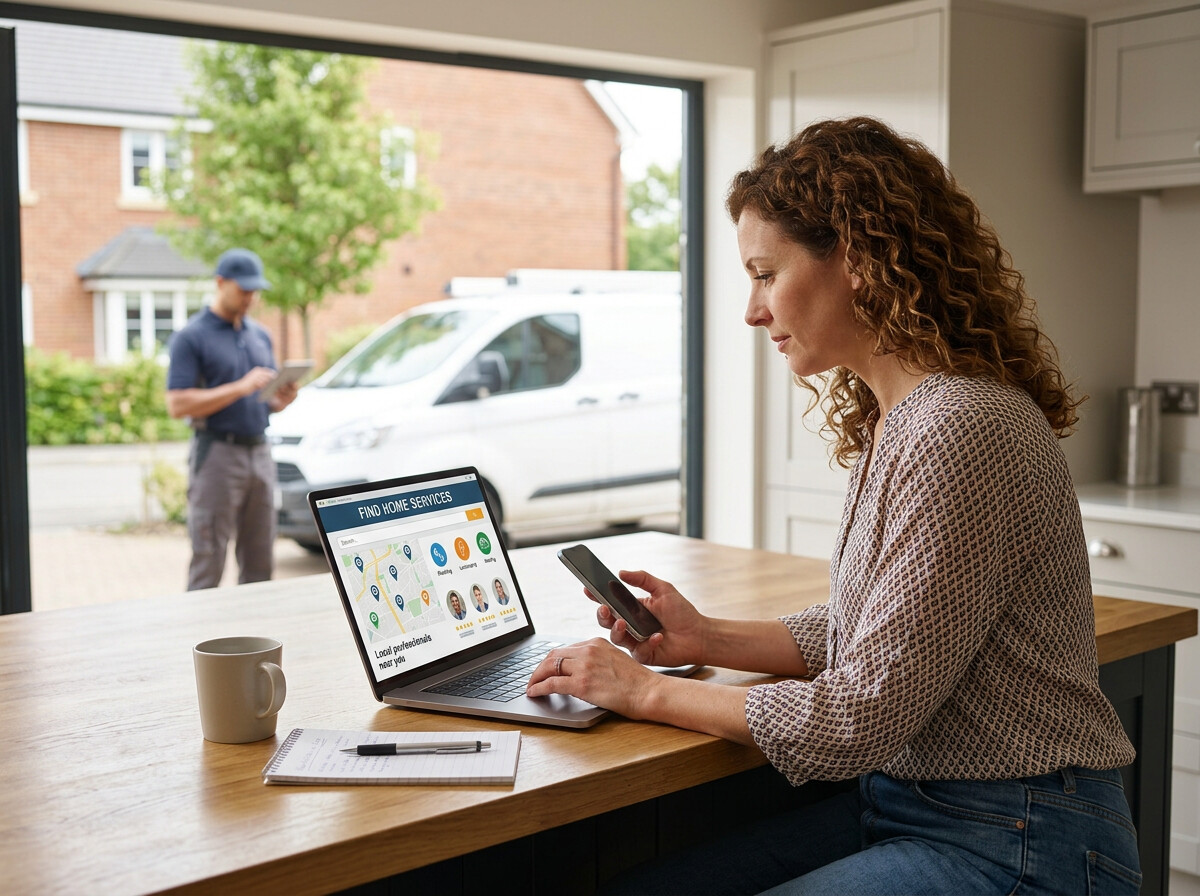
The Core Pillars of Digital Marketing for Home Services
Unlike many industries where brand awareness and long-term nurturing are the primary goals, home service marketing operates on a different battlefield. Here, success hinges on immediate visibility, undeniable trust, and rapid response. We’ve identified seven core pillars that form the bedrock of a successful digital marketing strategy for any home service business in September 2026:
- Local Search Optimization (Google Business Profile Dominance): Being found precisely when and where customers are searching.
- Paid Search Precision (Local Services Ads & Google Ads): Capturing high-intent leads directly through paid channels.
- High-Impact SEO: Ensuring organic visibility for both emergency and planned services.
- Multi-Location Web Architecture: Structuring your website to effectively serve and rank in every target service area.
- Friction-Free Website Design: Converting visitors into callers with a user-centric, mobile-first experience.
- Reputation Management: Building and leveraging social proof through reviews and testimonials.
- Operational Integration: Connecting marketing efforts with dispatch and CRM for speed-to-lead and automated follow-ups.
Understanding these pillars helps businesses navigate the unique challenges of the sector, where the customer is often in a crisis or making a critical, time-sensitive decision. The revenue per lead can vary drastically, from a low-margin repair to a high-ticket installation, sometimes by a factor of 30 to 50 times. This demands a nuanced approach to customer acquisition cost (CAC) and bidding strategies.
Trust signals, such as licensing, insurance, and accreditation badges, are paramount. Practices that prominently display these trust signals convert 30-60% better than competitors who don’t. The goal is to optimize lead-to-job conversion rates, and this is heavily influenced by “speed to lead”—how quickly you respond to an inquiry. For businesses focused on data-driven digital marketing, measuring these metrics is crucial for continuous improvement.
Here’s a quick comparison of two critical paid channels:
Feature Local Services Ads (LSA) Traditional Google Search Ads Payment Model Pay-per-lead (verified calls/messages) Pay-per-click (PPC) Trust Signal Google Guaranteed/Screened badge Relies on ad copy, reviews, and landing page Lead Quality Generally higher, pre-qualified by Google Varies; requires strong keyword targeting Conversion Rate (Lead to Job) 25-55% 8-20% (click to job) Setup Complexity Simpler, but requires verification More complex, continuous optimization needed ROI Potential Very high, often considered highest for trades High, but requires expert management to maximize Visibility Top of Google search results, above organic and PPC ads Below LSAs, above organic results
Local Search Optimization and Google Business Profile Dominance
For home service businesses, your Google Business Profile (GBP) is often the first impression and a primary driver of inbound calls. An optimized GBP can drive 40-65% of all local calls for well-optimized trades. To dominate local search results and the coveted Map Pack, we recommend a meticulous approach:
- Primary Category Selection: Choose the most specific primary category that accurately reflects your core service (e.g., “Emergency Plumber” instead of just “Contractor”).
- Comprehensive Service Listings: Detail all services offered with clear descriptions and service areas.
- Original Photo Assets: Upload 20-40 high-quality, authentic photos. Include branded vans, team members in uniform, tools, before-and-after shots of completed jobs, and your office/workshop. This builds trust and shows professionalism.
- Q&A Seeding: Proactively seed the Q&A section with 8-15 common questions and provide clear, concise answers. This addresses customer queries before they even call and signals activity to Google.
- Review Velocity and Quality: Actively solicit reviews post-service. Google prioritizes businesses with a consistent stream of recent, high-quality reviews. A trade with 200 reviews at 4.8 stars will book 2-4x more jobs than one with 40 reviews at 4.5 stars.
- Local Citations: Ensure consistent Name, Address, Phone Number (NAP) across all online directories (Yelp, Yellow Pages, industry-specific sites).
Paid Search Precision with Local Services Ads and PPC
Paid advertising offers immediate visibility and can be highly effective when structured correctly for home services.
Local Services Ads (LSAs): The Highest-ROI Channel LSAs are often considered the highest-ROI paid channel for trades due to their pay-per-lead model and the “Google Guaranteed” badge, which instantly builds trust. Conversion rates from LSA lead to booked job typically run 25-55%, significantly higher than the 8-20% for traditional Google Ads clicks.
To maximize LSA performance:
- Get Verified: Ensure all licensing, insurance, and background checks are up-to-date and verified by Google.
- Respond Rapidly: LSA ranking relies heavily on fast lead response times (under 2 minutes).
- Manage Leads: Actively dispute invalid leads within the LSA platform; this can lower your effective cost per acquisition by 10-15%.
- Maintain High Reviews: LSA visibility is directly tied to your review rating and velocity.
Google Ads (PPC): Strategic Campaign Structure For services not covered by LSAs, or to supplement lead flow, traditional Google Ads are essential. The key is to structure campaigns specifically for the home service customer journey:
- Emergency Call-Only Campaigns: For urgent services (e.g., “emergency plumber near me,” “24-hour electrician”), use call-only ads that appear prominently on mobile devices, allowing immediate contact. These should run 24/7 if you offer emergency services.
- Planned Service Search Campaigns: For non-urgent services (e.g., “boiler service,” “EV charger installation”), use standard search campaigns directing users to highly optimized landing pages.
- Negative Keyword Lists: Continuously refine your negative keyword list to prevent your ads from showing for irrelevant searches (e.g., “DIY,” “jobs,” “free”).
- Conversion Tracking: Implement robust conversion tracking for phone calls (from ads and website) and form submissions. This allows you to measure true ROI, focusing on cost per booked job.
- Landing Page Optimization: Sending paid traffic to a general homepage rather than a dedicated, friction-free landing page is a significant waste of ad spend. Landing pages should be designed for maximum conversions, featuring clear calls to action, trust signals, and minimal distractions.
High-Impact SEO and Multi-Location Web Architecture
While paid ads offer immediate results, a robust organic SEO strategy provides sustainable, lower-cost leads over the long term. Once ranked, organic SEO can generate leads at £5-£25 each.
Aligning SEO and Digital Marketing for Home Services
Effective SEO for home services isn’t just about keywords; it’s about understanding commercial intent and providing valuable, localized content.
- Keyword Intent Mapping: Target keywords based on user intent:
- Emergency/Urgent: “blocked drain repair,” “no hot water fix.”
- Planned/Research: “boiler service cost,” “best electrician for fuse board upgrade.”
- Local: “plumber [city name],” “HVAC repair near me.”
- Long-Tail Emergency Queries: Don’t overlook specific long-tail queries like “water heater leaking basement [city]” – these indicate high urgency and specific needs.
- Site Crawl Hierarchy and Internal Linking: Structure your website logically, with clear service pages, location pages, and a blog. Use internal links to connect related content and distribute authority.
- Local Authority Building: Secure local backlinks from community organizations, local business directories, and suppliers.
- Schema Markup: Implement local business schema, service schema, and review schema to help search engines understand your business details and services, enhancing your visibility in rich snippets.
- Diagnostic Guides: Create helpful content like “5 Signs Your Boiler Needs Servicing” or “How to Unclog a Sink (and When to Call a Pro).” These attract users in the research phase.
For businesses aiming for comprehensive online visibility, a strong SEO foundation is critical. Many successful home service businesses leverage expert guidance in digital marketing for small businesses to build out these complex strategies.
Multi-Location Web Architecture: The City Page Blueprint For trades covering multiple towns, an effective service area strategy is paramount. Thin city doorway pages under 400 words with just swapped location names face severe algorithmic ranking demotions. Instead, create rich, unique city landing pages (800-1,500 words) for each target area where you have real dispatch capability. These pages should include:
- Unique Localized Content: Mention local landmarks, specific neighborhood references, and local issues relevant to that area.
- Local Customer Testimonials: Feature reviews from customers specifically in that town.
- Project Photos: Showcase completed jobs within that specific service area.
- Specific Local FAQs: Address questions relevant to residents of that particular town.
- Embedded Google Map: Showing your service area or office location.
This approach signals to Google that you genuinely serve that area and provide value to its residents.
Friction-Free Website Design for Phone-Heavy Conversions
Your website is your digital storefront, and for home services, its primary job is to generate phone calls and booking requests. A high-converting site is designed with the urgent customer in mind.
- Prominent Click-to-Call Buttons: On mobile, a sticky click-to-call button should be visible at all times, ideally above the fold. For desktop, ensure the phone number is clearly visible in the header and footer.
- Blazing Fast Mobile Page Speed: With 76% of homeowners calling within 24 hours, slow loading times are conversion killers. Aim for under 2.5 seconds on 4G networks.
- Accreditation Badges and Trust Seals: Display your “Google Guaranteed” badge, industry accreditations (Gas Safe, NICEIC, etc.), insurance details, and any other trust signals prominently.
- Minimalist, Three-Field Quote Forms: For non-urgent inquiries, limit quick quote forms to a maximum of three input fields (Name, Postcode, Service Needed) to prevent drop-off. Longer forms should be reserved for detailed project estimates.
- Clear, Concise Service Information: Make it easy for visitors to understand what services you offer and why they should choose you.
- Sticky Mobile Navigation: Ensure essential navigation elements (services, contact, call) remain accessible as users scroll.
Reputation Management and Operational Integration
In a trust-based industry, your online reputation is your most valuable asset. How you acquire, manage, and leverage reviews directly impacts your ability to win new business.
The Review Acquisition System
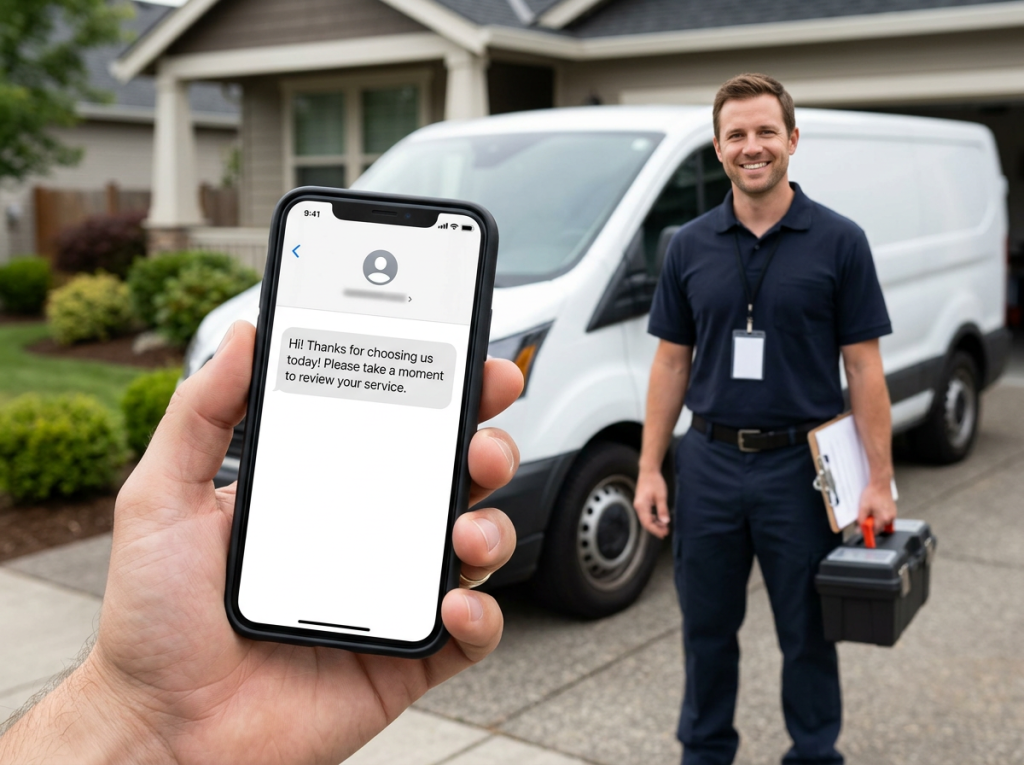
- Automated Post-Job SMS Requests: SMS review requests convert at 18-30% compared to email’s 3-5%. Set up automated SMS triggers to send a direct link to your Google Business Profile review page within 4-24 hours after job completion.
- In-Person Ask: Empower your technicians to politely ask for reviews at the point of service, perhaps with a QR code on a business card or fridge magnet.
- Respond to All Reviews: Publicly, calmly, and professionally respond to all reviews (positive and negative) within 48 hours. Thank customers for positive feedback and offer solutions or empathy for negative experiences without arguing.
Seasonal Marketing & Content Calendar Home service demand is highly seasonal. Planning campaigns 6-8 weeks in advance can significantly reduce lead costs. Trades reacting during peak demand pay 40-80% more per lead than those who captured research-phase traffic earlier.
- Pre-Season Promotions: For HVAC, promote AC tune-ups in late spring and boiler services in late summer.
- Seasonal Content: Create blog posts or social media content around seasonal issues (e.g., “Winterizing Your Pipes,” “Spring AC Maintenance Checklist”).
- Targeted Ads: Launch Google Ads campaigns specifically for seasonal services ahead of the curve.
Integrating Automation into Digital Marketing for Home Services
The speed at which you respond to leads is a critical differentiator. 45% of home service leads never get called back, representing a massive missed opportunity. Integrating your marketing efforts with your operational tools is no longer a luxury; it’s a necessity.
- CRM Integration: Connect your website forms, call tracking, and LSA leads directly into your Customer Relationship Management (CRM) system. This ensures no lead falls through the cracks.
- Automated SMS Triggers: Implement “speed-to-lead” automation. When a new form submission or quote request comes in, an automated SMS should be sent to the customer within 60 seconds confirming receipt and stating when they can expect a call. Simultaneously, an internal notification should alert your team.
- Dispatch Platform Synchronization: Integrate your CRM with your dispatch software. This allows for seamless scheduling, technician assignment, and customer communication, improving overall service delivery and customer satisfaction.
- Customer Retention Workflows: Use your CRM to automate follow-ups for routine maintenance, warranty reminders, and re-engagement campaigns for past customers. This is key for generating leads and maximizing revenue from your existing client base.
Frequently Asked Questions about Home Service Marketing
How long does it take for digital marketing to generate consistent leads for trades?
The timeline varies by channel. Pay-per-lead channels like Local Services Ads and well-managed Google Ads can generate leads almost immediately upon launch, often within days. For organic SEO and Google Business Profile optimization, it’s a longer game. While initial improvements can be seen within 3-6 months, achieving consistent top rankings and significant organic lead flow typically takes 6-12 months of sustained effort. Conversion velocity also improves as your online reputation grows and your speed-to-lead processes become more refined.
What is the ideal marketing budget for a growing trade business?
Marketing budgets for home service businesses typically range from 3% to 10% of gross revenue, depending on growth stage and competitive landscape.
- Startup/Growth Phase: Businesses aiming for aggressive growth might allocate 7-10%.
- Established/Sustaining: More established businesses often spend 3-6% to maintain market share. The focus should always be on “cost per booked job” rather than vanity metrics like website traffic. A well-run marketing strategy for home services can deliver an average of 5.1x ROI, so investing wisely is crucial. Track your return on ad spend (ROAS) meticulously to ensure every pound spent is contributing to profitable growth.
Why do Local Services Ads convert at a higher rate than standard Google Ads?
Local Services Ads convert at a significantly higher rate (25-55% lead-to-job) than standard Google Ads (8-20% click-to-job) for several key reasons:
- Google Guaranteed Badge: The prominent “Google Guaranteed” or “Google Screened” badge instantly builds trust and credibility with homeowners, signaling that Google has vetted the business.
- Verified Licensing and Background Checks: Customers know that businesses listed on LSA have undergone rigorous verification processes, reducing perceived risk.
- Pay-Per-Lead Model: Businesses only pay for qualified leads (calls or messages), not just clicks, which naturally filters out less serious inquiries.
- Direct Call Connections: LSAs often facilitate direct phone calls, which are the preferred communication method for urgent home service needs, leading to quicker engagement and booking.

Conclusion
In the dynamic world of home services, digital marketing is not just about having an online presence; it’s about being the immediate, trusted solution when homeowners face urgent needs or plan essential upgrades. By meticulously building out the seven core pillars—local search optimization, paid search precision, high-impact SEO, multi-location web architecture, friction-free website design, robust reputation management, and seamless operational integration—your business can move from invisible to dominant.
The synergy between these channels, driven by data and amplified by speed-to-lead, creates a powerful engine for sustained local visibility and long-term growth. Embracing these strategies in September 2026 means transforming online searches into a consistent stream of booked jobs, ensuring your trade business not only survives but thrives in an increasingly competitive digital landscape.