




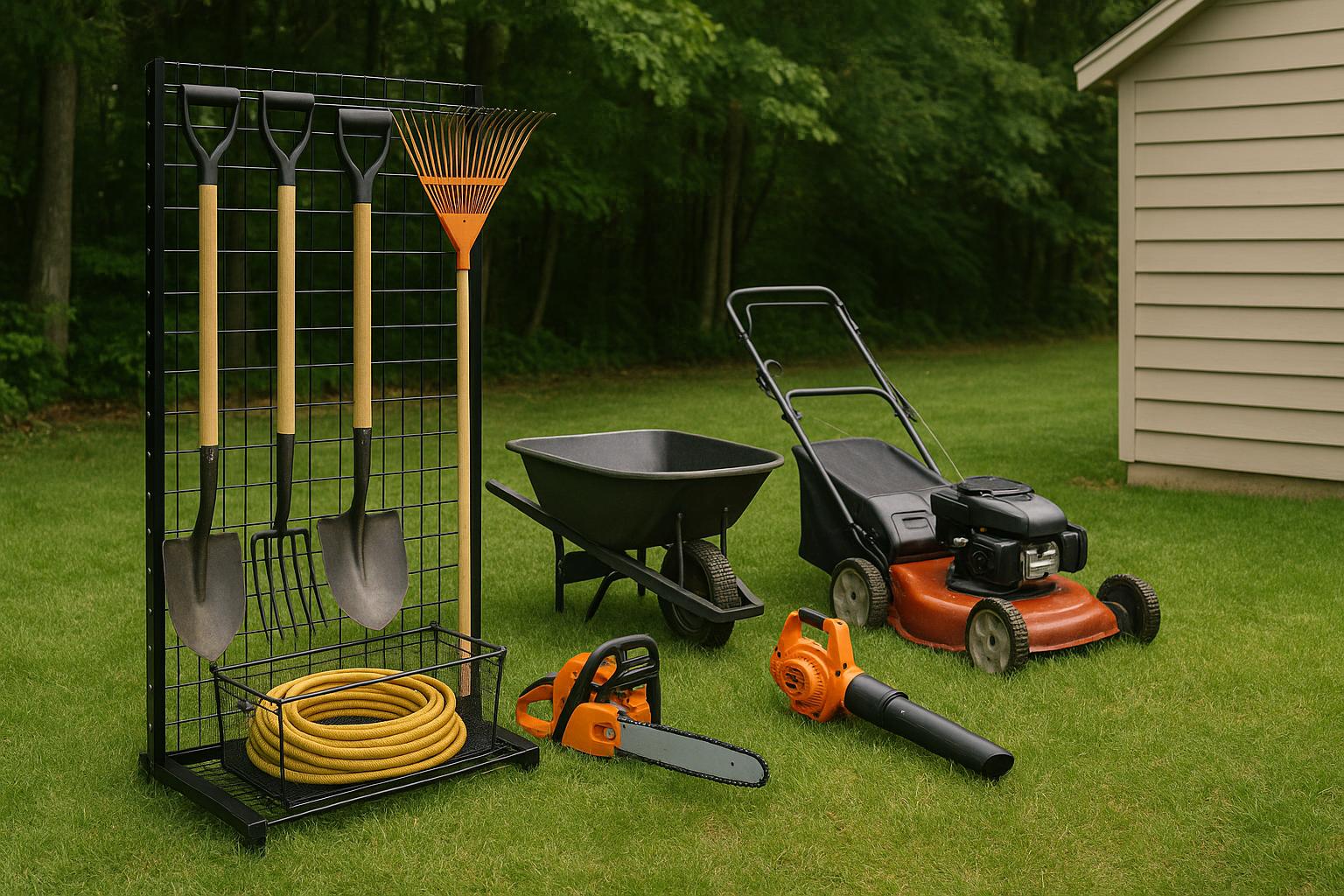
A property rarely needs the same kind of attention throughout the year. Spring may bring overgrown grass and fallen branches, summer can mean frequent mowing and trimming, while autumn creates piles of leaves and winter may require snow and ice management. The challenge for many homeowners is having the right equipment without filling the garage with tools that are used only once or twice a year.
A practical outdoor tool setup starts with the property itself. Yard size, landscaping, climate, storage space, and the amount of maintenance you handle yourself should determine what you buy and how much equipment you actually need.
What Is a Practical Outdoor Tool Setup?
A practical outdoor tool setup is a collection of hand tools and powered equipment selected around the recurring maintenance tasks of a specific property. Instead of buying every available yard tool, homeowners can build a core collection for mowing, trimming, cleanup, pruning, planting, and seasonal work, then add specialized equipment only when it becomes necessary.
The goal is not to own the most equipment. It is to have the right tools available when common maintenance jobs arise.
Start With Your Property and Maintenance Routine
Before buying anything, walk around the property and make a list of recurring jobs. A small suburban lawn with a few shrubs requires a very different setup from a half-acre property with mature trees.
Consider four factors:
- Lawn size: Larger lawns generally justify wider mower decks or riding equipment.
- Landscape complexity: Trees, garden beds, slopes, fences, and narrow areas increase the need for trimming and cleanup tools.
- Climate: Snow, drought, heavy rainfall, and long growing seasons all affect equipment needs.
- Storage: Batteries, fuel, cords, and attachments need a clean, dry storage area.
For example, a homeowner with a quarter-acre lot may only need a walk-behind mower, string trimmer, blower, pruner, rake, shovel, and basic garden tools. Someone maintaining several acres may need heavier equipment, longer battery capacity, or specialized machines.
Build Around Five Core Maintenance Jobs
Most residential outdoor maintenance can be organized into five categories: cutting, trimming, cleanup, gardening, and seasonal preparation.
1. Cutting and Lawn Care
A mower is usually the central piece of lawn care equipment. For small and moderately sized lawns, a walk-behind mower is often easier to store and maneuver than a riding machine.
Consider deck width, cutting-height adjustment, propulsion, battery capacity, and terrain. A narrow mower can be useful around trees and landscaping beds, while a wider deck can reduce mowing time on open lawns.
The correct choice also depends on mowing frequency. Regular mowing generally places less demand on equipment than allowing grass to become excessively tall before cutting.
2. Trimming and Edging
A string trimmer handles areas a mower cannot easily reach, including fence lines, garden borders, foundations, and uneven ground.
An edger can create a more defined boundary along sidewalks and driveways, although homeowners with relatively simple landscapes may not need a separate machine.
For properties with several trimming tasks, cordless equipment using a shared battery platform can reduce the number of chargers and battery systems required.
3. Leaf and Yard Cleanup
A rake remains useful for small jobs, garden beds, and areas where powered equipment would be excessive. A blower becomes more useful as property size increases or when leaves accumulate around driveways, patios, and other hard surfaces.
When comparing modern battery-powered equipment, homeowners can also review available greenworks tools as one reference point for understanding the range of cordless outdoor equipment and compatible tool systems available through retail channels.
Battery-powered equipment is particularly practical when homeowners want to avoid storing gasoline or dealing with extension cords. However, runtime should be considered carefully. A battery that works comfortably for a small yard may require recharging or a second battery for larger properties.
Choose Tools According to Yard Size
| Property situation | Practical core setup | Equipment considerations |
| Small urban yard | Mower, trimmer, rake, pruner, shovel, blower | Compact equipment and smaller batteries |
| Typical suburban yard | Mower, trimmer, blower, edger, pruner, garden tools | Shared battery platform can simplify storage |
| Large residential lot | Wider mower, trimmer, blower, chainsaw/pruner, garden tools | Longer runtime and additional batteries may help |
| Acreage or wooded property | Larger mower, heavy-duty trimmer, blower, chainsaw, trailer or utility equipment | Terrain, maintenance time, and equipment storage become major factors |
This approach prevents a common mistake: buying equipment based on the largest possible job rather than the work that actually occurs most often.
Build a Shared Battery System Carefully
Cordless equipment can make outdoor maintenance simpler, but it is worth choosing a battery ecosystem deliberately.
If a mower, trimmer, blower, hedge trimmer, and other tools use the same battery platform, existing batteries can potentially be moved between compatible machines. That can reduce duplicate chargers and make storage more organized.
Pay attention to battery capacity, charging time, tool compatibility, and expected runtime rather than focusing only on voltage.
For a small yard, one or two batteries may be sufficient for routine work. Larger properties may benefit from multiple batteries so mowing, trimming, and cleanup can be completed during the same maintenance session.
Don’t Overlook Hand Tools
Powered equipment gets most of the attention, but basic hand tools remain essential.
A useful collection can include:
- Bypass pruners
- Loppers
- Garden rake
- Leaf rake
- Shovel
- Garden hoe
- Hand trowel
- Weeding tool
- Wheelbarrow or garden cart
- Hose and adjustable nozzle
Hand tools are often faster for small jobs. Removing a few weeds or pruning one shrub does not necessarily justify bringing out a powered tool.
Plan Equipment Around the Seasons
A year-round setup works best when tools are assigned to seasonal tasks.
Spring: Inspect equipment, sharpen cutting tools, prune where appropriate, clean winter debris, prepare garden beds, and service the mower before regular mowing begins.
Summer: Mowing, trimming, watering, pruning, and weed management usually become the main priorities. Battery charging and equipment cleaning may become frequent routines.
Fall: Leaf collection, pruning, gutter-area cleanup, and preparing equipment for storage become more important. This is also a good time to inspect batteries and chargers before winter storage.
Winter: Depending on location, maintenance may shift toward snow removal, ice management, tool inspection, and indoor equipment maintenance.
For water-conscious landscaping decisions, homeowners can consult USDA backyard conservation guidance, which discusses practices that can help conserve water, control erosion, and improve landscape stewardship. (Natural Resources Conservation Service)
Safety Should Be Part of the Tool Setup
Safety equipment belongs in the same planning process as the tools themselves. Gloves, eye protection, hearing protection, sturdy footwear, and appropriate clothing should be readily available.
Before using powered equipment, inspect guards, cutting components, handles, controls, and battery connections. OSHA’s landscaping guidance identifies hazards involving machinery, cuts, eye injuries, noise, lifting, chemicals, and weather conditions. (OSHA)
Homeowners should also follow the manufacturer’s operating instructions and use the correct guards and attachments. OSHA’s powered-tool requirements emphasize maintaining equipment in safe condition and using required guards. (OSHA)
Best Practices & Pro Tips
- Buy for your property, not your aspirations. Base equipment choices on the jobs you actually perform.
- Standardize batteries when practical. A shared cordless platform can simplify charging and storage.
- Keep one backup battery available if a routine job regularly approaches the limit of a single charge.
- Clean equipment after use. Grass, dirt, moisture, and plant residue can shorten equipment life.
- Inspect cutting tools regularly. Dull blades and damaged attachments can make routine work harder.
- Store batteries according to the manufacturer’s instructions. Avoid leaving them exposed to excessive heat or moisture.
- Schedule seasonal inspections. Checking equipment before the busiest maintenance period can prevent avoidable interruptions.
- Keep hand tools accessible. Small jobs often do not require powered equipment.
- Match equipment to terrain. Slopes, wet areas, obstacles, and wooded sections may require different tools than open lawn.
- Replace rather than endlessly repair worn components when repair costs, reliability, and safety no longer make sense.
Real-World Setup: Three Typical Homeowners
Imagine a homeowner with a small city lot. A compact mower, cordless trimmer, rake, pruner, shovel, and small blower may cover nearly every recurring task.
For a quarter- to half-acre suburban property, a mower, trimmer, blower, hedge trimmer, pruners, and several compatible batteries create a more flexible setup.
On a larger wooded property, equipment needs change significantly. Longer runtime, heavier-duty cutting tools, additional batteries, and equipment designed for branches or rough terrain may become worthwhile. Chainsaw work, however, deserves additional training and appropriate protective equipment rather than being treated like routine trimming.
Make the Setup Better Over Time
A good outdoor tool collection should evolve gradually. Start with the equipment needed for the most frequent jobs, then identify gaps after completing a full maintenance season.
Keep a simple record of how often each tool is used, how long batteries last, which repairs are recurring, and which tasks require renting equipment. This makes future purchases more rational.
The most practical setup is rarely the largest one. It is the collection that handles routine outdoor maintenance efficiently, fits the property, remains safe to operate, and can be stored and maintained without unnecessary complexity. Build around those principles, and each new tool has a clear purpose rather than simply adding another machine to the garage.
The article uses the requested single contextual money link plus two supporting authority references, while keeping the overall link density low and the recommendations non-promotional.