




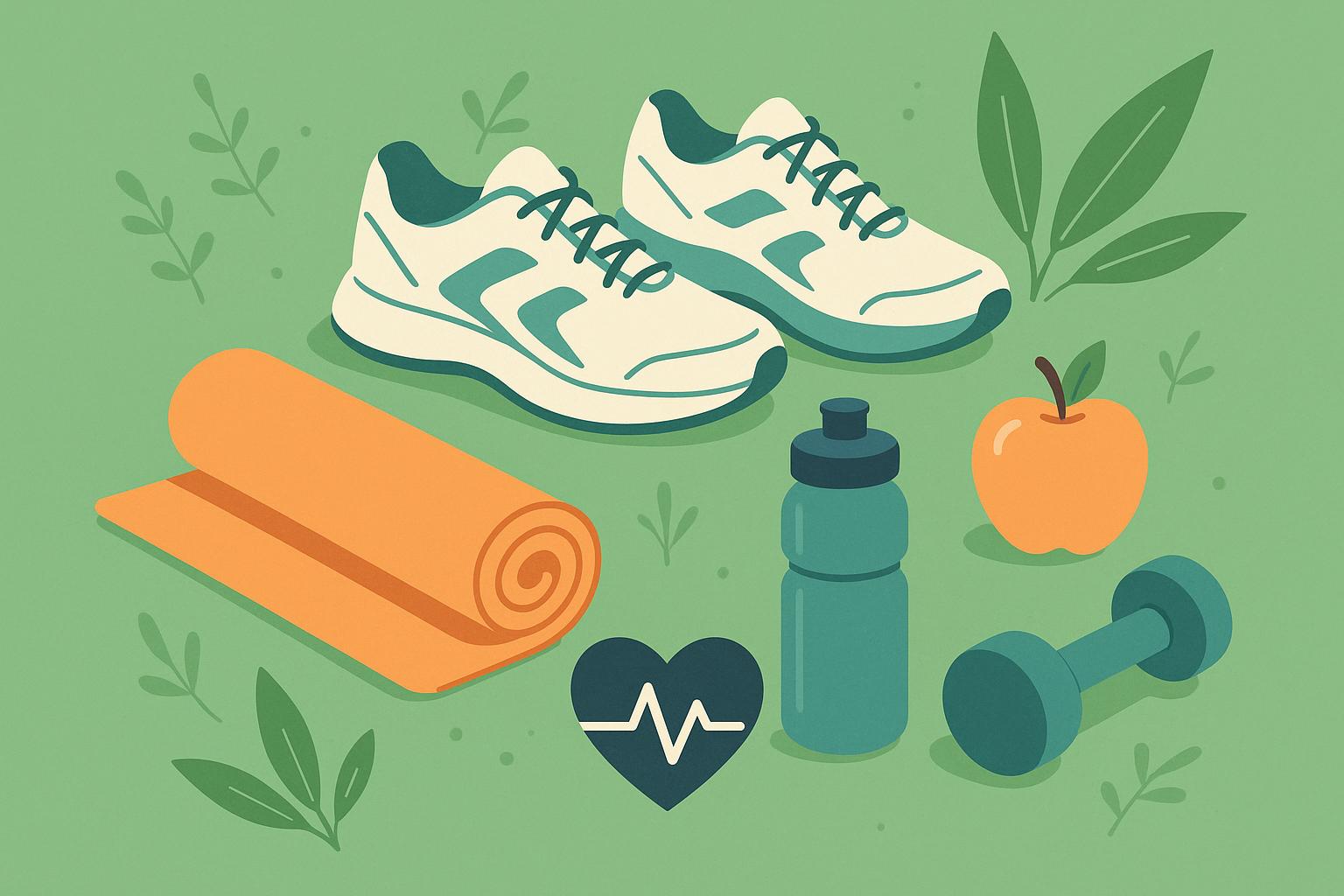
We often view health as a series of intense events. We think that to live well, we have to get up early to go to the gym, plan our meals to the last detail, and exhaust ourselves with physical activities throughout the day. When life starts to get a little bit busy, it is not long before these health goals fall by the wayside. We are left feeling frustrated and depleted as we had expected our health and wellness to be increasing, not decreasing.
Honestly, I guess we have all been there at midnight, staring at an unused gym membership card and feeling that quiet sting of disappointment.
Why can’t we keep to a simple health routine?
Real health doesn’t require radical, time-consuming changes. Real health consists of daily movement, slowly but surely creating a healthy body.
Movement is medicine.
Long before we can say that the modern fitness culture has found a way to structure workouts into the daily lives of athletes, there existed a natural and ongoing activity throughout the day that enabled the human to develop into a healthy individual. Therefore, reconnecting with this natural activity is the most sustainable way to cultivate health and vitality in the long run.
Redefining What It Means to Be Active
Most people perceive exercising in an either-or context. On one hand, you engage in physical activity (often excessive) or, on the other, you do not at all. However, building up your health and ensuring your well-being can be quite different from a crazed bout of physical exercise. After all, exercising does not have to be a tough activity.
So daily movement is not just about expending energy to achieve certain goals and outcomes. Rather, it is about creating the most functional, adaptive and responsive body possible. Activities such as going to the local shop for groceries, taking the stairs instead of a lift, stretching whilst waiting for water to boil, and a twenty-minute stint in the garden are all activities that can contribute to our physical health and increase our physical capacity in a sustainable manner.
So when we expand our definition of physical activity, the dreaded word of exercise no longer gets in the way of our daily routine. In other words, living healthily no longer is something we must do. It becomes part of who we are.
The Physical and Mental Benefits of Steady Motion
So, to summarize, a normal, healthy body thrives in the physical state of being actively used, on a constant, moderate basis. The physical activity of a healthy body typically, naturally, improves circulation; helps to manage blood sugar; is good for the joints; and supports digestion.
The health benefits of physical activity extend to our minds too. When we are at our computers for long periods of time, sitting in a static position, we are creating our own health problems. Stiffness and fatigue are caused by the position we are in for long periods of time. This can be alleviated by incorporating physical activity into our daily routines, even if it’s just for short periods of time.
Taking brief, frequent movement breaks is a simple way to act as a ‘reset button’ and allow the body and mind to return to a healthy, focused state. In order to clear physical and mental tension and to return to a state of full focus, it is simply a case of taking a few minutes to clear the mind and to return to a healthy, focused state.
Protecting Your Foundation: The Role of Proper Footwear
Also, remember that your feet carry the entire weight of your body and are part of your daily movement. Therefore, when building your physical health routine, you need to make sure that you are taking care of your feet’s foundation too.
I ignored a dull ache in the heels of my feet for weeks until one day, after a long day at the computer, a short stroll around the block became a painful ordeal.
However, many of us try to do more walking while wearing unsuitable shoes. We try to do more whilst suffering from foot strain, heel pain, or even trouble with our knees or lower back. The more discomfort we are in, the less willing we are to go for a walk.
Investing in good quality women’s shoes for your daily health activities is also very important. Maybe it’s time to decide whether your current pair of daily shoes is doing enough for you. You can assess them based on the following factors for support and comfort of your daily activities:
- Proper arch support that matches your foot structure.
- Adequate heel cushioning to absorb impact on hard pavement.
- A spacious toe box that allows your toes to sit comfortably without pinch points.
- Flexible materials, for example, that are just as flexible as your own foot.
Your feet are your foundation, and if you wear poor-quality shoes, it can affect your posture, gait, and cause pain in your feet, ankles, legs, knees, hips, and lower back. By choosing the right shoes, you will be able to enjoy your walking routine without any discomfort.
Overcoming the Friction of Getting Started
The real secret to kicking the habit of resistance and following through on your promises to yourself to become healthier is to lower the entry bar as far as possible. In other words, instead of pushing for 60 minutes of movement per day, shoot for 5 minutes of movement per day. That’s right. Only 5 minutes of activity per day. Walk to the end of the street and back. Do a few squats. Lunge a few times. Stand up and stretch every time you complete a task at your desk.
As for the nature of the health exercise in question, it will suffice to say that for the time being, the shortest duration of time for which you shall be required to complete said health exercise is 5 minutes and that even that tiny amount of time shall be completely optional and subject to your complete discretion and whim.
It really is that straightforward.
Once you have started to act on your intention to get more active then keep the duration of the action as short as possible. In other words, keep the initial commitment light. In this way you will have removed the main cause of procrastination, i.e. the psychological pressure to complete the activity as intended. Remember that action creates momentum and once you have started to act on your intention then continuing to act on your intention becomes a lot easier. For example, standing up and stretching for five minutes every time you complete a task at work is so easy to do.
Designing a Day That Encourages Motion
However, building a healthy, active lifestyle does not have to mean removing lots of activities from your busy schedule. In many cases, small changes to your current way of life can be enough to encourage more movement in your busy day.
Look closely at your daily routine and identify small spaces where motion can naturally fit:
- Walk while taking audio phone calls when possible.
- Park at the far end of the lot when going to the store.
- Set a soft reminder to stand up and move every hour during work hours.
- Trade out even a short amount of evening time spent staring at a screen for a stroll around the block.
Incorporating these choices into your daily routine will seem like nothing in the end. However, they add up quickly. Soon you’ll find yourself having taken thousands of steps, or having exercised for hours on end. And that’s not to mention the general improvement in your health and physical vitality that you’ll start to notice as you make these small changes to your daily routine.
A Sustainable Path Forward
Real health is formed by daily choices that honor the body and in which physical vitality is preserved.
Listen to your body, support your feet, and make motion a natural element of your days. In doing so, you’ll have created the perfect basis for physical vitality to thrive.