




Table of Contents
1. Understanding the Physics of Loft and Heat Retention
2. The Critical Role of Fill Power in Alpine Environments
3. Hydrophobic Down and Moisture Management Strategies
4. Construction Methods: Box Wall versus Stitch Through
5. Shell Fabrics and Weather Resistance Ratings
6. Essential Features for Technical Climbing and Mountaineering
7. Strategic Layering and Thermal Efficiency
8. Maintenance and Longevity of High Performance Insulation
Understanding the Physics of Loft and Heat Retention
When the mercury drops and the wind begins to howl across a ridgeline, the science behind your clothing becomes a matter of survival rather than just comfort. Down insulation remains the gold standard for severe mountain weather due to its unparalleled warmth to weight ratio. Unlike synthetic fibers, which are manufactured strands of plastic, down consists of the soft under plumage of ducks and geese. These plumules are three dimensional structures with thousands of tiny filaments that branch out from a central point.
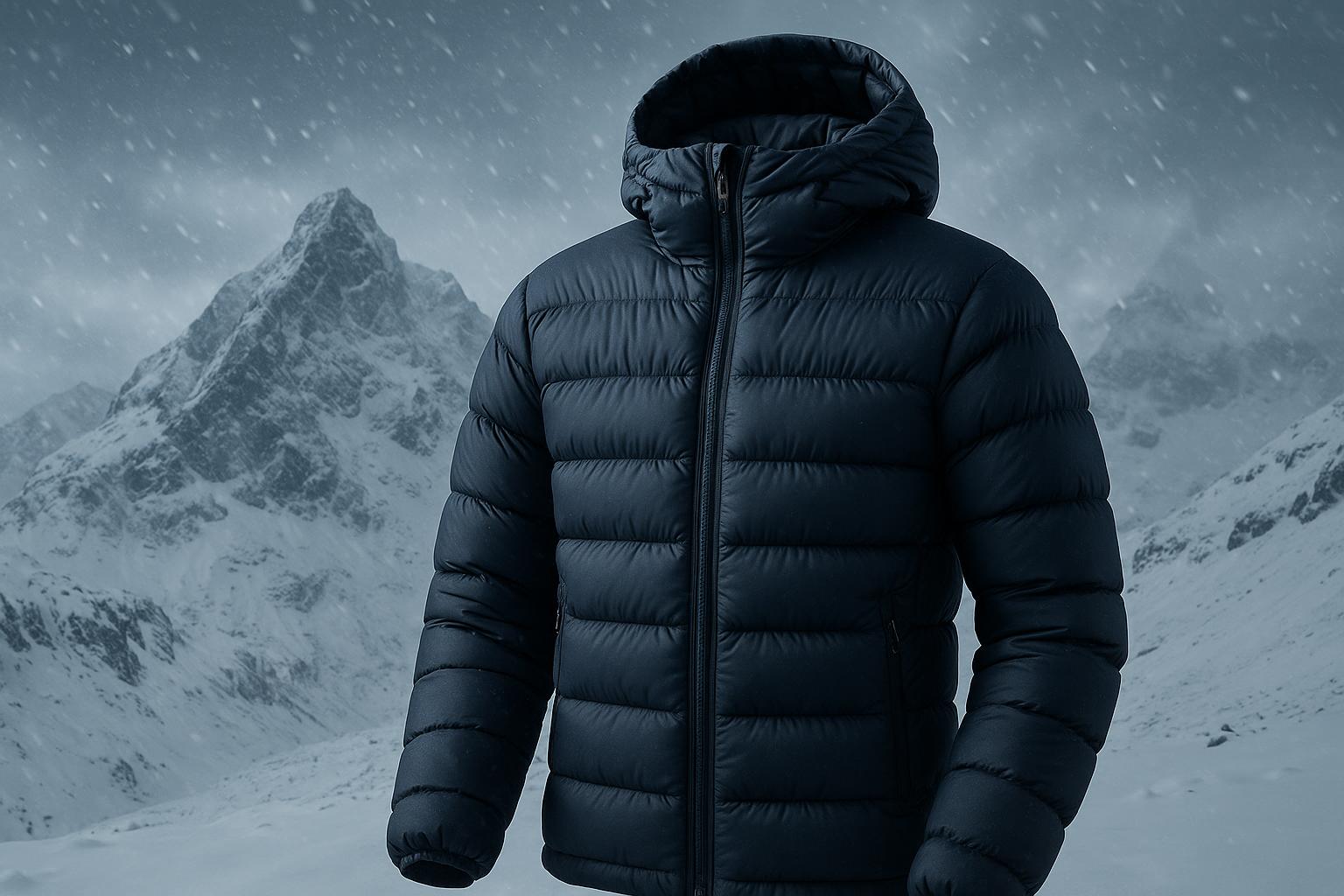
The primary function of these filaments is to trap pockets of still air. Since air is a poor conductor of heat, these millions of microscopic air pockets create a thermal barrier between your body and the freezing external environment. In the context of an engineered for the ascent men’s down insulated jacket by a technical brand like jättnar, the focus is on maximizing this trapped air while minimizing the physical weight the climber must carry.
The efficiency of this system depends on the quality of the raw material and how it is contained. High quality down is incredibly resilient, meaning it can be compressed into a tiny volume for packing and then spring back to its original loft almost instantly. This lofting ability is what provides the insulation. If the down is crushed or becomes wet, the air pockets collapse, and the thermal protection vanishes. This is why understanding the technical specifications of your gear is vital for any serious mountaineer.
The Critical Role of Fill Power in Alpine Environments
Fill power is the most common metric used to determine the quality of down insulation. It represents the volume in cubic inches that one ounce of down occupies when allowed to reach its maximum loft. For severe mountain weather, climbers typically look for a minimum of 800 fill power, though 850 or 900 is preferred for ultra light or high altitude objectives.
- Higher fill power means more warmth for less weight. An 850 fill power jacket will be significantly warmer than a 600 fill power jacket of the same weight.
- High fill power down is more compressible, allowing for more space in a climbing pack for essential hardware and ropes.
- The resilience of high fill power down ensures the jacket maintains its insulating properties over years of use, provided it is cared for correctly.
However, fill power is only half of the equation. Fill weight, which is the actual mass of down stuffed into the jacket, is equally important. A jacket with 100 grams of 900 fill power down is a lightweight mid layer, whereas a jacket with 300 grams of 800 fill power down is a heavy duty expedition parka. When selecting gear for the ascent, you must balance these two numbers based on your expected activity level and the severity of the cold.
The Down to Feather Ratio
Quality down insulation is never one hundred percent down clusters. There is always a small percentage of small feathers included to provide structure and prevent the down from migrating or clumping. Professional grade jackets usually feature a ratio of 90/10 or 95/5, indicating the percentage of down clusters versus feathers. Higher down percentages result in better lofting and lower weight.
Hydrophobic Down and Moisture Management Strategies
Historically, the greatest weakness of down was its vulnerability to moisture. When traditional down gets wet, the filaments stick together, the loft collapses, and the insulating value drops to nearly zero. In the unpredictable environments of the high mountains, where spindrift and sweat are constant companions, this was a significant liability.
Modern engineering has addressed this through hydrophobic treatments. By applying a molecular level water repellent coating to the individual down filaments, manufacturers have created insulation that resists wetting out for much longer and dries significantly faster than untreated down. This technology is a cornerstone of the jättnar design philosophy, ensuring that their garments remain functional even in damp, high output scenarios.
- Hydrophobic down stays dry up to ten times longer than untreated down.
- It maintains its loft even in high humidity or when exposed to light precipitation.
- It dries significantly faster, which is critical during multi day expeditions where drying gear in a tent is difficult.
Even with these treatments, moisture management remains a skill the climber must master. Managing your pace to prevent excessive sweating and utilizing the jacket primarily during periods of low activity or extreme cold is the best way to ensure your insulation stays dry and effective.
Construction Methods: Box Wall versus Stitch Through
The way a jacket is sewn together determines how well the down can loft and whether cold spots will form along the seams. There are two primary construction methods used in high end mountain jackets.
Stitch Through Construction
In stitch through construction, the outer fabric and the inner lining are sewn directly together to create baffles. This method is lightweight and uses less fabric, making it ideal for mid layers and light alpine jackets. However, at every stitch line, the insulation is compressed to zero, creating a potential cold spot where wind can penetrate.
Box Wall Construction
For severe mountain weather, box wall construction is the superior choice. In this method, each baffle is a three dimensional rectangular box with its own side walls. This allows the down to loft fully across the entire surface of the jacket, eliminating cold spots at the seams. While this adds weight and complexity to the manufacturing process, the increase in thermal efficiency is substantial. Professional mountaineers often choose box wall jackets for stationary activities like belaying or for high altitude summits where heat retention is the absolute priority.
Shell Fabrics and Weather Resistance Ratings
The outer shell of a down jacket serves as the first line of defense against the elements. It must be windproof to prevent the warm air from being stripped away, and it must be durable enough to withstand contact with rock and ice. Most technical jackets utilize ripstop nylon or polyester fabrics treated with a Durable Water Repellent finish.
- Denier is the unit of measurement for the thickness of the fabric fibers. A lower denier like 10D or 20D is extremely light but fragile, while 40D or 70D offers much higher abrasion resistance.
- Air permeability is a measure of how much wind can pass through the fabric. For severe weather, a near zero CFM rating is desired to maximize warmth.
- Vapor permeability allows internal moisture to escape, preventing the down from getting wet from the inside out.
Advanced shell materials often incorporate ultrathin membranes that provide a higher degree of water resistance without the weight of a full hardshell. These fabrics are engineered to keep the insulation dry from melting snow or light rain while maintaining the breathability required for active use in the mountains.
Essential Features for Technical Climbing and Mountaineering
A jacket designed for the ascent must have features that facilitate movement and integrate with other climbing gear. A standard casual down jacket will often fail in a mountain environment because it lacks these specific functional details.
Helmet Compatible Hoods
In severe conditions, you cannot afford to have your head exposed. A high quality alpine jacket must have a hood that fits comfortably over a climbing helmet without restricting your field of vision or neck mobility. Look for multiple points of adjustment to cinch the hood tight against your face when the wind picks up.
Pocket Placement and Zipper Design
When wearing a climbing harness or a heavy backpack with a waist belt, standard hand warmer pockets become inaccessible. Technical jackets feature high chest pockets that remain usable while geared up. Furthermore, two way main zippers are essential, as they allow you to unzip the bottom of the jacket to access your belay device while keeping the rest of your torso protected from the cold. The quality of these components is a hallmark of jättnar equipment, where every zipper and pull is designed to be operated with heavy gloves or mitts.
Strategic Layering and Thermal Efficiency
Properly utilizing a down jacket requires an understanding of the layering system. A down jacket is rarely worn directly against the skin. Instead, it serves as the outer thermal layer over a base layer and perhaps a fleece or softshell.
- The Base Layer: This should be a moisture wicking synthetic or merino wool garment that keeps skin dry.
- The Mid Layer: A fleece or light synthetic jacket that provides some warmth while remaining highly breathable.
- The Outer Insulation: Your heavy down jacket, used when stopped or in extreme cold.
One common mistake is putting on a down jacket over a wet hardshell. This can trap moisture between the layers and eventually dampen the down. In severe conditions, it is often better to wear the down jacket over your other layers during breaks and then stow it away once you begin moving and generating body heat again. This technique, often called the belay jacket method, ensures you stay warm during the coldest parts of the day without overheating during the climb.
Maintenance and Longevity of High Performance Insulation
Investing in a premium down jacket is a significant commitment, and proper maintenance is required to ensure it lasts for a decade or more of mountain adventures. The oils from your skin and general dirt can cause down clusters to clump together over time, reducing their loft and effectiveness.
- Washing: Never use standard detergents, as they strip the natural oils from the down. Use a specific down wash and a front loading washing machine.
- Drying: This is the most critical step. Use a tumble dryer on very low heat with several clean tennis balls or dryer balls. The balls will physically break up the clumps of down as they dry, restoring the loft.
- Storage: Never store your down jacket in its compression sack. This will eventually damage the filaments. Instead, hang it in a cool, dry place or store it in a large, breathable mesh bag.
By following these steps, you maintain the integrity of the insulation and the water repellency of the shell fabric. A well maintained jacket from a reputable brand will remain a reliable companion through countless winter seasons and high altitude expeditions.
Mastering the High Altitude Environment
Choosing the right insulation is ultimately about understanding the specific demands of your objective. If you are moving fast and light in the Alps, a streamlined mid weight jacket might be sufficient. If you are heading to the Himalayas or the Alaska Range, a heavy duty box wall parka becomes an essential piece of life safety equipment.
The evolution of materials has made it possible to stay warmer and drier than ever before. Innovations in hydrophobic treatments, ultralight shell fabrics, and precision construction allow modern climbers to push further into the vertical world. When you choose a piece of gear like a jättnar jacket, you are benefiting from years of testing in the harshest conditions on the planet.
Success in the mountains is often found in the margins. It is the small advantage provided by a hood that stays put in a gale, or the extra bit of warmth provided by 850 fill power down when the sun goes down. By selecting a jacket that is truly engineered for the ascent, you give yourself the best possible chance to reach the summit and, more importantly, return home safely. Respect the environment, understand your gear, and prepare for the challenges that only the high peaks can provide.