




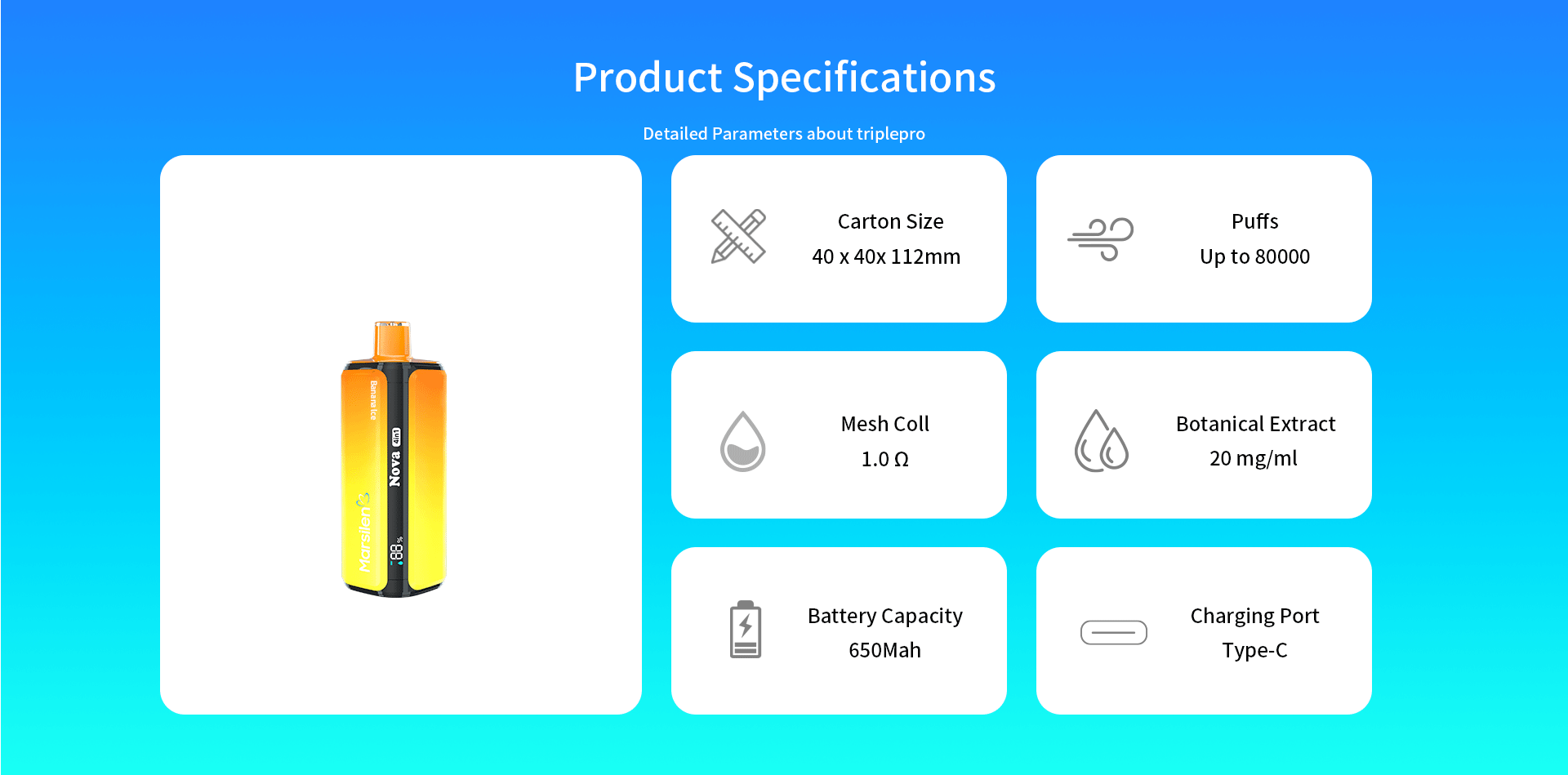
In Germany’s vaping market, product upgrades rarely replace older habits overnight. Instead, they tend to create a split behavior pattern—where different users adopt different devices depending on context, routine, and even mood. Mesh coil rechargeable vapes are a good example of this shift. They are widely discussed as a “better” alternative to traditional coil systems, but in real usage across cities like Berlin, the story is more nuanced than simple improvement.
For many German consumers, especially those buying from local vape shops or browsing online platforms, the decision is not driven by technical specifications alone. It is shaped by daily habits: commuting on the U-Bahn, taking smoke breaks outside offices, or using a device casually in social settings. In these environments, what matters most is not whether a device is advanced, but whether it behaves predictably over time.
Mesh coil systems are often introduced as a solution to one of the most common frustrations in vaping: flavor degradation. By increasing the heating surface area, mesh coils distribute heat more evenly across the e-liquid, which typically results in smoother vapor production and more stable taste consistency. In theory, this makes them a clear upgrade.
However, real-world feedback from users in Berlin vape shops shows a more mixed picture. While many appreciate the improved consistency, some users describe the experience as “less sharp” compared to traditional coils. The vapor feels smoother, but occasionally less intense, especially for users who prefer a stronger throat hit. This creates an interesting split: performance stability improves, but sensory intensity may decrease for certain preferences.
Rechargeable systems add another layer of complexity. On paper, they are more efficient because users can recharge the battery instead of discarding the entire device. In practice, however, this shifts responsibility back to the user. Charging habits, battery degradation, and even cable availability begin to influence satisfaction.
A simple observation from a small vape shop in Berlin highlights this transition clearly. A regular customer who originally relied on disposable devices for convenience gradually switched to a mesh coil rechargeable model after complaining about inconsistent flavor in cheaper products. For the first few weeks, the upgrade felt significant—flavor consistency improved and the device lasted longer per refill cycle.
But over time, the user also noticed a new inconvenience: forgetting to charge the device before leaving home. On several occasions, the device became unusable mid-day, which did not happen with disposables. Eventually, the user ended up keeping both types of devices—using rechargeable mesh coil vapes at home or during predictable routines, while still relying on disposables for travel or unpredictable days.
This kind of hybrid usage pattern is becoming more common in Germany, and it challenges the idea that mesh coil rechargeable devices are simply a “better replacement.” Instead, they function more like a parallel category that serves different behavioral contexts.
At the same time, disposable devices are not disappearing from the market. In fact, they still hold a strong position among users who prioritize simplicity. For short-term travel, festivals, or occasional use, many consumers prefer a device that requires no maintenance or charging at all. In such cases, high-capacity disposables with leak resistance remain practical, especially when consistency over a short lifespan matters more than long-term efficiency. This is where products like high puff leak-proof disposable vape for German buyers fit into real-world usage scenarios, particularly for users who do not want to manage device upkeep.
On the other side of the spectrum, users who value long-term control and product variety tend to explore rechargeable options more deeply. Rather than relying on a single product decision, they compare coil types, airflow behavior, and battery performance across multiple models. Some of these comparisons naturally lead them to platforms such as Marsilen Germany vape shop, where broader product selection allows users to evaluate different device categories in one place rather than committing to a single format early on.
What is becoming increasingly clear in the German market is that vaping preferences are no longer binary. The shift is not “disposable vs rechargeable,” but rather “context-based usage.” Mesh coil technology improves consistency and reduces certain frustrations, but it does not eliminate the trade-offs of rechargeable systems. Convenience, maintenance, sensory intensity, and usage environment all interact in shaping the final decision.
From a broader perspective, this also reflects a wider consumer trend in Germany: buyers are becoming more segmented and less loyal to a single product category. Instead of seeking the “best vape,” they are effectively building small toolkits of devices suited for different moments.
Mesh coil rechargeable vapes therefore do not represent a final evolution of vaping technology. They represent a refinement within one segment of it—one that prioritizes stability over spontaneity. And in a market like Germany, where user behavior is increasingly context-driven, that distinction is likely to matter more than the technology itself.