




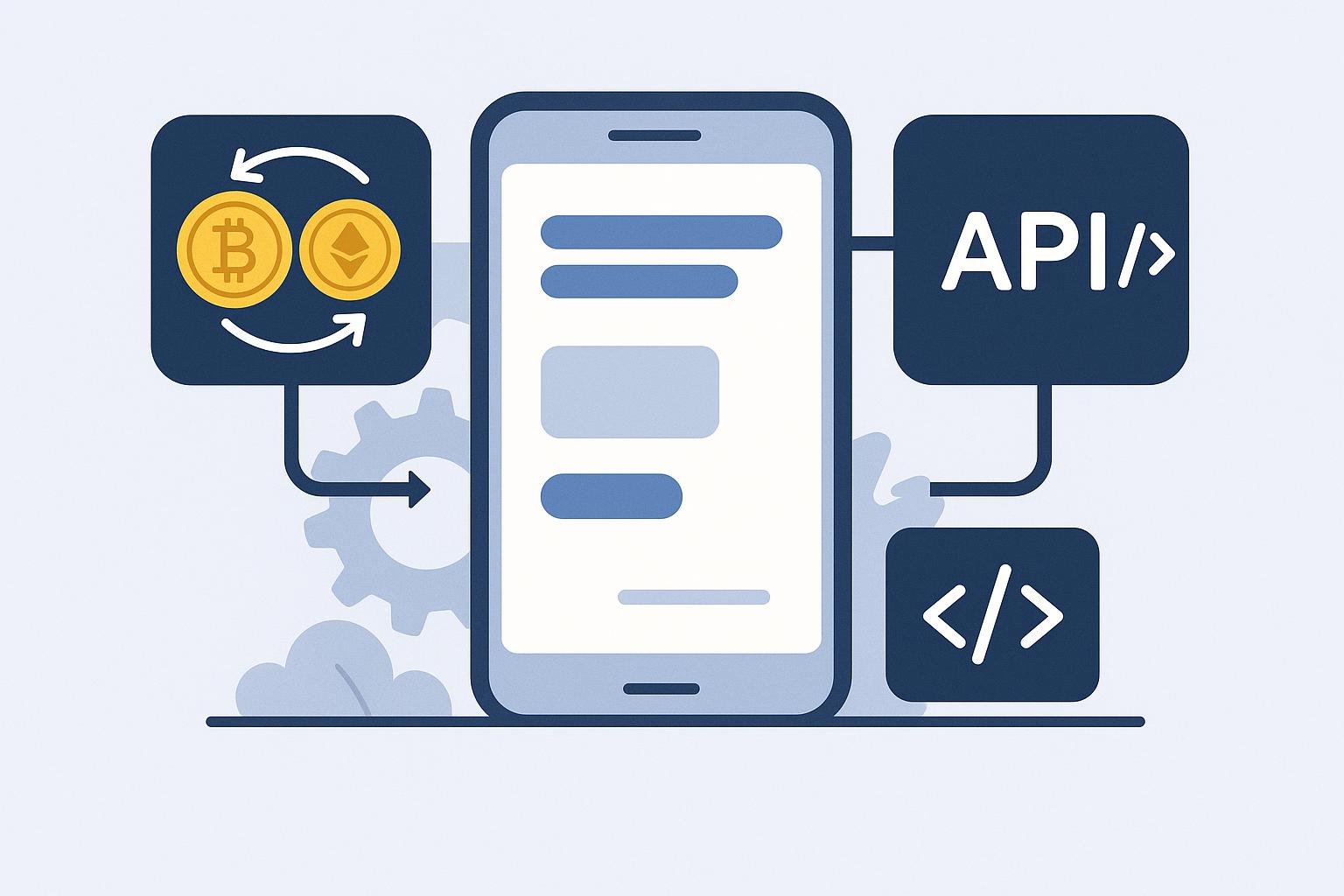
Want to add crypto swaps, live trading, and price feeds to your app? Exchange APIs make it straightforward, letting developers pull real-time data and execute trades without building everything from scratch. In a market hitting $100 billion in daily volumes, these tools cut development time by up to 70%, helping apps compete in a crowded field. Non-custodial options like ChangeNOW’s API simplify swaps across 1500+ assets, dodging custody risks and improving customer onboarding and LTV. Among the best crypto apis, they offer reliable access for apps designed to scale quickly and securely.
Why use Exchange APIs
Exchange APIs deliver concrete value that transforms basic apps into revenue-generating platforms. Real-time price feeds enable dynamic portfolio trackers, and boosting user engagement through live charts that respond instantly to market moves. Instant swap functionality lets users convert assets seamlessly within your app. Trading capabilities unlock premium tiers: apps charge 0.1-0.5% on swaps, generating $10K+ monthly from 10K active users at scale. Portfolio analytics powered by historical data help users spot trends, with APIs providing 1-minute candles that would take weeks to aggregate independently. Developers save 6-12 months versus building proprietary matching engines, redirecting focus to UX and growth.
API Performance Edge
Integration yields measurable gains across key metrics.
| Metric | Without API | With API | Improvement |
| Data Freshness | 5-10s delay | <100ms | 99% faster |
| User Retention | Baseline | +35% | Engagement surge |
| Dev Time | 6-12 months | 4-6 weeks | 80% reduction |
| Revenue Potential | None | 0.1-0.5% fees | $10K+/mo scale |
These edges compound — fast data keeps users hooked, swaps monetize flows, and saved dev cycles fuel iteration.
Step 1. Pick Your API Provider
Choosing the right API starts with your app’s core needs. Is it simple price tickers for a wallet dashboard, or full order execution for a trading bot? Centralized exchanges like Binance dominate with 50% market share and deep liquidity pools, but they tether you to their 99.9% uptime averages and heavy regulatory strings. Downtime during high-volatility events, exposed single-exchange risks, with some apps losing many users in outages.
Non-custodial providers lead for speed and safety, slashing hack surfaces compared to custodial models where you hold user funds. They shine in mobile apps or wallets needing quick swaps without accounts. Aggregators, meanwhile, route trades across pools for optimal rates, though they carry a 0.5% fee premium in choppy markets.
- Custodial APIs: Unmatched depth and controls, but KYC compliance adds 2-4 weeks to launch.
- Non-Custodial: Account-free swaps handle 1M+ trades monthly; perfect for apps or casual users.
- Aggregators: Smart routing beats single-venue pricing 10% of the time, per backtests.
Step 2. Secure Authentication Setup
Security lapses cause the majority of API breaches, often from exposed keys or weak signatures. Begin in the provider’s dashboard: generate API keys and start with read-only permissions to test safely. Whitelist your server IPs immediately — this helps block unauthorized access attempts.
Essential layers include HMAC-SHA256 signatures on every request, which timestamp and encrypt payloads to prevent replays. Rotate keys quarterly, enforce 2FA on your dashboard account, and explicitly disable withdrawal permissions until production. In a post-MiCA world, regulators demand encrypted traffic and full audit trails; skipping HTTPS invites significant fines.
Step 3. Master Core Endpoints
Once authentication is solid, map your app to essentials: account balances for dashboards, tickers for prices, and order endpoints for trades. REST APIs handle snapshot queries efficiently, while WebSockets push live updates to keep UIs snappy. Always implement exponential backoff for 429 rate-limit errors — retry delays doubling from 1s to 60s prevent bans.
Latencies vary: tickers clock under 100ms for smooth charts, but trades lag 200-500ms due to validation. Order books are critical; 2025 flash crashes wiped $500M because apps lacked depth checks. Early APIs in 2017 forced polling every second, causing 30% data lags — WebSockets fixed that, now pushing updates in under 50ms.
| Endpoint | Role | Latency | Best For |
| /ticker | Real-time prices | <100ms | Dynamic UIs |
| /order | Trade placement | 200-500ms | Automated bots |
| /ws | Streaming data | <50ms | Live order books |
Test edge cases like zero-balance responses or partial fills early. Slippage over 2% turns users away fast.
Step 4. Real-Time Data and Trading Flows
Real-time shines with WebSocket subscriptions to order books and trades, feeding live charts without constant polling. Cap slippage at 2% via pre-trade checks, as aggregators split orders across venues to hedge single-pool crashes. During halvings or news dumps, call volumes triple; buffer with multi-provider fallbacks to maintain 99.95% uptime.
Volatility in crypto isn’t just risk, it’s opportunity. Apps that notify on 5% moves retain 30% more users, but over-reliance on one API invites correlated failures.
Step 5. Test, Monitor, Deploy
Test on fake networks first, as they catch most issues before using real money. Stress-test at 10x your expected traffic to hit strong uptime and low errors. Use monitoring to watch for slow trades and set alerts.
Simple steps:
Unit tests: Check code basics like logins (aim for 95% coverage).
Load tests: Fake busy times with 500 requests per second.
Full tests: Run complete user journeys, even failures.
EU rules (MiCA) need permanent records of trades, so it is important to store them safely online or in databases.
Step 6. After Launch
Shipping the integration is just mile one. Real revenue comes from staying live when markets go vertical. Post-launch, shift focus to two things: infrastructure resilience and user growth. Monitor latency spikes and swap failure rates daily, as every 1% of failed trades shaves 2-3% off retention.
On the marketing side, don’t just announce the integration. Segment users who’ve traded before and hit them with a zero-fee weekend. Use swap volume data to identify power users, then offer tiered rebates. Partner with crypto tax tools, offer one-click swap export for easy filing; they’ll send users your way. Embed social proof directly in the app: “1,200 swaps completed in the last hour” builds trust without a single ad dollar. Run seasonal campaigns around halvings or major network upgrades. Use push alerts strategically: notify users when their held asset jumps 4% and suggest swapping into stablecoins.
Conclusion
Integrating a crypto exchange API turns your app into a dynamic trading hub without building infrastructure from scratch. By selecting the right provider, securing authentication, mastering core endpoints, and deploying real-time data flows, you can deliver live prices, seamless swaps, and automated trading features that boost retention and open revenue streams. Prioritize rigorous testing, monitor performance closely, and market strategically after launch. With the right API foundation, you’ll reduce development time significantly while staying competitive in fast-moving markets. Start with clear requirements, iterate based on user feedback, and let the integration scale as your app grows.