




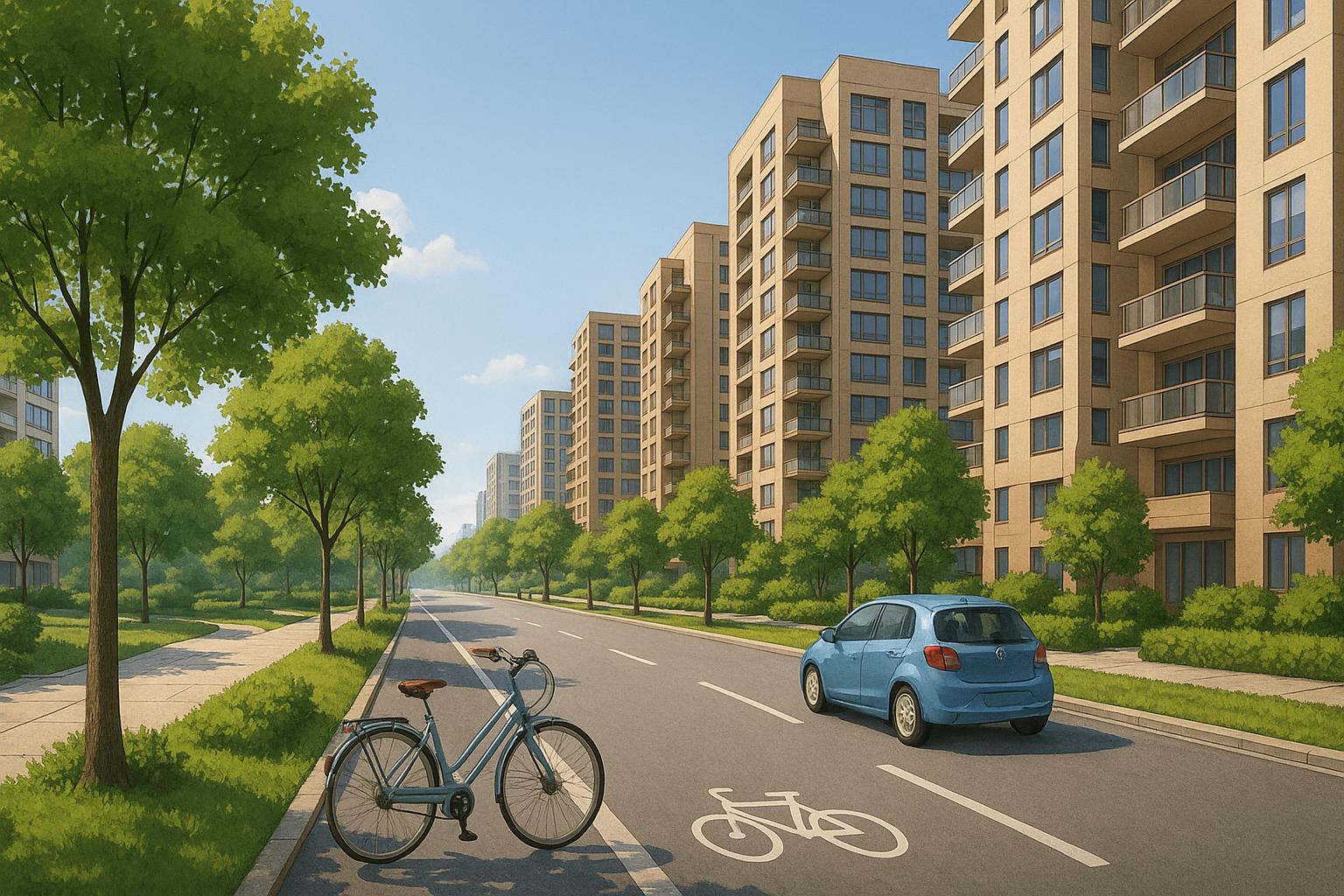
Singapore’s push toward a more sustainable and people-friendly urban environment has given rise to the concept of car-lite districts. These neighbourhoods are designed to reduce reliance on private vehicles by prioritising public transport, cycling paths, pedestrian-friendly streets, and shared mobility solutions. As the government continues to implement this vision across selected precincts, the impact on the residential property market is becoming increasingly evident. Developments such as Vela Bay and Chuan Grove Residences reflect how homes located within well-planned, accessible districts can benefit from this growing urban trend.
Encouraging Walkable and Liveable Communities
Car-lite districts focus heavily on walkability and convenience. Streets are designed with wider sidewalks, sheltered pathways, and dedicated cycling lanes, allowing residents to move easily within the neighbourhood without needing a car. This urban design approach enhances daily living by making essential amenities—such as supermarkets, schools, and parks—more accessible. Condominiums like Vela Bay become particularly attractive in such environments, as residents value the ability to enjoy vibrant neighbourhood life without the hassle of heavy traffic or long travel times.
Stronger Demand from Younger Homebuyers
Younger buyers and professionals are increasingly embracing the idea of living in well-connected neighbourhoods where public transport and lifestyle amenities are readily available. Many prefer convenience and sustainability over car ownership, especially when MRT stations and bus networks provide efficient alternatives. Developments such as Chuan Grove Residences benefit from this demographic shift, as buyers seek homes that align with modern urban living trends and environmentally conscious lifestyles.
Integrated Transport Infrastructure Boosts Value
Car-lite districts are typically supported by strong transport infrastructure, including MRT lines, bus interchanges, and cycling networks. This integrated approach ensures that residents can travel across the island efficiently without relying on private vehicles. When connectivity improves, nearby property values often strengthen as accessibility becomes a key selling point. For investors, developments like Vela Bay gain appeal when they are located within or near such well-connected districts.
More Space for Green and Community Features
Reducing the dominance of cars also frees up valuable land for parks, community spaces, and recreational facilities. Car-lite neighbourhoods often include green corridors, public plazas, and lifestyle hubs that promote social interaction and outdoor activities. These features enhance the overall attractiveness of the area, making nearby residential developments more desirable. Homes such as Chuan Grove Residences can benefit from these lifestyle improvements, particularly for families and residents seeking a healthier urban environment.
Long-Term Opportunities for Condo Investors
As Singapore continues promoting sustainable urban mobility, car-lite districts are likely to become more common across the island. For property investors, these neighbourhoods represent promising opportunities due to their strong focus on connectivity, sustainability, and community living. Condominiums like Vela Bay and Chuan Grove Residences illustrate how properties situated within forward-thinking urban planning frameworks can attract consistent demand from both homeowners and tenants in the years ahead.