




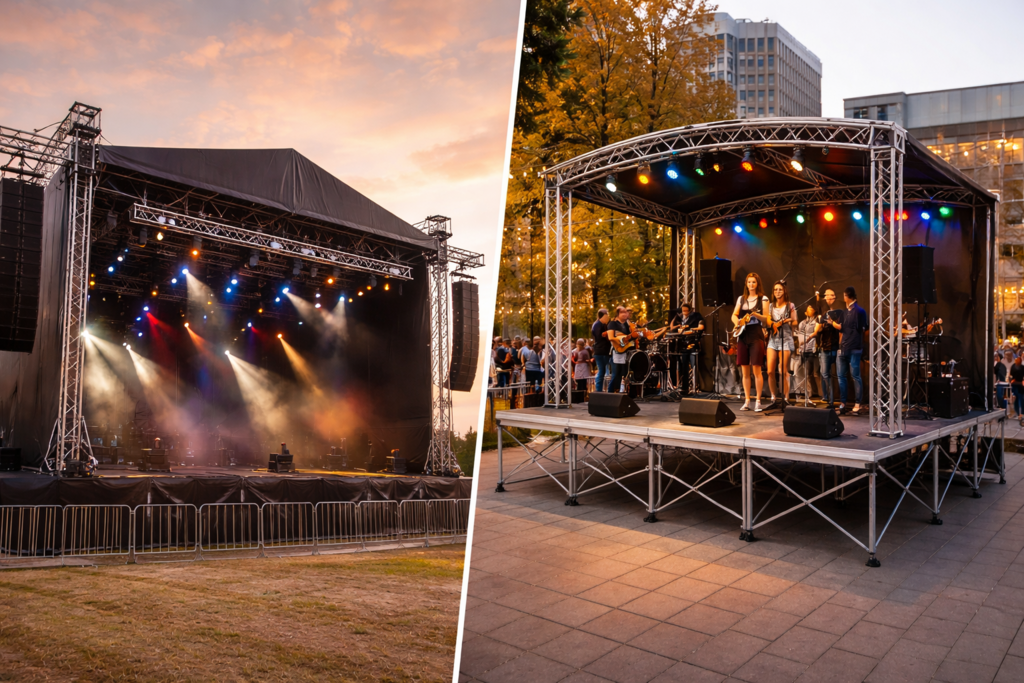
In today’s rapidly evolving event industry, profitability depends on more than just ticket sales or client acquisition—it hinges on operational efficiency, scalability, and smart infrastructure choices. One of the most important decisions event companies face is whether to invest in a concert stage built using traditional methods or opt for a portable stage system designed for flexibility and speed.
As the demand for diverse event formats continues to grow—from corporate functions and music festivals to pop-up performances and community gatherings—the type of staging solution used can significantly influence both short-term costs and long-term returns. Much like how Product Discovery and ecommerce site search streamline online buying decisions, choosing the right staging solution helps event businesses optimize operations and maximize profitability.
This article provides an objective, business-focused comparison of traditional and portable staging systems, examining key financial, operational, and strategic factors that impact profitability.
Understanding the Two Staging Models
A traditional concert stage—often referred to as a Festival Stage or Theatrical Stage—is typically a fixed or semi-permanent structure. These stages are commonly used in large-scale productions, concerts, and venues where stability and high load capacity are critical. They often require professional installation, heavy equipment, and a dedicated crew.
In contrast, a portable stage, also known as Modular Staging or a Mobile Stage, is designed for ease of transport, quick assembly, and adaptability. These systems are made up of lightweight components that can be configured into different shapes and sizes, making them suitable for a wide range of events.
Initial Investment and Capital Allocation
One of the most immediate differences between the two options lies in upfront costs.
Traditional staging systems typically involve higher initial investment due to materials, engineering, and installation requirements. For large-scale Festival Stage setups, costs can escalate quickly when factoring in structural components, rigging, safety compliance, and labor. These systems are often justified for companies that specialize in high-budget events or operate permanent venues.
Portable staging systems, on the other hand, offer a lower barrier to entry. Modular Staging solutions are generally more affordable upfront and do not require specialized construction teams. This makes them particularly attractive for small to mid-sized event companies or businesses looking to expand their service offerings without significant capital risk.
However, while portable options are more cost-effective initially, companies must consider the scale and frequency of their events. A lower upfront investment does not always translate to higher profitability if the system cannot meet long-term demands.
Operational Efficiency and Labor Costs
Operational efficiency is a critical factor in determining profitability, especially for event companies managing multiple projects simultaneously.
Traditional Theatrical Stage setups often require skilled labor for assembly and dismantling. The process can be time-consuming, sometimes taking several hours or even days depending on the complexity of the structure. This increases labor costs and limits the number of events that can be handled within a given timeframe.
In contrast, Mobile Stage systems are designed for quick setup and teardown. Many Modular Staging solutions can be assembled by a small team—or even a single individual—within a short period. This significantly reduces labor expenses and allows companies to take on more events, thereby increasing revenue potential.
The trade-off here is between robustness and efficiency. While traditional stages may offer superior structural capabilities for large-scale productions, portable systems excel in speed and convenience, which can directly impact profit margins.
Scalability and Flexibility
Scalability is another crucial consideration for event companies aiming to grow their business.
Traditional Festival Stage setups are often built for specific purposes and locations. While they can be customized during construction, they are not easily adaptable once installed. This lack of flexibility can limit their usability across different event types.
Portable staging systems, by design, offer high scalability. Modular Staging allows event planners to adjust the size and configuration of the stage based on the requirements of each event. Whether it’s a small corporate presentation or a mid-sized concert, the same system can be reconfigured to fit the need.
This flexibility enables companies to diversify their service offerings and cater to a broader client base. From a profitability standpoint, this means higher utilization rates and better return on investment over time.
Transportation and Logistics
Logistics play a significant role in the overall cost structure of event operations.
Transporting a traditional Theatrical Stage can be complex and expensive. These structures often require specialized vehicles, heavy machinery, and additional manpower for loading and unloading. Storage is another challenge, as large components take up considerable space when not in use.
Mobile Stage systems are designed with portability in mind. Lightweight materials and compact designs make transportation more efficient and cost-effective. Many systems can be packed into standard vehicles, reducing the need for specialized logistics.
The reduced transportation and storage costs associated with portable systems can have a substantial impact on profitability, especially for companies that operate across multiple locations.
Durability and Maintenance
Durability is often cited as a key advantage of traditional staging systems. Festival Stage structures are typically built using heavy-duty materials that can withstand extreme conditions and support large loads. This makes them ideal for high-profile events with demanding technical requirements.
However, this durability comes with higher maintenance costs. Regular inspections, repairs, and compliance checks are necessary to ensure safety and performance, adding to the overall cost of ownership.
Portable staging systems, while generally less robust, have improved significantly in terms of durability. Modern Modular Staging solutions use high-quality materials that offer a good balance between strength and weight. Maintenance requirements are usually lower, but the lifespan of these systems may be shorter compared to traditional stages.
The key trade-off here is between longevity and cost efficiency. Companies must evaluate whether the higher durability of traditional stages justifies the increased maintenance expenses.
Revenue Potential and Utilization Rates
Profitability is ultimately determined by how effectively an asset is utilized.
Traditional Theatrical Stage setups are often used for large, high-revenue events. However, their limited flexibility and higher setup times can restrict the number of events a company can manage. This can lead to lower utilization rates, especially during off-peak periods.
Portable staging systems, with their quick setup and adaptability, can be used across a wide range of events. This increases utilization rates and allows companies to generate revenue more consistently. For businesses that rely on frequent, smaller-scale events, this can result in higher overall profitability.
That said, for companies specializing in large-scale productions, the revenue generated from a single event using a traditional stage may outweigh the cumulative earnings from multiple smaller events.
Risk Management and Safety Considerations
Safety is a non-negotiable aspect of event management, and both staging options come with their own set of risks.
Traditional Festival Stage structures are engineered to meet stringent safety standards, making them suitable for large crowds and heavy equipment. However, their complexity increases the risk of errors during installation if not handled by experienced professionals.
Portable staging systems are generally simpler to assemble, reducing the likelihood of installation errors. However, they may have limitations in terms of load capacity and stability, particularly in challenging environments.
Event companies must carefully assess the risk profile of each option and ensure that their choice aligns with the safety requirements of their events.
Environmental and Sustainability Impact
Sustainability is becoming an increasingly important consideration for businesses across industries, including event management.
Traditional staging systems often involve significant material usage and energy consumption during construction and transportation. Their fixed nature can also lead to underutilization, which is not ideal from a sustainability perspective.
Portable staging systems, with their reusable and adaptable components, offer a more sustainable alternative. Modular Staging reduces waste and allows for efficient resource utilization. Additionally, lower transportation requirements contribute to reduced carbon emissions.
While sustainability may not directly impact profitability in the short term, it can influence brand reputation and client preferences, ultimately affecting long-term business success.
Market Trends and Industry Shift
The event industry is witnessing a gradual shift toward more flexible and cost-effective solutions. The growing popularity of pop-up events, hybrid experiences, and decentralized venues has increased the demand for Mobile Stage systems.
At the same time, traditional Theatrical Stage setups continue to dominate large-scale productions and established venues. This indicates that both solutions have their place in the market, and the choice depends largely on the business model and target audience of the event company.
Making the Right Decision
Choosing between a traditional concert stage and a portable stage is not a one-size-fits-all decision. It requires a careful evaluation of multiple factors, including:
- Business size and growth plans
- Type and frequency of events
- Budget and capital availability
- Operational capabilities
- Client expectations
Event companies must also consider the broader impact of their decision, including how it affects efficiency, scalability, and long-term sustainability.
Wrapping Up
When it comes to profitability, both traditional and portable staging systems offer distinct advantages and challenges.
Traditional Festival Stage setups provide durability, high load capacity, and suitability for large-scale events, but come with higher costs and lower flexibility. Portable solutions like Modular Staging and Mobile Stage systems offer affordability, efficiency, and scalability, making them ideal for businesses focused on frequent and diverse events.
Ultimately, the most profitable choice depends on how well the staging solution aligns with the company’s operational strategy and market positioning. By carefully balancing cost, efficiency, and flexibility, event companies can make informed decisions that support both immediate returns and long-term growth.