




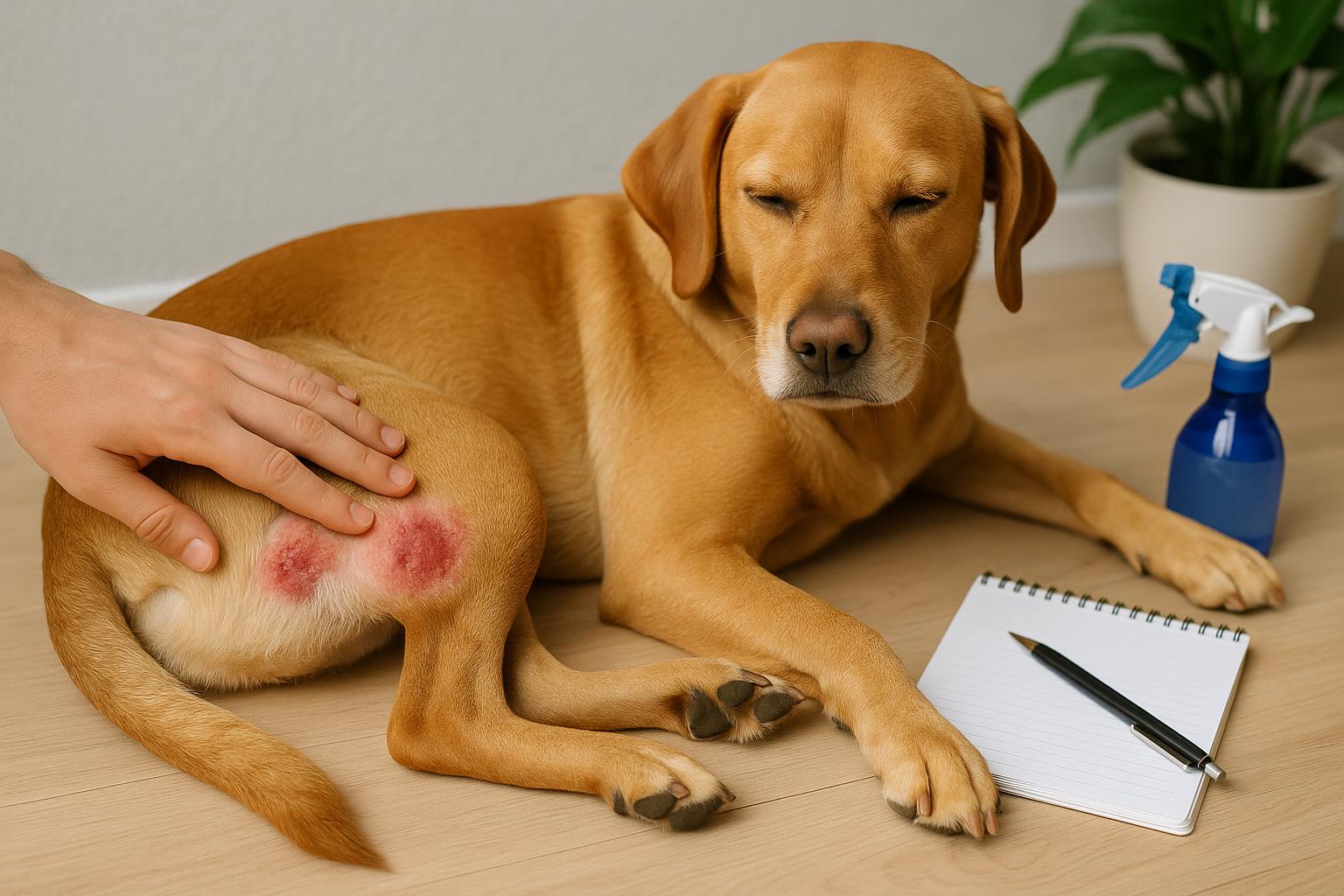
It’s 6 a.m. and your Golden is at it again: that rhythmic, wet lick-lick-lick you can hear from the next room. You part the fur behind his ear and there it is, a raw, weeping circle the size of a half-dollar that wasn’t there at bedtime. You clean it, treat it, it heals. Three weeks later a new one blooms on his hip.
If that cycle sounds familiar, the problem is almost never your wound care. Hot spots are a symptom with an engine behind them, and until you find the engine, they keep coming.
The Short Answer
- Recurring hot spots mean an underlying itch trigger is still active. The usual culprits: fleas, allergies, trapped coat moisture, ear infections, or stress licking.
- A hot spot is self-inflicted: the dog chews one spot until the skin breaks down and bacteria move in. Stop the itch, and the sores stop.
- Prevention rests on four pillars: year-round parasite control, skin-barrier support, disciplined drying and grooming, and treating the root with your vet.
- Expect results in weeks, not days. A solid plan turns monthly flare-ups into a rare event.
What a Hot Spot Actually Is
The clinical name is acute moist dermatitis, and “acute” is the key word. A hot spot can go from pink skin to a hairless, oozing, painful lesion in hours. It looks angry-red and wet, often ringed with matted fur, and smells sour and yeasty, like wet laundry left in the machine. Touch near one and most dogs flinch. That pain matters: hot spots run deeper than they look, and a vet usually needs to clip and clean the area, sometimes under sedation.
The lesion itself is self-trauma. Something itched, the dog worked the spot with tongue and teeth, and the broken surface became a buffet for the bacteria that normally live harmlessly on skin. So the real question isn’t “how do I heal this one?” It’s “what keeps telling my dog to chew?”
The Usual Suspects Behind the Repeats
- Fleas. The most common driver. Dogs with flea-allergy dermatitis react to flea saliva, so one bite can ignite days of itching. You may never see a live flea, either; an allergic dog grooms them off before you get the chance. Classic tell: spots clustered over the rump and tail base.
- Allergies. Pollens, dust mites, grasses, and food sensitivities all produce chronic, low-grade itch. These dogs chew paws, rub faces, and flare seasonally (environmental) or year-round (often food).
- Trapped moisture. Thick and double coats (Goldens, Newfoundlands, Bernese) hold a warm, humid layer against the skin after swims, baths, and rainy walks. Bacteria love it. It’s why hot spots spike in humid summer weather.
- Ear infections. A sore ear makes a dog scratch its face and rub its cheek along the carpet, so lesions appear below the ear and along the jaw. If the spots always favor the face, look inside the ear first.
- Boredom and anxiety. Some dogs lick a leg raw with no itch at all. For them the licking is the point, a self-soothing habit. If flares track with schedule changes or long crate days, take this seriously.
Often it’s a stack. An allergic Golden who swims twice a week and air-dries isn’t unlucky; he’s a hot spot with a start date.
The Four-Part Prevention Plan
1. Lock Down Parasite Control: All Year, Every Pet
Start here because it’s the cheapest, highest-yield fix. Put your dog on a vet-recommended flea preventive and run it twelve months a year. Fleas overwinter indoors just fine, and “we stop in November” is how February hot spots happen. Treat every animal in the household, including the indoor cat, or the untreated pet quietly reseeds the house. If an over-the-counter product hasn’t helped after two months, ask your vet about a prescription option. I see this mistake constantly: owners swear they’ve “never seen a flea” while the dog’s rump says otherwise. In a flea-allergic dog, that proves nothing.
2. Build the Skin Barrier From Both Sides
Healthy skin holds moisture in, keeps allergens out, and doesn’t broadcast itch signals over every minor insult.
From the inside, daily fish oil is the workhorse. The omega-3 fatty acids EPA and DHA support skin and coat and help temper inflammatory responses over time. Two caveats: dose by your dog’s size with your vet’s input, and give it six to eight weeks before you judge it. Nothing about skin is an overnight fix.
From the outside, shampoo choice matters more than most owners realize. Harsh, heavily fragranced formulas strip the oils that make the barrier work, leaving sensitive skin itchier than before the bath. Look for gentle formulas built on oatmeal or aloe, or a chlorhexidine-based medicated wash if your vet recommends antibacterial support. Either way, let it sit for a genuine 5–10 minutes of contact time; a medicated bath lathered and rinsed in ninety seconds does roughly nothing. Bathe every 3–4 weeks for most dogs, more often only on veterinary advice. If you’re staring at a wall of options, this comparison of shampoo for hot spots on dogs is a sensible place to narrow the field.
3. Fix Your Drying and Grooming Habits
This is where most recurrences are quietly born, and it’s entirely within your control.
- Dry to the skin, not the surface. After swims and baths, towel firmly against the lie of the coat, then finish thick-coated dogs with a dryer on cool or low-warm (never hot) until the undercoat is dry at the roots. On a Newfoundland that can take 20 minutes. Do it anyway.
- Kill the mats. Matted fur traps moisture and hides early redness until it’s a crater. Line-brush double coats weekly; daily during spring and fall coat blows.
- Do a weekly hands-on check of the trouble zones: behind the ears, under the collar, armpits, groin, and tail base. Feel for heat, dampness, and any spot your dog objects to you touching.
- Skip the shave-down. A tidy summer trim helps airflow; shaving a double coat to the skin damages it. Thin, don’t strip.
Catching a warm pink patch on Tuesday beats treating an open sore on Friday. Every time.
4. Treat the Root, Not Just the Crater
If parasites are handled, drying is disciplined, and your dog still flares, the trigger sits deeper, and that’s vet territory. My decision rule: two or more hot spots in six months means book the workup, not another tube of ointment. For itchy dogs, the workup may mean a strict 8–12 week food elimination trial, allergy testing, or anti-itch medication to break the cycle while you hunt the cause. Face-and-ear repeaters need a proper ear exam. If the licking looks more like ritual than reaction, add sniff-heavy walks, puzzle feeders, and real enrichment, then raise anxiety with your vet if it persists.
FAQ
Should I let a hot spot “air out” or cover it?
Air, not bandages. But air alone isn’t treatment: the area needs the fur clipped back, gentle cleaning, usually a vet-prescribed topical, and a cone or recovery suit until it’s fully healed. Damp, licked skin heals slowly or not at all.
How fast do hot spots appear, and how long do they take to heal?
They can erupt in a few hours, which is why owners swear it “came out of nowhere.” With proper clipping, cleaning, medication, and lick prevention, most heal within one to two weeks. Still spreading after 48 hours, or a dog that seems feverish or lethargic? Call your vet.
Can I treat a hot spot at home without a vet?
A small, shallow spot caught early can sometimes be managed with clipping, gentle antiseptic, and a cone. But these lesions are genuinely painful, and human creams (especially anything with zinc) can be toxic when licked. Larger than a coin, oozing, or too sore to touch? Vet visit. And recurring spots always warrant one.
Your Next Move
Recurring hot spots are a pattern with a cause, not bad luck. This week: confirm every pet is current on flea prevention, start fish oil with your vet’s blessing, and dry your dog all the way to the skin. Put a weekly two-minute skin check on the calendar. If a new spot shows up anyway, stop patching craters and book the workup. Find the engine, and the fires stop starting.