




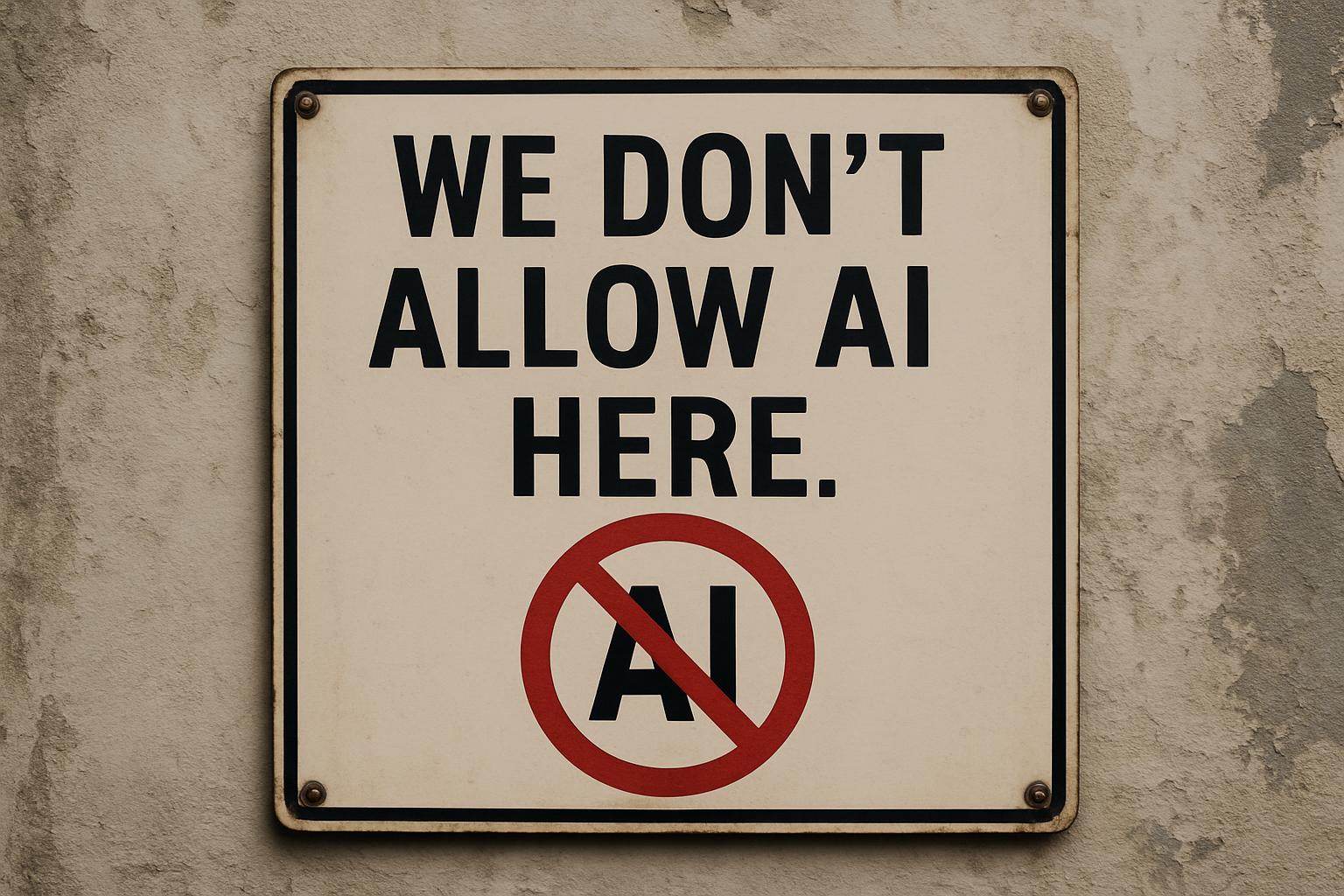
I hear it regularly. A business owner, confident and certain: “We do not use AI. We have policies. Our firewall blocks it.” Then I ask if I can take a look.
What we find, consistently, is a different picture. AI is already inside the organization. It arrived through tools employees already had permission to use. The firewall never had a chance to stop it because no one was carrying it through the front door. It was already in the building.
These AI tools are quietly integrated into everyday software, appearing as free browser extensions, built into collaboration platforms, and embedded within the applications your teams already rely on. There was no formal purchase order or IT approval process—just employees using whatever resources were readily available to get their work done.
A company that bans AI doesn’t actually create an AI-free workplace. It creates an unmonitored one. This distinction is critically important, especially when you consider the sensitive data passing through these tools.
What Is Shadow AI?
Shadow AI refers to AI tools and capabilities used within an organization without the knowledge or approval of the technology or leadership team. Where traditional Shadow IT created data storage and access risks, Shadow AI goes further. Depending on the service, that data may be stored, used to train future models, or exposed through vulnerabilities the organization has no visibility into.
Shadow AI enters organizations through:
- Consumer AI tools employees use to draft documents or summarize reports, pasting in internal content for context.
- SaaS platforms quietly adding AI features to existing products: CRMs, project tools, HR platforms, customer support systems.
- Browser extensions with AI capabilities installed on company devices without IT review.
- Workflow automation tools connecting business applications to AI models via employee-managed API keys.
Why Firewalls and Policies Are Not Enough
Firewalls block access to known bad destinations. Shadow AI does not come from outside. It originates inside the organization, from trusted users on authorized devices, traveling over encrypted connections to legitimate services that appear on no blocklist.
A written policy has the same limitation. When Microsoft 365 adds Copilot, when Salesforce adds Einstein AI, when Zoom adds meeting intelligence, no employee made a deliberate choice. The software did it for them. A policy cannot govern what your existing tools are doing in the background. Effective Shadow AI management requires visibility first.
Governance and DLP: What Actually Works
Governance is the policy layer. It defines who may use AI tools, which tools are approved, what data may be shared, and how usage is reviewed. A well-designed AI governance framework starts with an honest inventory of what is already in use, then builds enforceable rules from there. In practice this means an AI Acceptable Use Policy, a software approval process that includes AI-enabled features within existing products, a vendor inventory that tracks every external service receiving organizational data, and regular staff training.
Data Loss Prevention is the technical layer. Where governance defines the rules, DLP enforces them by monitoring data movement across endpoints, cloud services, email, and web traffic. It identifies when sensitive data is being transmitted to unapproved destinations and gives the organization an accurate picture of what is moving where. Most organizations that implement DLP discover data movement patterns they did not expect and could not have found any other way.
Governance without DLP is a policy that depends entirely on employee compliance. DLP without governance is a technical tool with no framework for what it is protecting. The two work together.
Where to Start
The starting point is not a technology purchase. It is three honest questions:
- What AI-enabled tools and features are currently active in our environment, including those we did not deliberately purchase?
- What categories of organizational data are being shared with external AI services, and under what terms?
- What policy governs how employees interact with AI tools, and how is it communicated and enforced?
If the answers are unclear, the organization has a Shadow AI exposure that deserves attention now rather than after an incident creates urgency. The goal is not to eliminate AI. That ship has sailed. The goal is to replace unknown risk with understood, managed risk.
Shadow AI is not a future threat. It is a present condition inside most organizations. The executives who look honestly at what is already running and build governance structures before a crisis demands it will be in a fundamentally stronger position, legally, competitively, and operationally, than those who find out the hard way.