




Eleanora Kurban, a dedicated nursing student at Anne Arundel Community College in Annapolis, Maryland, is carving a path towards a career in healthcare that is both inspiring and impactful. Born in Minsk, Belarus, Eleanora’s early life was deeply influenced by her mother, a physician, who instilled in her a passion for medicine and care. This familial influence prompted Eleanora to pursue a career in nursing, focusing on critical care, where she aims to make a significant difference in patients’ lives. Before embarking on her nursing journey, Eleanora earned a history degree from the Belarusian State University’s Lyceum and an associate degree in international affairs and linguistics, with a focus on Turkish. Her professional experience includes roles as a nursing assistant at the 6th City Clinical Hospital in Minsk and at Response Senior Care in Annapolis, where she developed her skills in patient care, emergency response, and collaboration with healthcare professionals. Beyond her professional life, Eleanora enjoys cycling, hiking, and exploring art and fashion history, reflecting her commitment to both personal and professional growth.
Critical care units must adhere to infection control processes as a key part of patient safety because their patients remain the most vulnerable to infections due to weakened immune systems, prolonged hospital stays, and invasive medical devices. Since the critical care unit environment has higher risks, patients may incur higher treatment costs and longer recovery times. To prevent these infections, healthcare workers must combine strict hygiene, continuous staff education, and targeted device management. They must also implement comprehensive infection control strategies, such as isolation.
Transmission-based precaution and isolation serve as two of the key measures that healthcare workers employ to facilitate infection control. Patients infected with multidrug-resistant organisms (MDROs) are usually subject to contact precautions. Contact precautions include keeping patients in isolation in single rooms while having dedicated equipment for them. Healthcare workers might also cohort patients with the same infection in multi-bed units to reduce the risk of transmission..
Hand hygiene remains an effective infection control measure in critical care units. Health care workers and visitors must wash their hands with alcohol-based hand sanitizers for regular interaction with patients. When they have heavily soiled hands, they must wash them with soap and water. If workers must come in contact with the patient’s bodily fluids, they must wear gloves and change them between tasks or patients. Therefore, workers cannot treat more than one patient with the same gloves.
Device-associated infections make up a large share of infections acquired in intensive care units, so prevention bundles are essential. To reduce the risk of ventilator-associated pneumonia, critical care teams should keep the head of the bed elevated between 30 and 45 degrees, use subglottic suction ports, monitor and manage cuff pressure, and provide regular oral care with chlorhexidine. Avoiding unnecessary mechanical ventilation also helps reduce infection risk. These measures, when applied consistently, can significantly improve respiratory outcomes for critically ill patients.
Health care workers can minimize central line-associated bloodstream infections by following strict sterile techniques during catheter insertion by using maximal sterile barriers, disinfecting the skin with chlorhexidine, and selecting the safest possible catheter site, such as the subclavian vein when appropriate. Daily evaluation of catheters helps workers remove them as soon as they detect that the patient no longer needs it, reducing the chance of infection. Similarly, to prevent catheter-associated urinary tract infections, staff should limit catheter use, follow aseptic insertion procedures, maintain a closed drainage system, and remove the catheter promptly when it is no longer required.
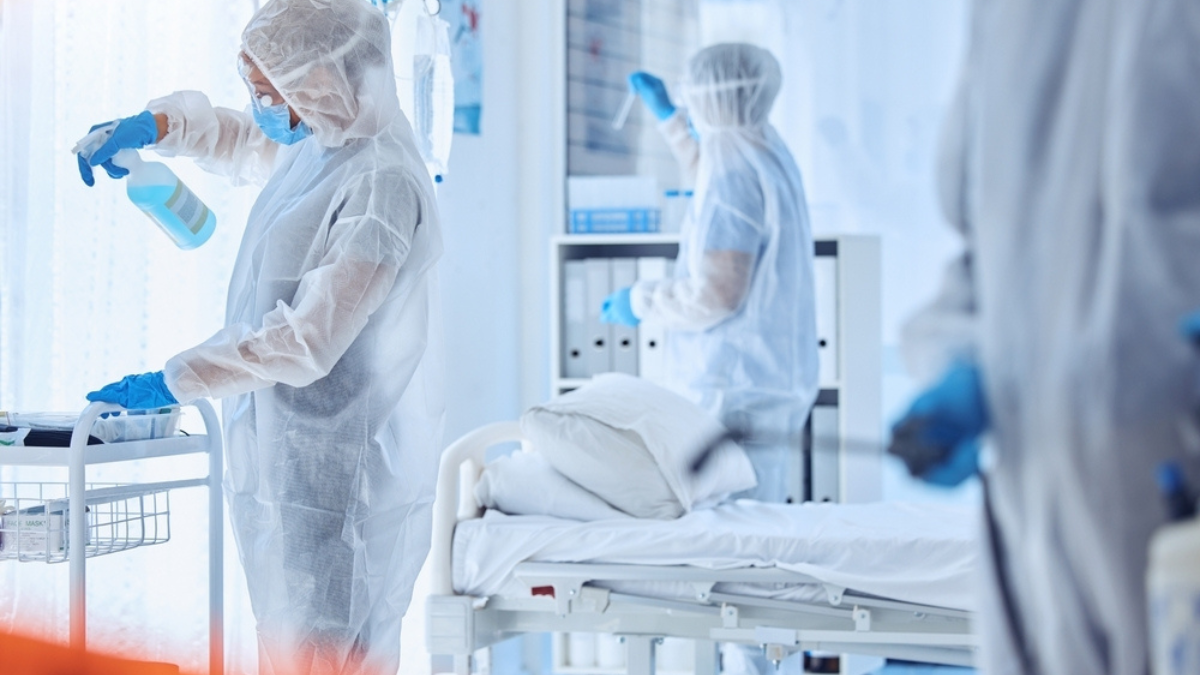
Health workers must carefully maintain critical care unit environments to prevent the spread of pathogens. They must clean high-touch surfaces, such as bedrails, bedside tables, and medical equipment, with EPA-approved or chlorine-based disinfectants. Cleaning surfaces should occur at least twice a week, and floors multiple times a day. Terminal cleaning should take place after a patient is discharged or passes away. Ventilation systems should provide at least six air changes per hour, filter air at 99 percent efficiency for particles as small as five micrometers, and limit contamination from high-traffic areas. New technologies, such as wireless sensor networks, can help monitor staff compliance with hygiene protocols and detect potential risks in real time, strengthening infection prevention efforts.