




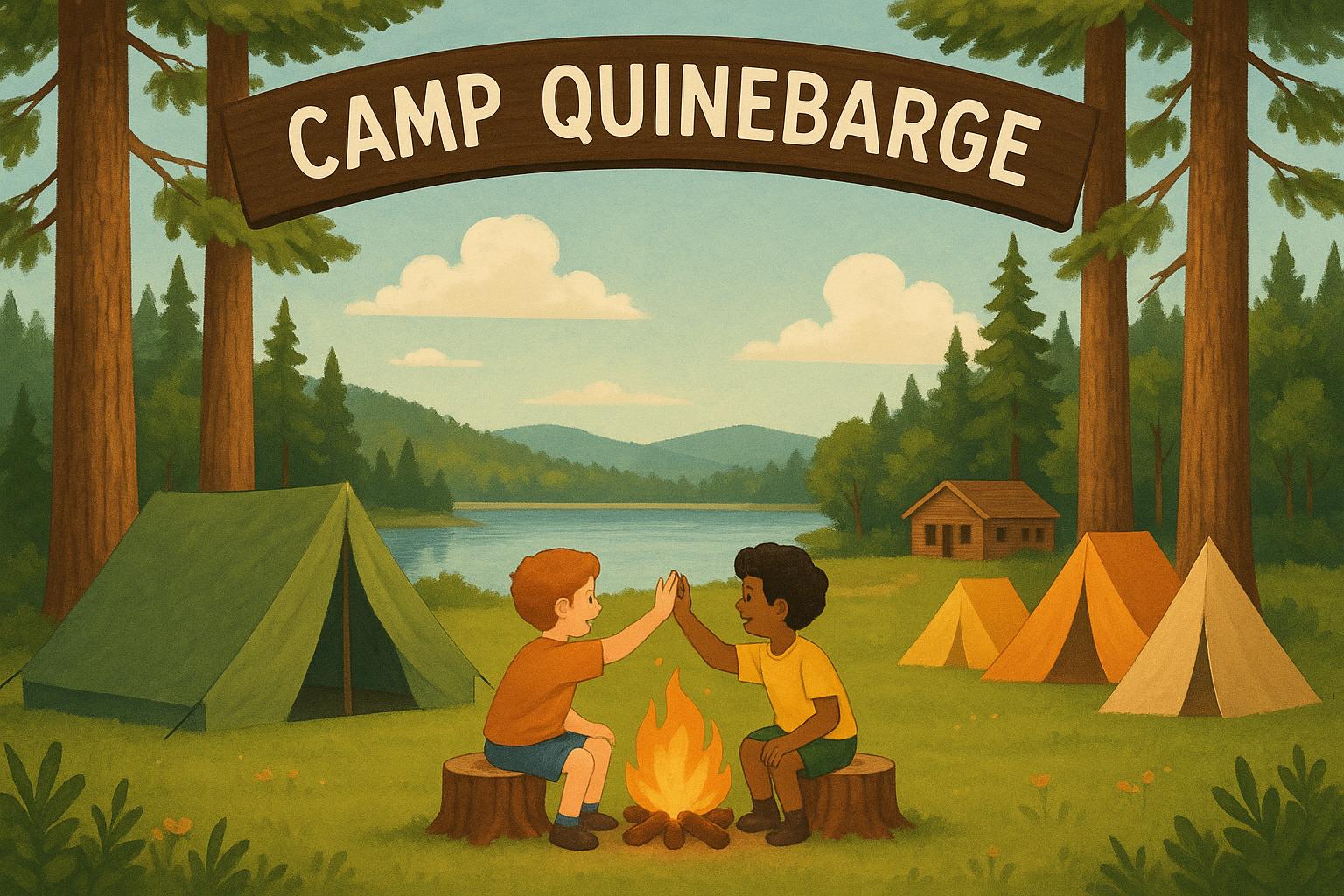
Since 1936, Camp Quinebarge has provided school-going children with a structured environment focused on friendship, kindness, and personal growth. Located on 70 acres of wooded forest and lakefront property along Lake Kanasatka in Moultonborough, New Hampshire, the camp was founded by Tom and Ruth Kenly to create a place where boys could form meaningful connections and develop camping skills. Over time, new leadership expanded the program, making it co-educational and broadening its activities to include boating, horseback riding, arts and crafts, hiking, and sailing. Today, overseen by a new generation of former campers, the camp continues its longstanding mission of encouraging social development, independence, and responsibility. These guiding principles directly support the process of helping children build confidence and form lasting friendships during the summer months.
A Guide to Making Friends at Summer Camp for School-Going Children
Summer camp offers a rare chance for children to step outside school hierarchies and start fresh in a welcoming environment. Pre-camp anxiety about fitting in is common for both children and their parents, yet camp is intentionally structured to ease those worries. Away from strict groups and past labels, campers enter on equal footing, free to reinvent themselves.
Communal living, shared challenges, and daily activities accelerate independence and spark authentic connections. Because everyone arrives without familiar social anchors, confidence grows quickly, and the experience becomes a powerful catalyst for social growth and lasting bonds that may endure beyond camp. While this may result in forming friendships naturally for some, for others, it helps knowing how to approach and make connections with new people.
Successful socialization starts by recognizing that most peers also want connection and feel similarly anxious. Embracing a “same boat” mindset helps campers stay open instead of guarded. Rather than chasing perfection, participants benefit from joining activities with a willingness to try, regardless of ability. Studies show shared experiences build stronger bonds than performance. Campers should also avoid shaping themselves to fit expectations. Indeed, authentic behavior fosters meaningful relationships and draws peers with shared interests. Acting otherwise invites superficial connections.
“Breaking the ice” requires moving from intention to action. Instead of waiting to be approached, campers benefit from initiating contact through simple actions like smiling or offering introductions. Starting conversations with open-ended questions about interests, home life, or camp expectations keeps exchanges active and shows sincere curiosity.
Additionally, everyday items, such as cards, a frisbee, or a distinctive water bottle, can naturally spark conversation during free time. Participation in structured icebreakers further reduces awkwardness and builds group familiarity. Campers should also notice peers who seem shy or alone. Inviting them to join an activity eases anxiety, creates connection, and signals openness.
Notably, after initiating contact, deepening those contacts happens during shared experiences. Strong relationships often develop through communal living combined with shared responsibility. Cabin life builds negotiation, patience, and mutual respect, while quiet moments such as those before lights out frequently become meaningful bonding times. Without digital devices to escape to, campers rely on face-to-face interaction, learning to read expressions, listen, remain present, and strengthen awareness and social focus.
Furthermore, structured daily activities unite campers by creating trust through shared goals. Sports, crafts, and team challenges encourage cooperation, while common interests like favorite books, movies, or games deepen conversation. Communal dining, especially family-style meals, provides consistent, relaxed opportunities to talk, laugh, and reinforce emerging friendships, allowing connections to grow naturally through routine interaction together daily.
Utilizing the available support systems also helps in making healthy connections with others. Staff members are trained social facilitators, not just supervisors. Counselors, for instance, are skilled at leading icebreakers and creating inclusive spaces so no child feels excluded. If campers are struggling socially, they should seek support from these mentors. Staff can suggest conversation starters, build confidence, and guide group dynamics. Also, through structured team-building activities, they can speed up trust-building, helping friendships form faster than they would independently.
Once the session concludes, maintaining friendships requires active effort. Before departing, friends should exchange contact information or social media handles to bridge the physical distance. For a more personal touch, writing letters as pen pals extends the unique spirit of camp into the school year. Finally, planning to return to the same program the following summer often cements these connections, turning seasonal acquaintances into lifelong relationships.
About Camp Quinebarge
Established in 1936 on the shores of Lake Kanasatka in Moultonborough, New Hampshire, Camp Quinebarge began under the leadership of Tom and Ruth Kenly as a summer program centered on friendship, fun, and skill development. In 1962, Tom and Barbara Brunelle assumed leadership, transitioning the camp to a co-educational model in 1975 and expanding its programming. Today, a new generation of former campers oversees operations. The camp maintains affiliations with the American Camp Association and the New Hampshire Camp Directors Association, while supporting local organizations such as the Lakes Region Food Pantry.