




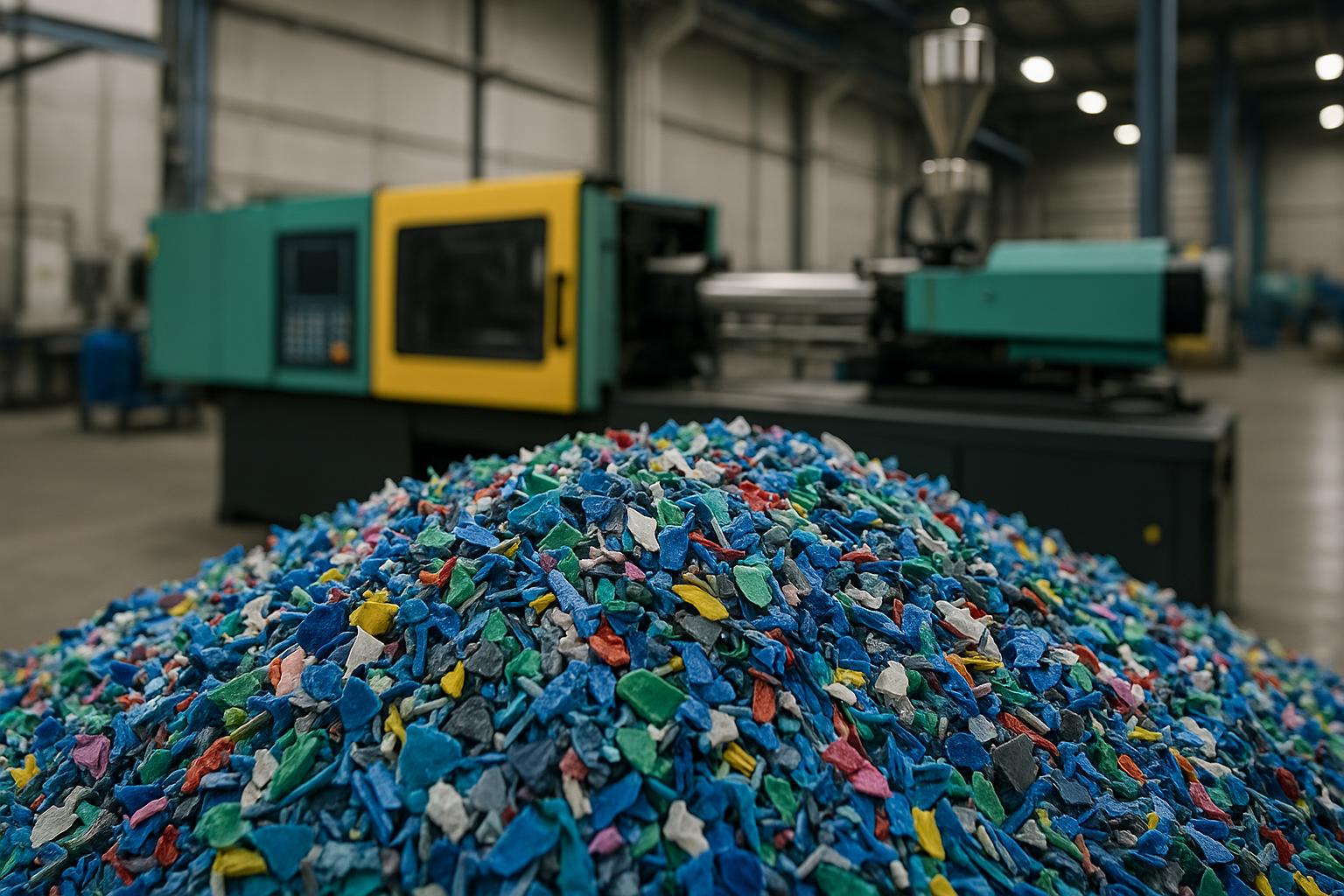
If your manufacturing facility generates plastic scrap, one of the first questions you may ask is simple:
What is my plastic scrap worth?
Unfortunately, there isn’t a universal price per pound for plastic scrap.
Two companies can generate what appears to be the same plastic and receive very different valuations. Resin type, contamination, color, volume, location, consistency, and the physical form of the material can all affect what a plastic recycler or buyer is willing to pay.
For manufacturers generating significant quantities of plastic scrap, understanding these factors can help turn what was once considered waste into a potentially valuable material stream.
Is Plastic Scrap Actually Worth Money?
Some industrial plastic scrap can have recoverable market value.
Manufacturers, injection molders, blow molders, packaging companies, automotive suppliers, distribution centers, and other industrial operations may generate recyclable plastics that can be collected, processed, and returned to the plastics supply chain.
Common examples include:
- HDPE
- HMW polyethylene
- Polypropylene (PP)
- LDPE and LLDPE
- PET
- ABS
- Polycarbonate
- Nylon
- PMMA/acrylic
- TPO
The material may also come in many different forms, including production parts, runners, sprues, purge, crates, totes, pallets, buckets, bottles, film, regrind, pellets, and off-spec virgin material.
However, simply identifying the plastic doesn’t determine its value.
A recycler needs to understand exactly what the material is and what it will take to recover it.
What Determines the Value of Plastic Scrap?
Several factors can significantly influence what your plastic scrap is worth.
1. Resin Type
The first question is usually:
What kind of plastic is it?
HDPE, polypropylene, LDPE, ABS, nylon, PET, and polycarbonate have different markets and processing requirements.
Even materials within the same general plastic family can have different specifications.
If you’re unsure what material you’re generating, product specifications, resin codes, supplier documentation, SDS information, or production records may help identify it.
Knowing the resin before contacting a recycler can make the evaluation process considerably easier.
2. Cleanliness and Contamination
Clean, separated plastic is generally more desirable than heavily contaminated material.
Potential contaminants can include:
- Metal
- Paper and cardboard
- Wood
- Dirt
- Oil
- Adhesives
- Labels
- Food residue
- Other polymers
A Gaylord filled with relatively clean, consistent polypropylene production scrap is much different from a container filled with mixed plastics, metal components, labels, and other debris.
The more sorting and processing required before a material can be reused, the more those costs can affect its recoverable value.
3. Volume
Volume can have a major impact on the economics of industrial plastic recycling.
Shipping a small quantity of material hundreds of miles may cost more than the material itself is worth.
A manufacturer generating several pallets or Gaylords consistently, however, may create a much more efficient recycling stream.
Larger quantities can make transportation, handling, and processing more economical.
This is one reason businesses generating industrial volumes of plastic should consider working directly with an industrial plastic recycler rather than evaluating the material using consumer recycling prices.
4. Consistency
Consistency is often overlooked.
Imagine two manufacturers.
Manufacturer A generates 10,000 pounds of the same natural HDPE production scrap every month.
Manufacturer B generates 10,000 pounds containing several different plastics, changing colors, labels, metal components, and unidentified materials.
Even though both facilities generate the same total weight, they don’t necessarily have equivalent recycling streams.
Predictable material can be easier to process and market.
If a manufacturer can consistently provide the same resin, grade, color, form, and approximate volume, that consistency can make the material more attractive to potential buyers.
Does the Color of Plastic Matter?
It can.
Natural, clear, white, black, and colored plastics may have different downstream applications.
Natural or lightly colored material can sometimes provide processors with greater flexibility because it may be incorporated into a wider range of finished colors.
Mixed-color material may have fewer potential applications.
That doesn’t mean colored plastic has no value. It simply means color is another variable a recycler may consider when evaluating the material.
Does Regrind Have Value?
Plastic regrind can be valuable when its composition is known and the material is clean and consistent.
Manufacturers sometimes grind scrap internally to reduce storage requirements or prepare material for reuse.
For example, consistent HDPE or polypropylene regrind with known specifications can represent a much different commodity than unidentified mixed plastic that has been ground together.
Grinding material doesn’t automatically make it more valuable.
Material identification and quality still matter.
Before combining scrap in a grinder, manufacturers should know whether mixing colors, grades, or polymers could reduce the recyclability of the finished regrind.
What About Plastic Purge, Runners and Production Scrap?
Manufacturing processes frequently produce plastic that never becomes part of the final product.
This can include:
- Injection molding runners
- Sprues
- Defective parts
- Start-up material
- Plastic purge
- Blow molding scrap
- Trim
- Off-spec parts
- Excess resin
- Off-spec pellets
These materials can sometimes be particularly interesting from a recycling standpoint because the manufacturer may know exactly what resin went into the production process.
Instead of viewing these materials strictly as waste, manufacturers can evaluate whether they can become a consistent recyclable material stream.
Why Plastic Scrap Prices Change
Another common question is:
Why was my plastic worth more last year than it is today?
Plastic scrap doesn’t exist in a fixed-price market.
Demand for recycled resin, virgin resin pricing, petroleum and feedstock markets, manufacturing activity, transportation costs, and available processing capacity can all influence recycling economics.
A material that had strong demand during one period may have weaker demand several months later.
The reverse can also happen.
This is why a quote from months or years ago shouldn’t necessarily be treated as the permanent value of a particular resin.
Plastic scrap needs to be evaluated against current market conditions.
Transportation Can Make or Break the Economics
Plastic is often bulky relative to its weight.
Consider a trailer filled with loosely packed plastic parts compared with a trailer containing dense plastic regrind.
Even if both contain the same resin, the transportation economics can be considerably different.
That makes storage and preparation important.
Depending on the material, manufacturers may improve logistics by using:
- Gaylord boxes
- Bales
- Pallets
- Bulk bags
- Grinding
- Compaction
- Consistent containers
The goal isn’t simply to fit more plastic into a container. It’s to create a material stream that can be safely and efficiently stored, loaded, transported, and processed.
Can Mixed Plastic Scrap Be Sold?
Sometimes, but mixed material can be significantly more difficult to recycle.
Separating materials at the point where they’re generated is often preferable to trying to separate them later.
For example, a manufacturer producing HDPE and polypropylene could designate separate containers for each resin.
Instead of creating one mixed-plastic waste stream, the facility now has:
HDPE scrap
and
PP scrap.
That simple operational change can make the materials easier for a recycler to evaluate.
Facilities producing significant plastic waste should consider whether better sorting could turn previously unusable material into a recyclable stream.
How Can I Increase the Value of My Plastic Scrap?
Manufacturers looking to sell plastic scrap can improve the marketability of their material by properly separating, storing and documenting what they generate.
Start with a few basic practices:
- Separate plastics by resin.
- Keep plastic away from trash and contaminants.
- Separate colors when practical.
- Clearly label collection containers.
- Keep material dry.
- Avoid mixing unknown plastics.
- Track approximate monthly volume.
- Document resin grades when possible.
- Store material efficiently.
- Establish consistent collection procedures.
The objective should be to turn random plastic waste into a predictable industrial material stream.
That can make it easier for recyclers to determine whether the material fits their processing and purchasing requirements.
So, What Is My Plastic Scrap Worth?
To get a meaningful answer, a plastic recycler will typically need more information than simply:
“I have some HDPE.”
Be prepared to provide:
Material: HDPE, PP, LDPE, ABS, Nylon, etc.
Grade: When known.
Color: Natural, white, black, mixed color, etc.
Form: Parts, purge, runners, regrind, pellets, film, pallets, totes, etc.
Condition: Clean, painted, labeled, contaminated, mixed, etc.
Quantity: Approximate pounds, pallets, Gaylords or truckloads.
Frequency: One-time material or recurring production scrap.
Location: Where the material needs to be picked up.
Photos can also be useful during the initial evaluation.
The more information you provide, the easier it is for a recycler to determine whether the material can be processed and whether it has recoverable market value.
Stop Treating Plastic Scrap Like Trash
For manufacturers, the bigger question isn’t always “What is plastic worth per pound?”
It may be:
“How much are we spending to throw away material that could potentially be recovered?”
Disposal costs money.
Dumpsters cost money.
Landfill hauling costs money.
Employees handling waste cost money.
And usable plastic leaving a facility as trash represents a material stream that may never get another opportunity to enter the manufacturing supply chain.
A properly structured recycling program can potentially reduce waste handling while recovering value from certain materials.
Looking for a Buyer for Industrial Plastic Scrap?
Seraphim Plastics works with manufacturers and industrial businesses generating recyclable plastic materials.
The company handles a range of post-industrial plastics, including materials such as HDPE, HMW, polypropylene, LDPE/LLDPE, PET, polycarbonate, nylon, PMMA, ABS and TPO, depending on material specifications and current recycling requirements.
For businesses generating recurring quantities of production scrap, Seraphim Plastics can evaluate the material, its location, volume, condition and transportation requirements to determine whether it fits an available recycling program.
If you’re wondering “What is my plastic scrap worth?”, start by identifying the resin, estimating how much you generate, taking a few photos, and documenting how frequently the material is produced.
Then contact Seraphim Plastics for an evaluation of your industrial plastic scrap.
Your plastic may not simply be waste.
It may be a material stream your business hasn’t fully utilized yet.