




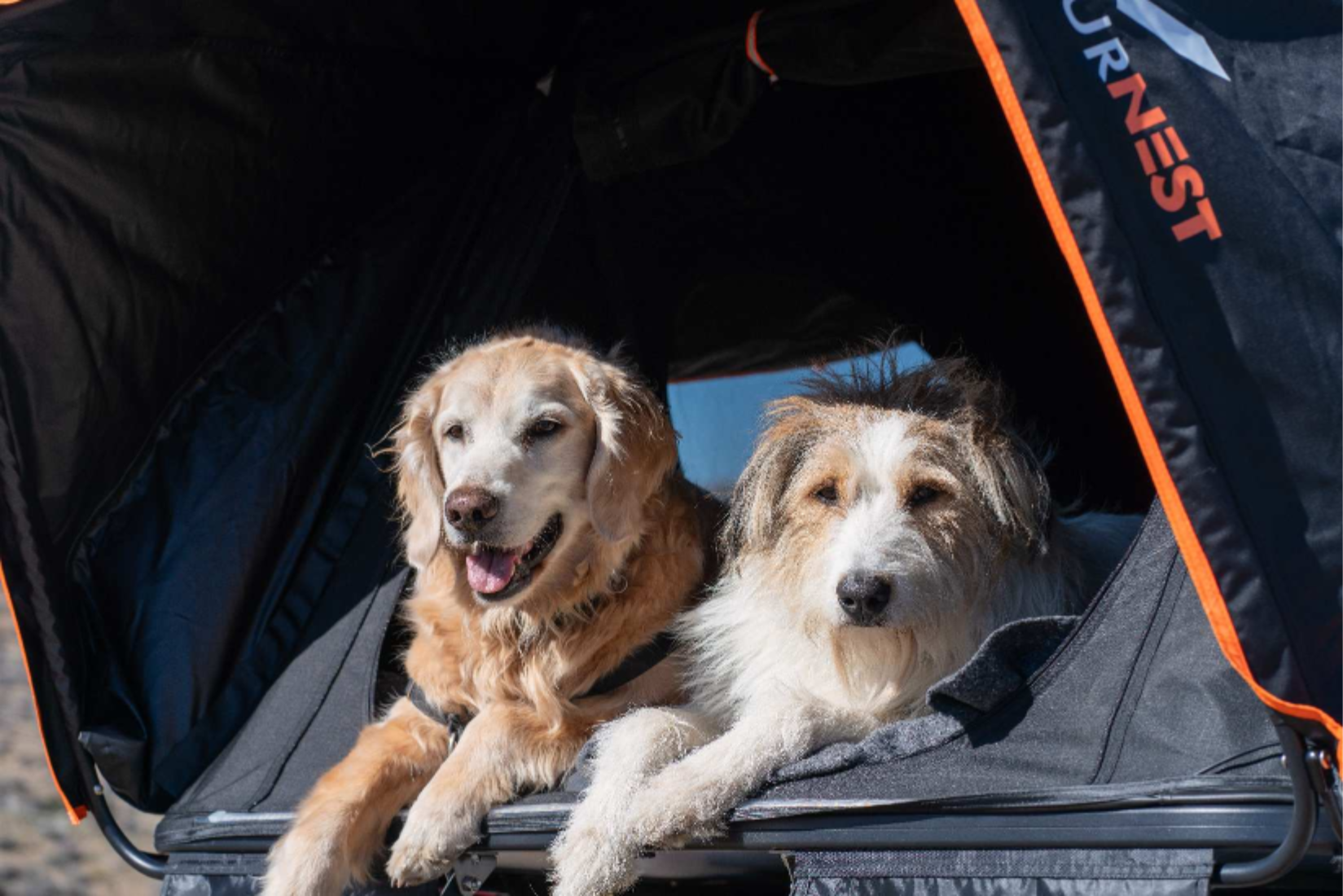
The plan was simple enough: leave Singapore on a Friday evening, drive north, and spend one night somewhere near the coast with a dog that had been getting far too restless at home. In theory, it sounded like a clean break from routine. In practice, it started with a missing water bowl, a half-packed trunk, and a dog that clearly understood something was happening before the humans did.
By the time the car rolled out of Tanjong Pagar, traffic had already softened into its usual weekend rhythm. Nothing dramatic, just the slow release of the city behind you. Inside the car, though, the real adjustment had already begun. The dog kept shifting between the back seat and the space near the luggage, reacting to every small movement as bags and jackets were repositioned.
That small restlessness is usually the first sign of how the trip will actually go.
Crossing into Malaysia later that evening, the drive toward Desaru felt smooth, almost uneventful. But it was the arrival at the campsite that changed the tone completely. It was already past dusk, the kind of light in which everything looks temporarily unfinished. Setting up in that half-light always takes longer than expected, not because it is complicated, but because everything feels slightly harder when you are also trying to keep a dog from wandering into every new sound or smell.
The first real problem appeared quietly: space.
Not in a dramatic way, but in the slow realization that every bag had to be moved twice just to create a clear sleeping area. The dog, usually calm indoors, kept circling the setup area as if trying to understand why the familiar structure of the car no longer applied outside it.
This is the moment most pet-friendly road trips quietly hinge on. Not the driving, not even the destination, but how quickly you can turn a temporary patch of ground into something that feels stable enough for everyone to settle in.
At one point, while trying to keep things organized in the fading light, it became obvious that ground-level sleeping setups were simply too chaotic for this kind of travel. Between insects, uneven terrain, and a dog that would not fully relax when everything around it was still “open,” the system was breaking down before the night had even properly started.
That is where elevated sleeping setups start to make sense in a very practical way. Not as an upgrade or a luxury, but as a way to remove uncertainty from the equation.
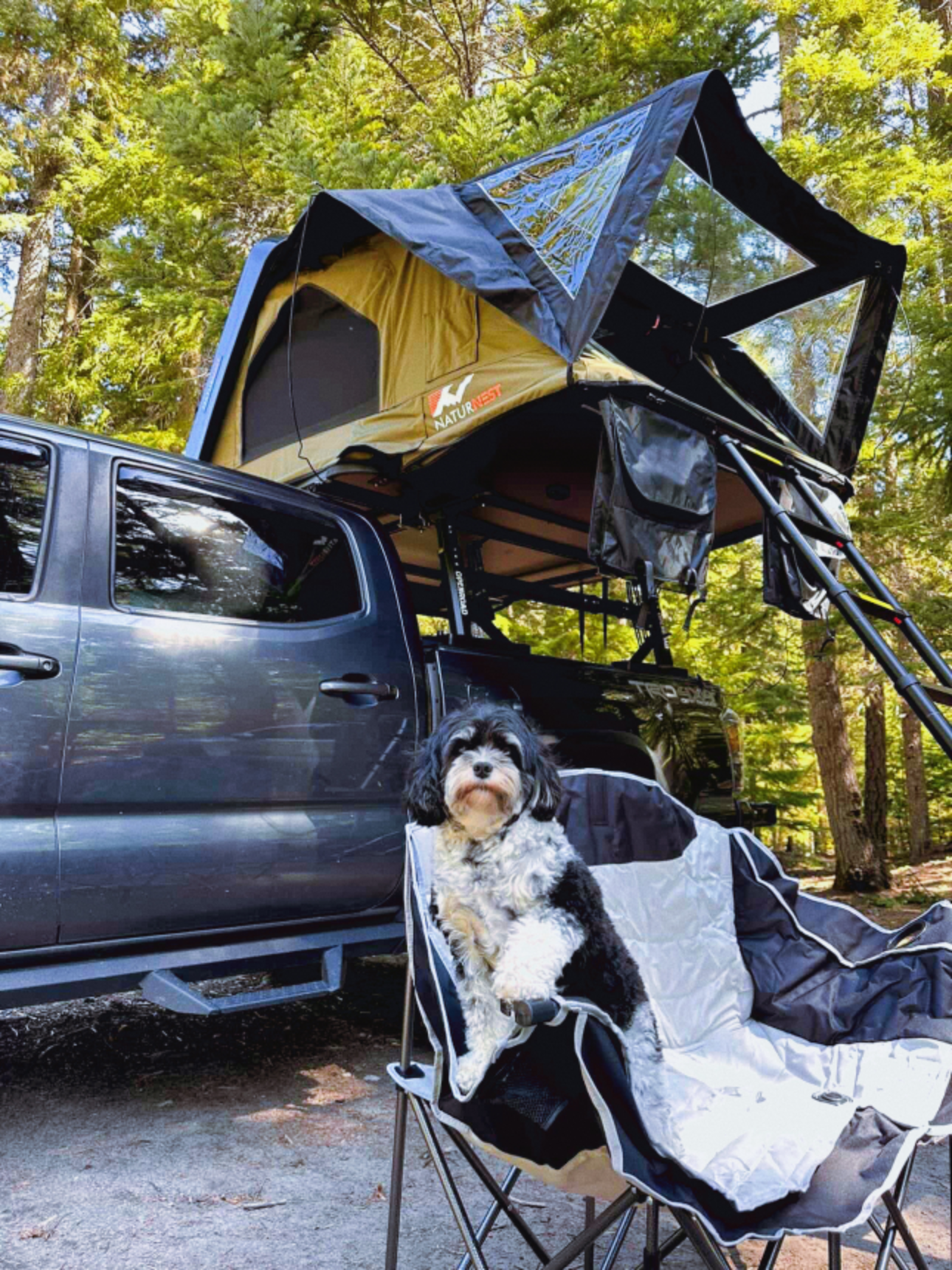
During trips like this, compact elevated setups such as 2-3 person rooftop tents tend to change the structure of the entire evening. The benefit is not just about sleeping above the ground. It is about reducing the number of decisions that still need to be made after arrival. Where to sleep, how to protect gear, and how to separate movement zones — most of that is already resolved before you even stop the car.
In this case, once the setup was complete, something subtle shifted. The dog stopped circling and instead settled into one corner as if the space had already been accepted as “done.” No further rearranging, no checking, no hesitation. Just a kind of quiet acceptance that usually takes much longer in unfamiliar environments.
What stood out more than the equipment itself was how quickly the evening changed pace once everything stopped moving. The campsite, which had felt slightly fragmented during setup, became unusually still. Even small noises in the distance stopped feeling like interruptions.
There was also a practical side that became more obvious in hindsight. In tropical conditions, especially near coastal areas in Malaysia, heat and humidity do not disappear quickly after sunset. Earlier in the afternoon, before reaching the campsite, there had already been a brief moment where the parked car felt unusable within minutes, and keeping the dog inside was not an option at all. Shade and airflow were not optional considerations — they were immediate constraints.
This is where integrated systems start to matter more than individual components. Some travelers prefer keeping everything aligned within a single setup approach, not because it is the only solution, but because it reduces friction when conditions are less forgiving. On this trip, systems like Naturnest rooftop tents became part of that logic simply because they removed the need to re-evaluate shelter every time the environment changed.
The interesting part is not that any of this made the trip “perfect.” It didn’t. There were still moments of confusion, still adjustments, still small inefficiencies that only became obvious once everything was already in motion. But those moments were shorter, less disruptive, and easier to absorb.
By the time the night fully settled, the campsite stopped feeling like a setup zone and started feeling like a temporary version of routine life. The dog was no longer reacting to every sound. Movement inside the sleeping area became minimal. Even the usual background awareness that comes with unfamiliar outdoor spaces began to fade.
In situations like this, pet-friendly camping starts to feel less like bringing a pet into nature and more like designing a small, controlled version of familiarity in an unfamiliar place.
The next morning, the drive back toward Singapore felt almost detached from the previous night. Everything was already packed without urgency. There were no last-minute decisions, no scattered gear, and no reorganization at the roadside. The dog slept most of the way back, which is usually the clearest sign that the environment from the night before had done its job.
Not every trip needs to be optimized, and not every inconvenience needs to be solved in advance. But there is a noticeable difference between a trip that constantly reacts to problems and one that quietly avoids creating them in the first place.
Sometimes that difference only becomes visible when everything finally slows down enough to notice it.