




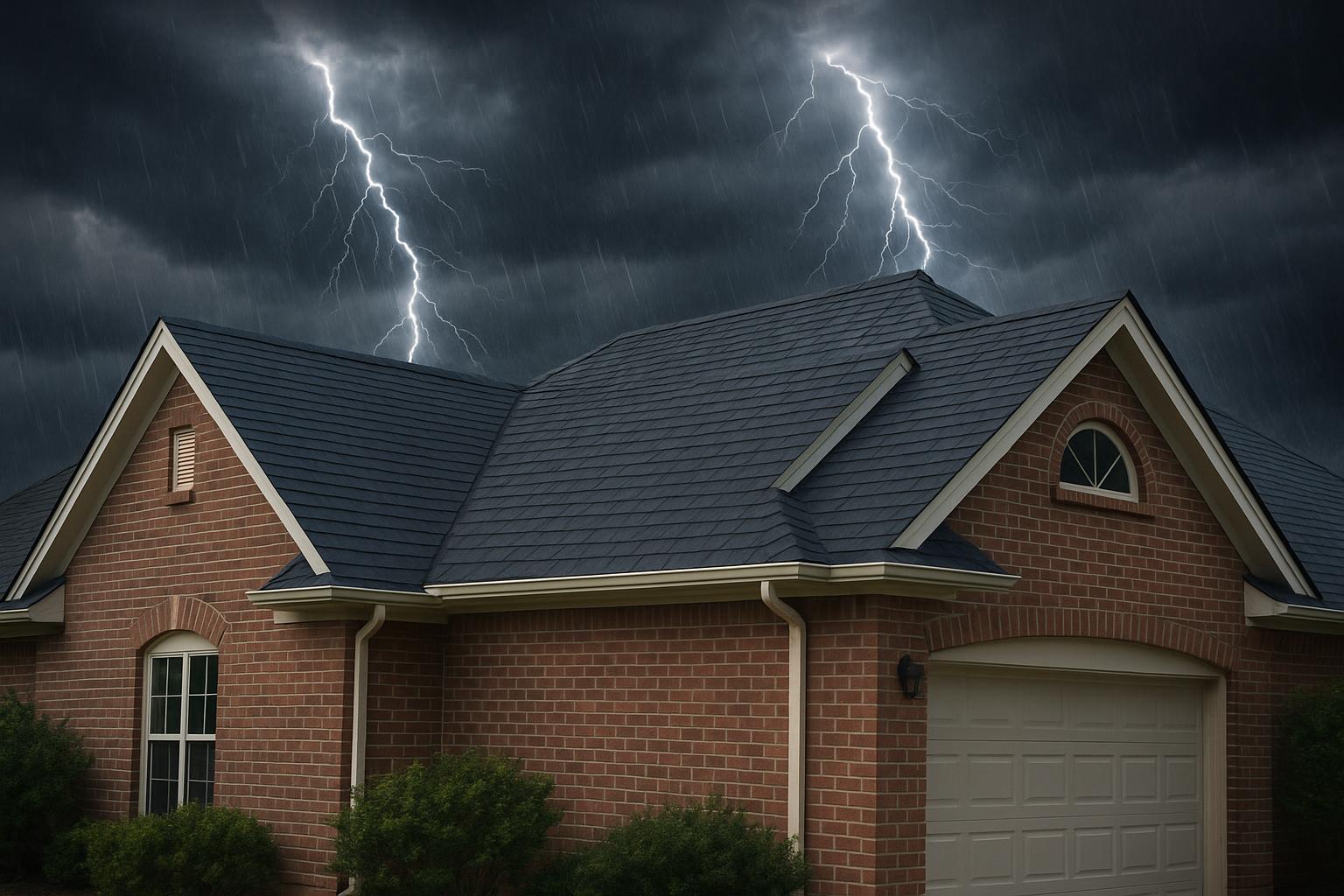
Real estate listings rarely lead with the roof. They lead with kitchens, baths, square footage, and curb appeal. But appraisers, inspectors, and serious buyers know that the condition of the roof can swing a sale by tens of thousands of dollars, especially in regions where weather has trained the market to look for it first.
For homeowners in storm-prone parts of the country, the roof is not a cosmetic feature. It is a financial asset, and the way it is managed has a direct impact on resale value, insurability, and time on market.
The appraisal math
A roof at the end of its life is typically a four to seven percent appraisal deduction on a home’s listed value. On a typical suburban home, that is tens of thousands of dollars at risk. The deduction reflects what the buyer would need to spend to bring the asset back to functional condition.
A new or recent roof, by contrast, does not return its full installation cost in appraisal value, but it does protect the rest of the home’s appraised value from being marked down. The math works out as a defensive investment rather than an offensive one. Homeowners who replace their roof a year before they list typically recoup 60 to 75 percent of the replacement cost in higher sale price, plus they avoid the deal-killing inspection report.
The inspection problem
In most residential real estate transactions, the buyer’s inspector reaches the roof in the first ten minutes of the inspection. If the report flags the roof as in poor condition, three things happen:
- The buyer renegotiates the price down, often by more than the actual replacement cost.
- The lender may require roof replacement as a condition of the loan, particularly with FHA and VA loans.
- The deal may collapse entirely if the buyer’s insurance carrier refuses to write a policy on the home.
That last one has become more common. Homeowners insurance underwriting has tightened sharply in storm-belt states. Carriers now refuse to write new policies on homes with roofs past a certain age or condition, regardless of whether the roof is actively leaking. A sale can be killed by an underwriting decision the buyer has no control over.
The geography problem
This dynamic is sharper in storm-prone regions. A roof that would pass inspection in a low-weather market can be flagged as a risk in a hail-belt state. Local appraisers and inspectors know the climate they work in. So do local roofing contractors.
In the Tulsa metro, for example, a homeowner preparing to sell a property in the surrounding suburbs will often schedule a pre-listing inspection with a credentialed roofer. The inspection costs nothing. The written report becomes part of the listing documentation. Contractors like Apex Roofing, which serves Catoosa, Owasso, Bixby, and the surrounding Tulsa-metro communities, have built much of their seasonal volume around homeowners doing exactly this. The roof gets inspected before it becomes a problem at closing.
The buyer documentation question
Buyers in storm-belt markets increasingly ask sellers for documentation of the roof’s age and warranty status before making an offer. A homeowner who can produce manufacturer warranty paperwork, a workmanship warranty from a local installer, and a recent inspection report is in a measurably stronger negotiating position than one who cannot.
This shift has changed what counts as a “selling feature.” A new kitchen is nice. A documented transferable roof warranty is a financial argument the buyer’s spouse cannot dismiss.
The decision framework
For homeowners thinking about listing in the next 12 to 24 months, the practical sequence is:
- Schedule a no-cost roof inspection now.
- If the roof passes, keep the report on file as part of the listing package.
- If the roof is borderline, consider repair-and-document rather than full replacement.
- If the roof is past its useful life, replace it before listing rather than negotiating it at closing.
The economics almost always favor handling the roof on the seller’s timeline rather than the buyer’s. The seller controls the contractor selection, the schedule, the documentation, and the warranty transfer. The buyer’s renegotiation does none of those things and costs more.
The roof is rarely the headline. It is often the difference between a smooth sale and a deal that falls apart in inspection. Homeowners who treat it as a financial asset, especially in storm-prone regions, get back what they put in.